

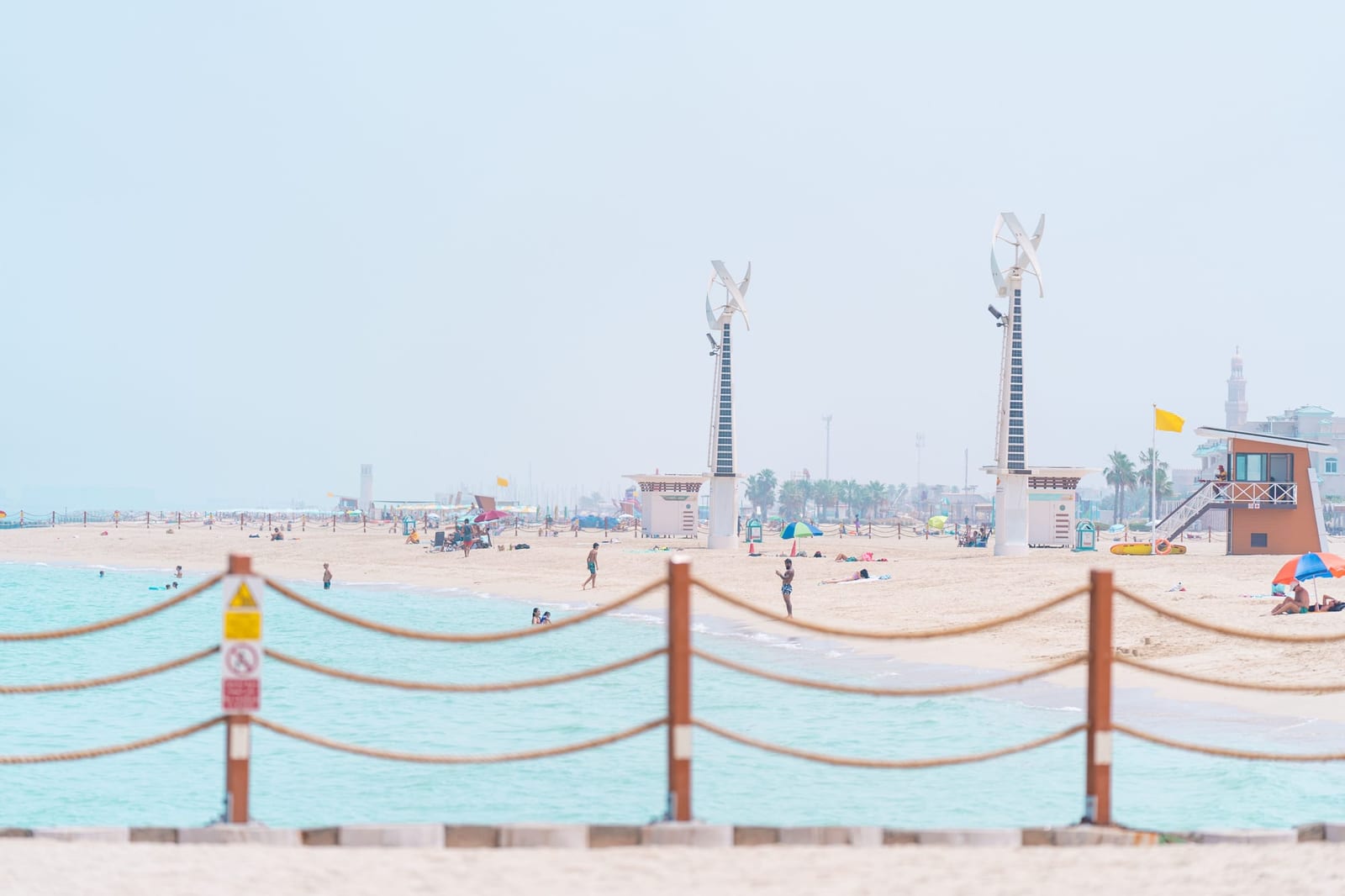
Swimwear is fine on Dubai's beaches and at pools, but cover up as soon as you leave the sand. Swim only inside the marked zone while a lifeguard is on duty, which generally means sunrise to sunset, and stay out of the water when the red flag is up. This guide covers what to wear, the flag colours, night swimming, the rules visitors trip on (alcohol, topless sunbathing, drones, photos), sea and heat risks, and public, hotel and paid beaches.
By SB Excursions · Published 29 October 2026 · Updated 29 October 2026
Tour on this route: Jet Ski to Burj Al Arab in Dubai — From $79 per jet ski, 30 minutes or 1 hour.
When can you swim at Dubai's public beaches?
In daylight, inside the marked zone, while lifeguards are on duty, which generally means sunrise to sunset. Do not swim when the red flag is up. The sea is about 22°C in winter and about 34°C in August. Some beaches have signed, lit zones for night swimming; where there is no sign, treat the beach as closed to swimmers after dark.
This guide also answers:
- Can children and non-swimmers use Dubai beaches?
Five kinds of beach, and the rule that matters at each
 #1
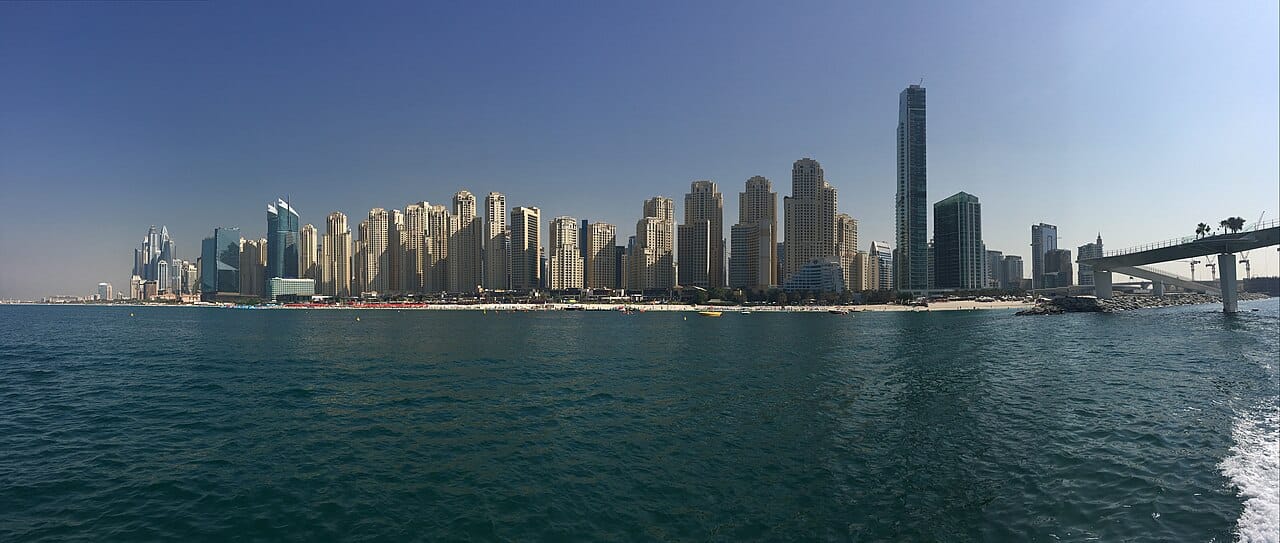
JBR Beach
The easiest beach for a first visit, with the Marina towers behind the sand and cafes and restaurants a short walk away on The Walk. Access is free and sunbeds are paid. It is busy at weekends, so keep to the marked swimming zone, watch the flags, and put a cover-up on before you wander into the shops and restaurants behind the beach.
 #2
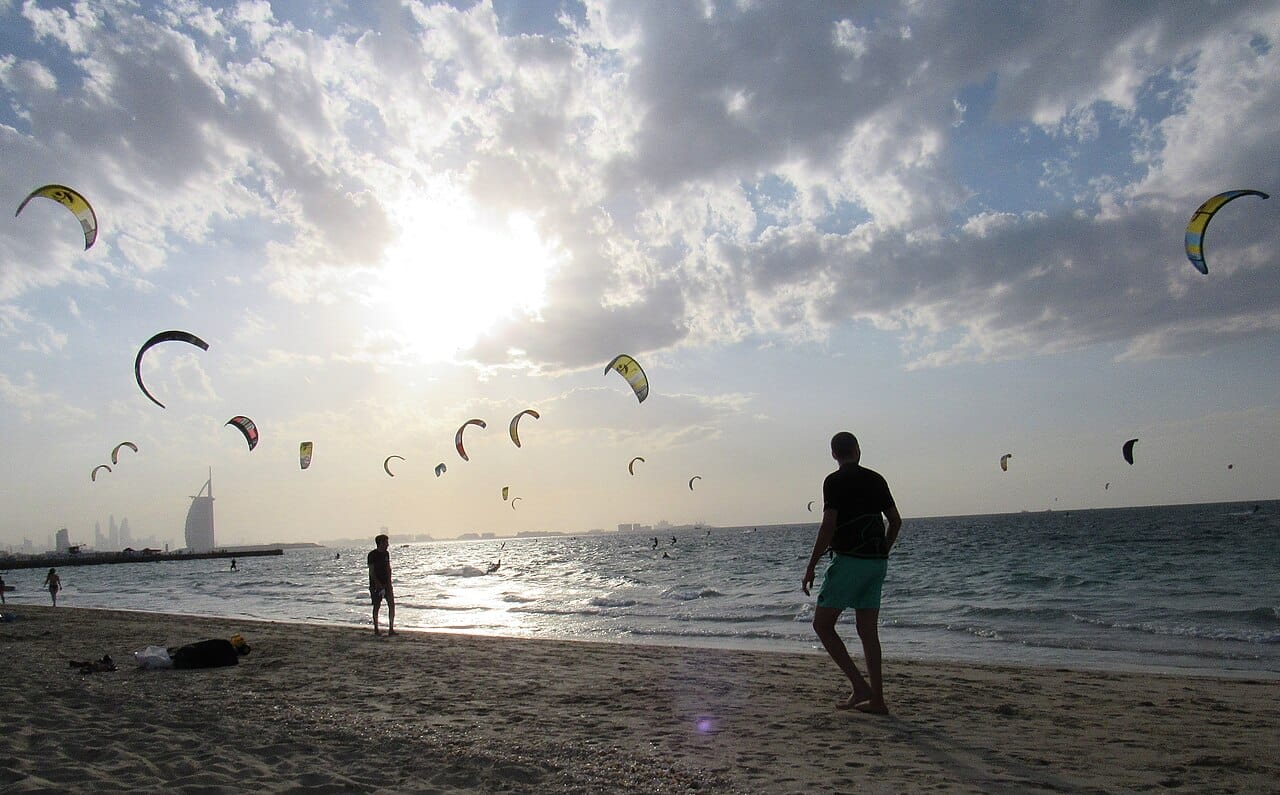
Kite Beach
A long public beach where kitesurfers launch from the sand. The water in front of the kite area is no place for a family swim, so look for the separate swimming zone and the flags, and keep children well away from kite lines and boards. Cafes and food trucks sit behind the beach, but shade is limited, so bring a hat and water.
 #3
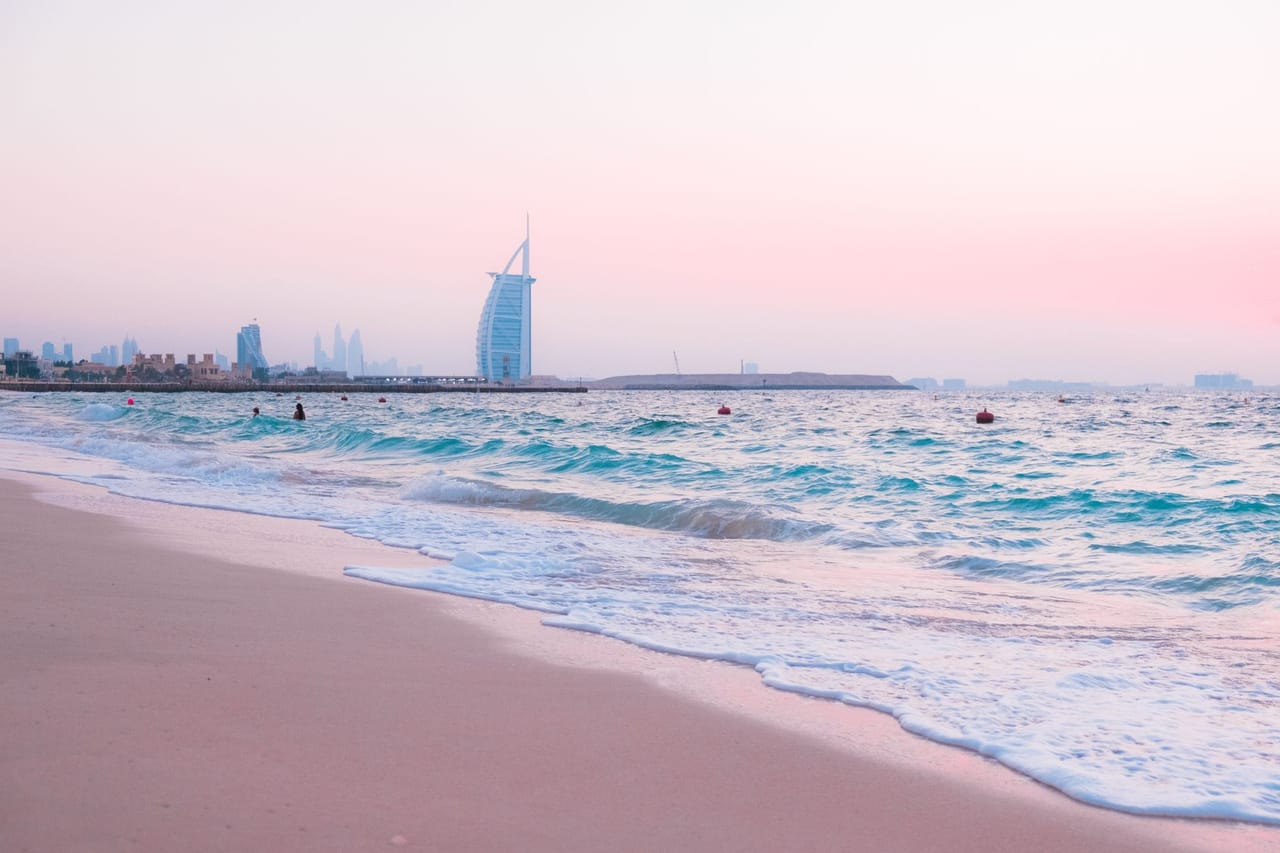
Sunset Beach
Surf, swimmers and the Burj Al Arab and Madinat Jumeirah wind towers on the horizon make this the postcard public beach. It is free and has little shade, so go late in the day. Respect the flags: when the surf is up, a yellow or red flag can be flying on an afternoon that looks calm from the car park.
 #4
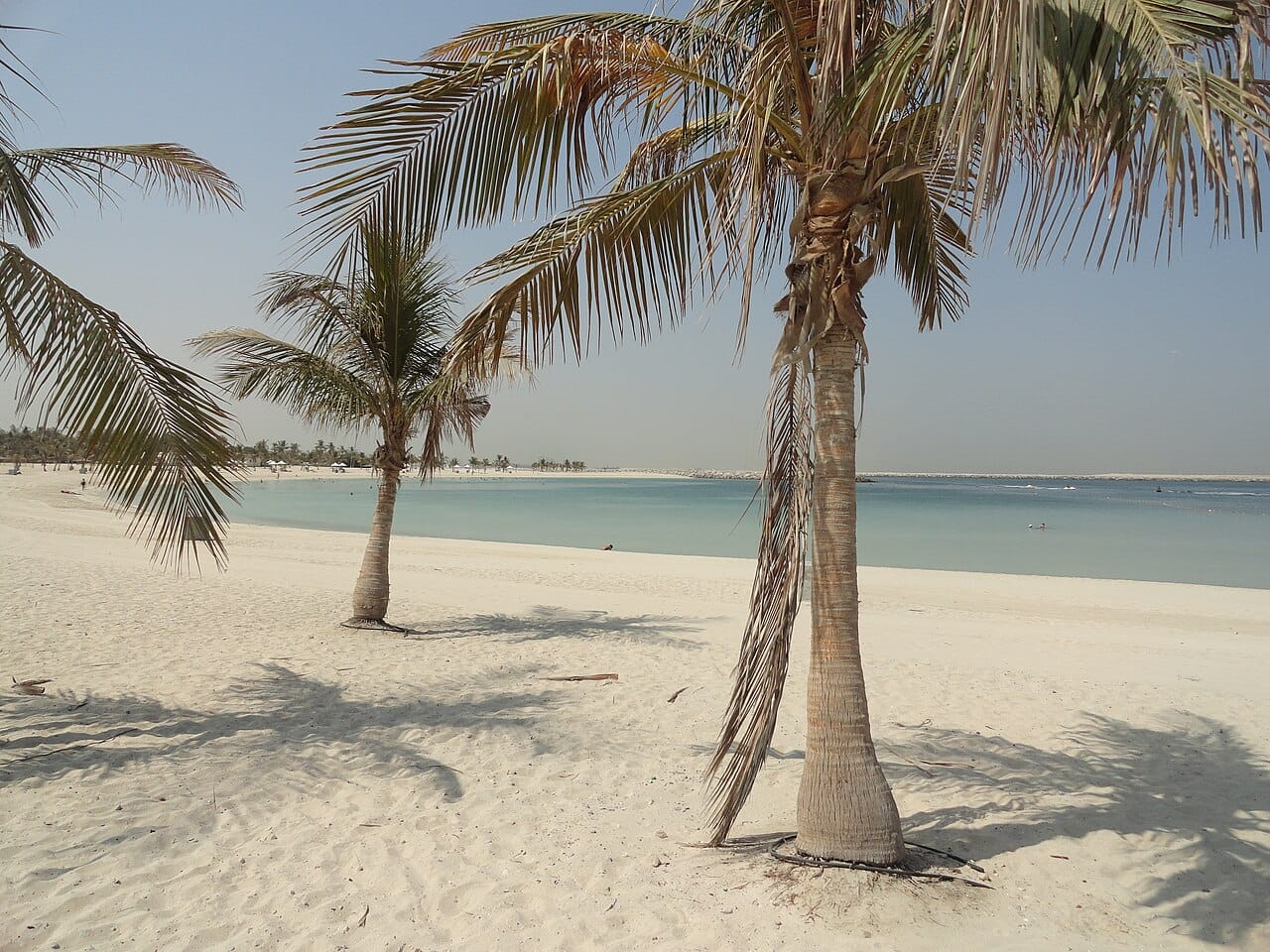
Al Mamzar Beach Park
A beach park with a calm lagoon, palms and picnic areas, on the Deira side of the city and a long way from the Marina. Lifeguards have been stationed here, and an entry fee applies, so check the current price and hours on Dubai Municipality's website before you go. Allow a taxi ride from most hotels.
 #5
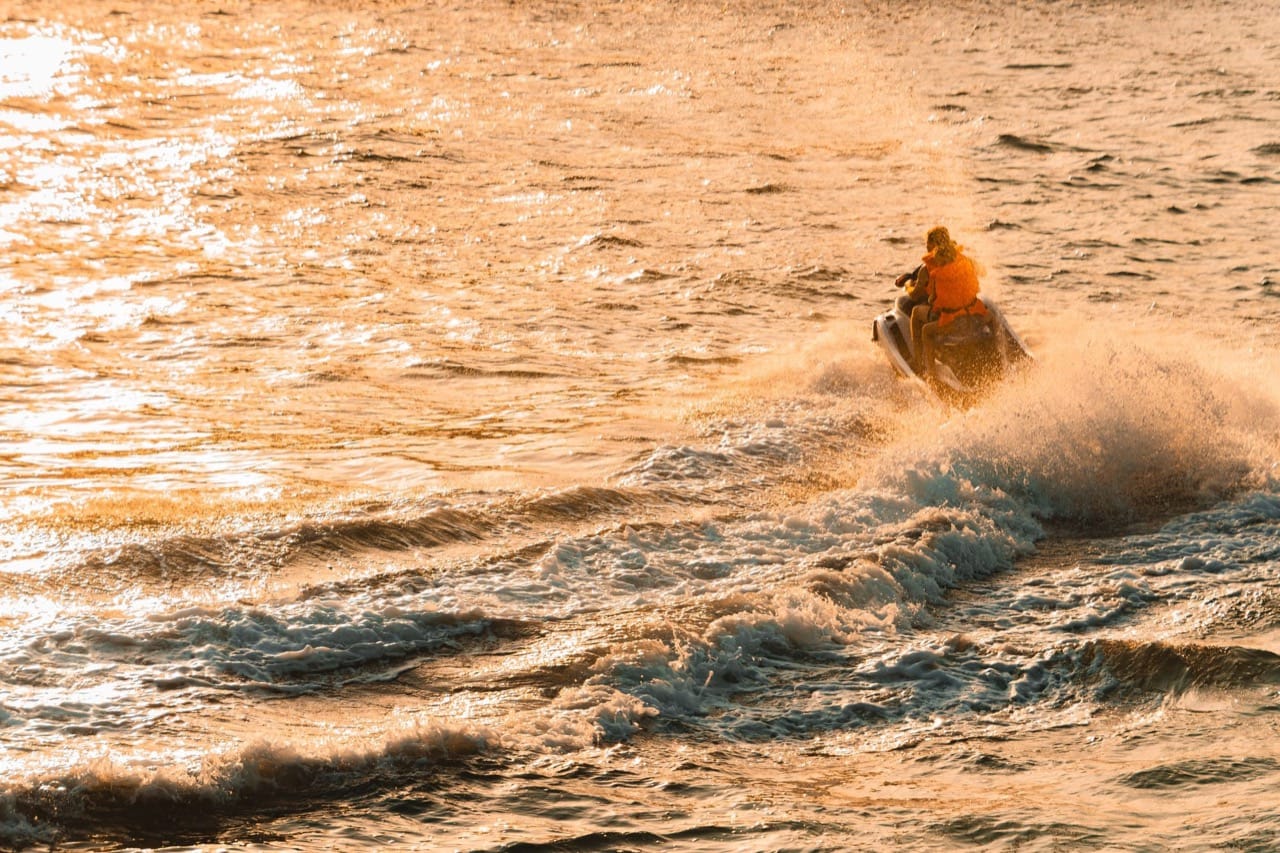
From the sea: a guided jet ski
A guided ride takes most of the beach rules out of your hands. The instructor rides in front, you wear a life jacket, and motorised craft keep to their own area away from swimmers. Our 30-minute ride is from $79 per jet ski, two riders can share one, and every rider needs an original passport or Emirates ID.
Dubai beach rules in one minute
Swimwear is fine on Dubai's beaches and at pools; cover up the moment you leave the sand. Swim only inside the marked zone while a lifeguard is on duty, which generally means sunrise to sunset, and stay out of the water when the red flag is up. Topless sunbathing, nudity, alcohol and pets are not allowed on public beaches, and the Dubai Municipality signs at each entrance are the rule book for that stretch of sand.
The sea is usually warm and calm, from about 22°C in winter to about 34°C in August, but the Gulf still has currents, jellyfish and a firm line on after-dark swimming. Rules and zones change, so read this as the plain-English version and treat Dubai Municipality and Dubai Police as the final word. For the wider picture on safety, see is Dubai safe for tourists.
What to wear: beach, pool and everywhere else
Dubai is relaxed about swimwear in the right places and strict about it in the wrong ones. The sand, the pool and the hotel beach are fine; the walk to the car, the lobby, the mall and the souk are not, and wet swimwear in a restaurant draws looks and sometimes a polite request to leave.
| Place | Swimwear? | What to know |
|---|---|---|
| Public beach (JBR, Kite Beach, Sunset Beach) | Yes | Normal swimwear on the sand and in the water; no topless sunbathing or nudity. Carry a cover-up and flip-flops for the walk back. |
| Hotel beach and pool | Yes | Same standard as a public beach; a cover-up is expected in lobbies, restaurants and corridors. |
| Paid beach club | Yes | Usually a day-pass fee; some clubs set their own evening dress rules. |
| Malls, souks, streets | No | Shoulders and knees covered is the common standard; wet swimwear is not acceptable. |
| Mosques and heritage sites | No | Full modest dress; see the dress code guide. |
| Our water sports | Yes | Swimwear, towel and sunscreen; a life jacket is provided. |
Venues set their own rules inside the fence. If unsure, ask at the desk before you change.
Bikinis and one-piece suits are both common at tourist beaches, and men wear swim shorts; it is the cover-up afterwards that matters. During Ramadan, dress on the sand is the same, but eat and drink discreetly in public during daylight hours. The Dubai dress code guide covers malls, mosques and yachts, and the Ramadan guide explains the rest.
Flags and lifeguards: what the colours mean
Dubai Municipality flies warning flags on its public beaches. Red, yellow and purple are the ones to know, and the lifeguard on the tower will tell you if you are unsure.
Lifeguards generally work from sunrise to sunset, and they cover the marked swimming zone only. That zone is bounded by buoys and ropes, so swim inside it and stay away from rocks, breakwaters and the area where boats and kitesurfers run. Not every beach is staffed: public beaches along Jumeirah and Umm Suqeim and at Al Mamzar have been among those with lifeguards, and a beach with no tower and no flag is a beach where you swim at your own risk.
| Flag | Meaning | What to do |
|---|---|---|
| Red | Swimming is prohibited in that area | Do not swim, and keep children well back from the waterline. |
| Yellow | Swim with caution | Stay close to shore inside the marked zone and keep children within arm's reach. |
| Purple | Swimming allowed, but marine life such as jellyfish has been spotted | Ask the lifeguard what has been seen; wear a rash vest or stay out if in doubt. |
Flags can change within the hour as wind and sea shift. Look again before each swim.
The Municipality also puts up signboards with safety information, and these override anything in a guidebook. If a lifeguard blows a whistle or waves you in, come in; the sea can look flat from the sand while a current runs under it.
Swimming at night
The default answer is no. Lifeguards generally leave at sunset, the sea is hard to read in the dark, and warnings against night swimming have been repeated for years. Some public beaches have lit, lifeguarded zones where swimming after dark is allowed, and the signs at the entrance say so, but the list has changed over time and a beach that allowed it once may not now.
If there is no sign, no light and no lifeguard, do not swim. Evening walks on the sand are fine, and a sunset paddle at the edge is common, but the swim itself needs a staffed zone. Hotel beaches and private clubs set their own hours, so ask at the desk. A night out on the water is better done from a boat: our Marina yacht party is $99 per person, 21+, with a professional crew, not a night swim.
Other rules visitors trip on
Most of these are common sense, and all of them are posted at public beaches. These are the ones that catch visitors by surprise:
- No alcohol on public beaches; drinks are served in licensed hotels and clubs only. See alcohol laws in Dubai.
- No topless sunbathing or nudity, and no changing in the open; use the changing rooms and showers.
- No pets on the beach, and no littering: bins are at the entrances, so carry your rubbish to them.
- Do not photograph strangers, especially women and children, without asking; privacy rules in the UAE are strict.
- No drones without the proper permission; the drone rules guide points to the authorities that decide.
- Children stay with an adult; the accompanying adult is responsible for them, and they should never swim alone.
- Motorised craft such as jet skis run in separate areas away from swimmers; never swim in their lanes.
Sea and sun: what actually goes wrong
Most beach problems in Dubai are heat, not waves. From June to September the air is about 40°C or more by midday and the sea is as warm as a bath, so it gives little relief; sunburn, dehydration and heat exhaustion are the real risks. Go before 10 AM or after 4 PM, wear a hat and high-SPF sunscreen, drink water, and take a break in shade. Our Dubai in summer guide lists what to do when the beach is too hot.
The other surprise is the wind. When a shamal blows, the sea gets choppy, sand stings and currents can appear on a sunny day; the red flag is the beach telling you. Jellyfish turn up now and then, which is what the purple flag is for. Non-swimmers should stay out of the sea beyond waist depth, and inflatable toys are not safe when the wind is offshore because they can drift out faster than you can swim after them. In winter the sea is about 22°C, fine for a short swim but cool for small children.
Public beach, hotel beach or paid beach club
Where you swim sets the rules more than the law does. A public beach is free, with showers, toilets and lifeguards at many of them, but limited shade. A hotel beach has its own staff, towels and loungers, and a beach club adds a pool and a bar. Our best beaches in Dubai guide ranks the main stretches, and the Jumeirah and Burj Al Arab guide shows where the sand is on the coast.
| Type | Cost | What you get | Best for |
|---|---|---|---|
| Public beach | Free to enter | Lifeguards and showers at many; paid sunbeds at some; little shade | A budget beach day |
| Beach park (Al Mamzar) | Entry fee | Fenced park, palms, picnic areas, changing rooms | Families with small children |
| Hotel beach | Guests, or a day pass at some hotels | Loungers, towels and the hotel's own staff | Comfort and a quiet swim |
| Beach club | Day pass, varies widely | Loungers, pool and bar | Evenings and alcohol |
Prices and rules change. Check the venue's own website for the current fee.
On the water with us: jet ski and parasailing
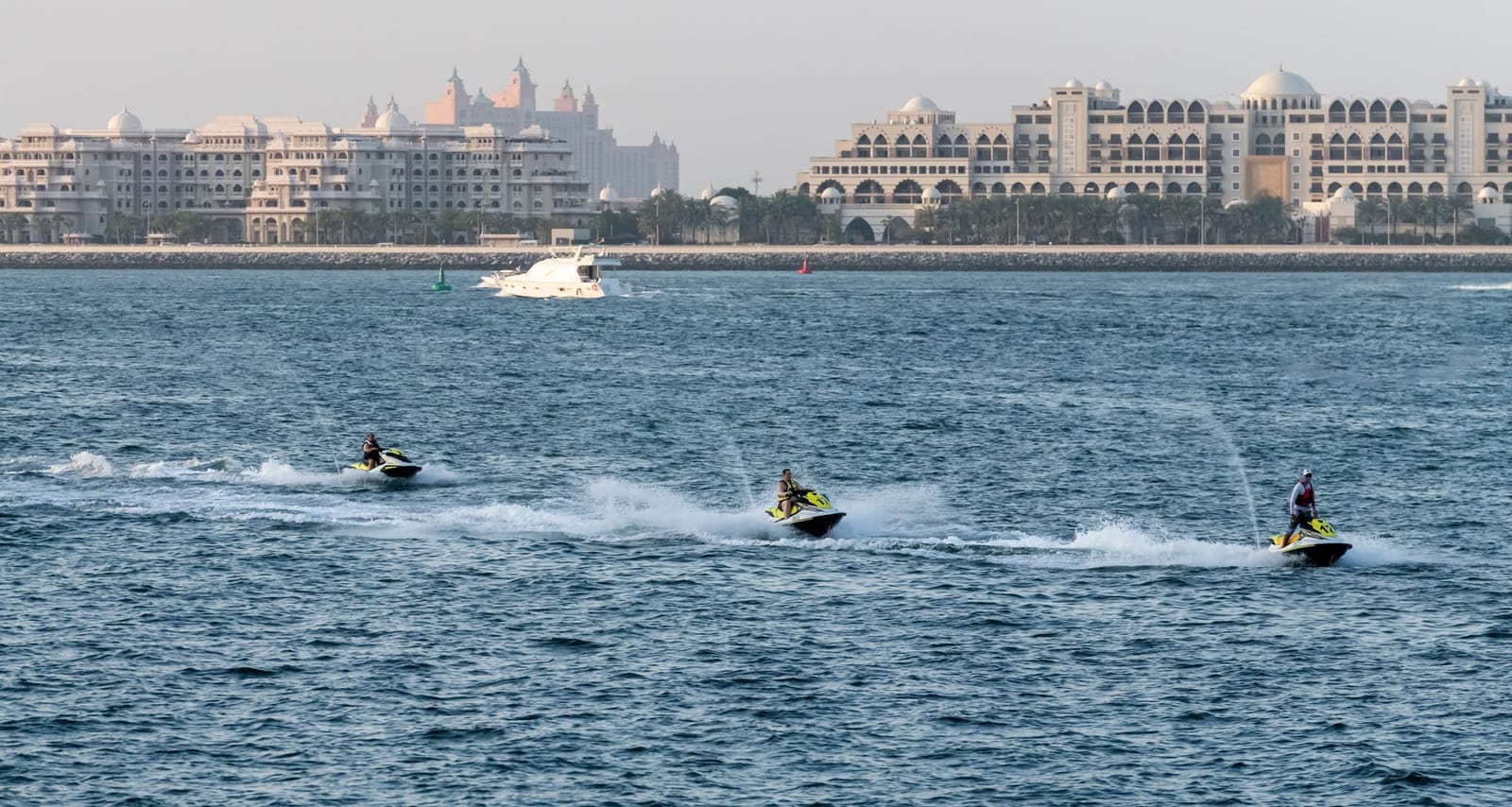
If you want the sea without the swimming question, a guided ride is simpler. Our jet ski ride to the Burj Al Arab is from $79 per jet ski for 30 minutes, or $140 for a full hour that continues to Atlantis. You get a safety briefing, a life jacket and an instructor riding in front, who stops at the landmark and takes photos and videos that are sent to you afterwards. Two riders share one jet ski at no extra cost.
Drivers must be 16 or older and passengers at least 5, and every rider needs an original passport or Emirates ID, not a photo on a phone. The meeting point is Umm Suqeim Fishing Harbour on Jumeirah Road, next to the Jumeirah Beach Hotel (not JBR), and there is no hotel pickup; full prepayment confirms the slot. Allow about 1 hour in all for the 30-minute ride. Parasailing from the same harbour is from $99 for a solo flight, for flyers aged 15 or older. The age, weight and safety rules guide has the limits, and jet ski in Dubai explains the ride in detail.
FAQ
When can you swim at Dubai's public beaches?
In daylight, inside the marked zone, while lifeguards are on duty, which generally means sunrise to sunset. Do not swim when the red flag is up. The sea is about 22°C in winter and about 34°C in August. Some beaches have signed, lit zones for night swimming; where there is no sign, treat the beach as closed to swimmers after dark.
Can you wear a bikini on Dubai beaches?
Yes, on tourist beaches and at hotel pools, bikinis and one-piece suits are both common. Topless sunbathing and nudity are not allowed, and you should cover up as soon as you leave the beach. Wet swimwear in malls, restaurants and souks is not acceptable.
What do the beach flag colours mean in Dubai?
Red means swimming is prohibited, yellow means swim with caution, and purple means swimming is allowed but marine life such as jellyfish has been spotted. Check the flag before every swim, because conditions change during the day.
Is it safe to swim at night in Dubai?
Not on most beaches. Lifeguards generally leave at sunset and the sea is hard to judge in the dark. Some public beaches have lit, lifeguarded zones for night swimming, signed at the entrance. If you see no sign, no lights and no lifeguard, stay out of the water.
Are Dubai beaches free?
Public beaches are free to enter, including JBR Beach, Kite Beach and Sunset Beach, though sunbeds and umbrellas cost extra at some. Beach parks such as Al Mamzar charge an entry fee, hotels often limit their beaches to guests, and beach clubs sell day passes. Check the current price with the venue.
Can you drink alcohol on a Dubai beach?
Not on public beaches. Alcohol is served only in licensed venues such as hotels and beach clubs,. Soft drinks and water are fine, and sun and heat make water the better choice anyway.
Can children and non-swimmers use Dubai beaches?
Yes, with an adult beside them at all times. The accompanying adult is responsible, children should stay in the shallow marked zone within arm's reach, and inflatable toys are risky when the wind is offshore. Our jet ski ride takes passengers from age 5, and drivers must be 16 or older.
Recommended Dubai tours for this guide
Jet Ski to Burj Al Arab in Dubai
It is the Burj Al Arab from sea level, without a licence or previous experience: the instructor rides in front, stops at the landmark for photos and sends you the files after the ride, and two people share one jet ski at no extra cost. The 60-minute ride continues to Atlantis on the Palm, and a 2-hour ride is arranged on request for groups of 4 jet skis or more.
- Duration
- 30 minutes or 1 hour
- Area
- Jumeirah, Dubai
- Format
- Guided jet ski
- Best for
- couples, friends and first-time riders who want the Burj Al Arab from the water
From $79 per jet ski Full prepayment
View tour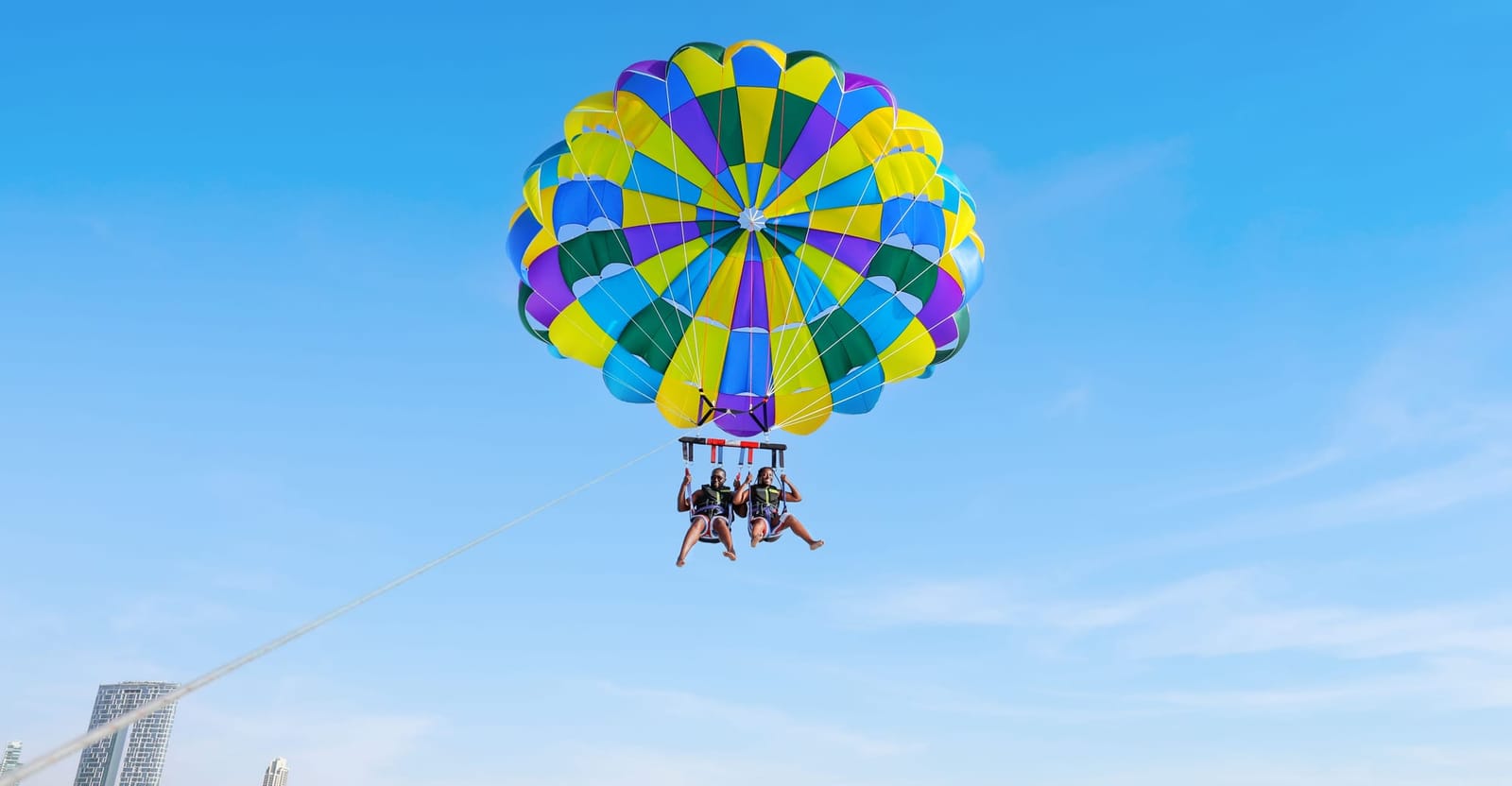
Parasailing Flight in Dubai
It is the Jumeirah coast from the air without driving anything: the crew briefs you before take-off and runs the boat, and you fly solo or as a tandem with a friend or partner. The base is the same Umm Suqeim harbour as our jet ski ride, so the two fit into one visit with a 30-minute break between them; flyers must be 15 or older, with about 150 kg per flight.
- Duration
- 1 hour, 10-12 min in the air
- Area
- Jumeirah, Dubai
- Format
- Parasailing boat trip
- Best for
- couples, friends and first-timers aged 15+ who want the Jumeirah coast from the air without driving anything
From $99 per person Full prepayment
View tour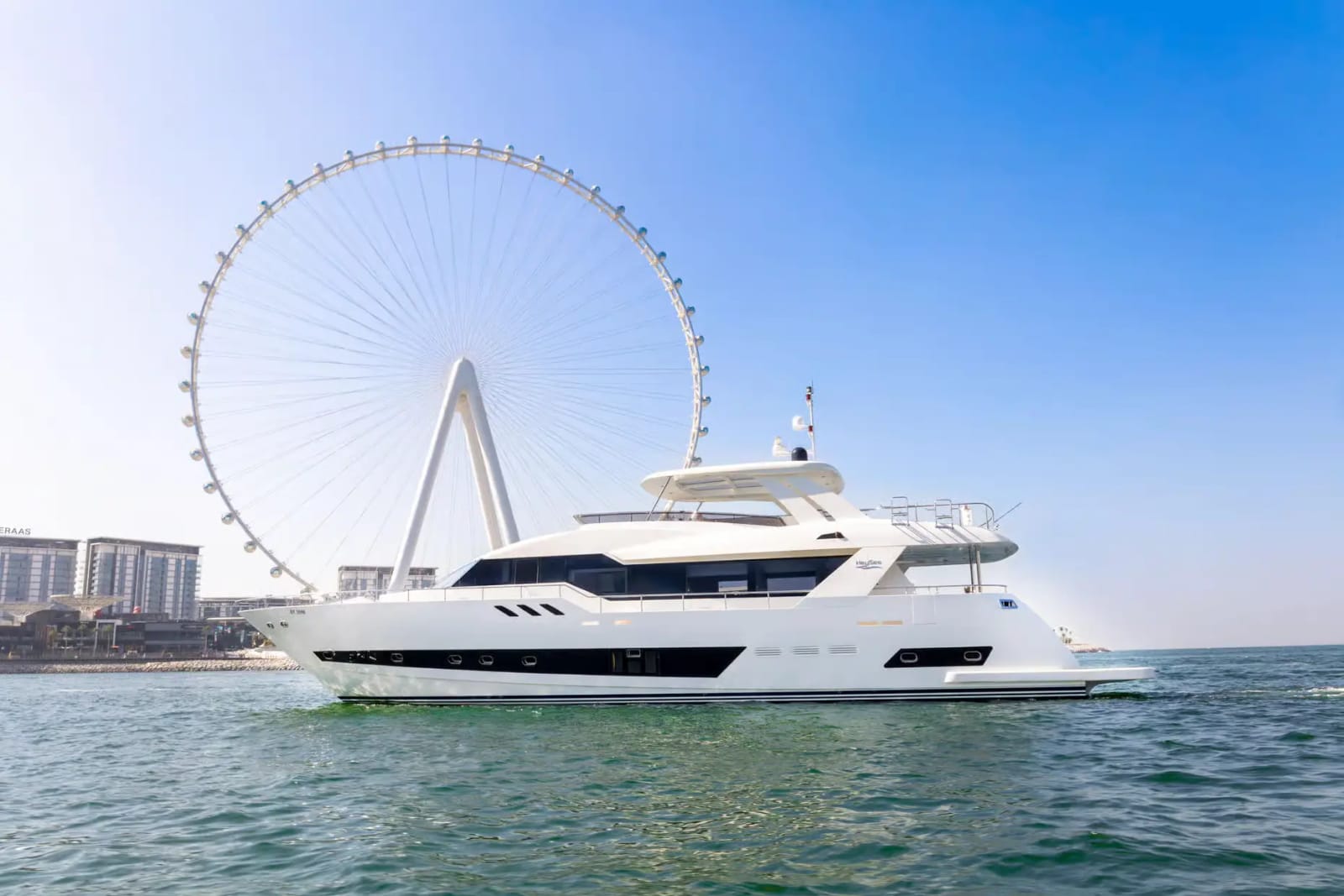
Dubai Marina Shared Yacht Tour
It is the most stylish way to see the skyline without paying for a private charter: a premium yacht with spacious decks and 5-star hospitality, a red carpet at the pier and the crew helping with photos against JBR and Ain Dubai. Full pre-payment secures your slot — the hourly departures sell out — and the yacht leaves strictly on time.
- Duration
- 1 hour
- Area
- Dubai Marina
- Format
- Shared 1-hour sightseeing cruise
- Best for
- families, couples and anyone who wants the Marina skyline from the water without a private charter
From $32 per person Full prepayment
View tour📚 Keep reading
Photos: JBR Beach — Sergei Gussev, CC BY 2.0, Kite Beach — MaryJaneB, CC BY-SA 4.0, Al Mamzar Beach Park — Fabio Achilli from Milano, Italy, CC BY 2.0 (Wikimedia Commons).