

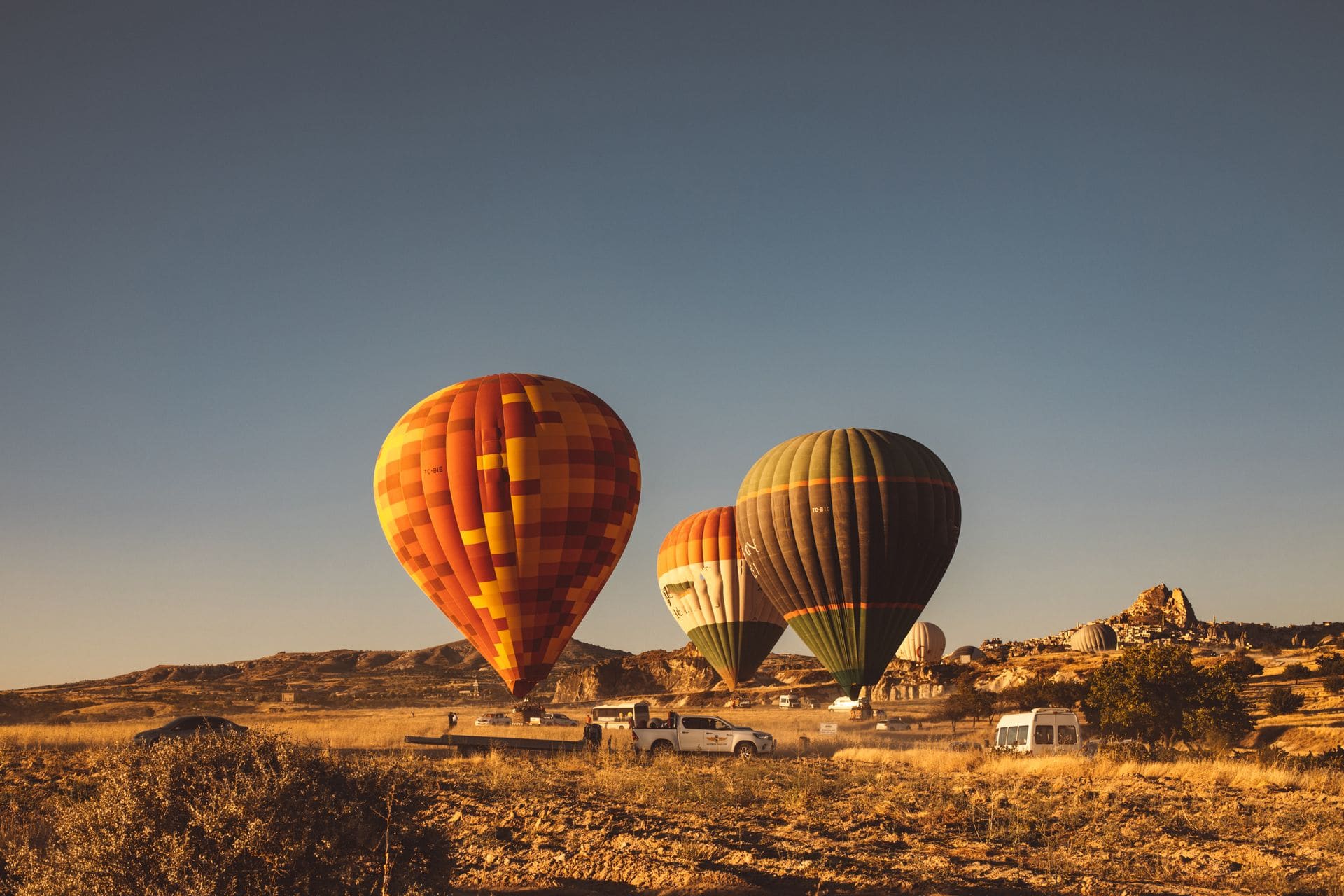
Dress for three climates in one morning: a cold, windy take-off site in the dark, a basket that turns warm the moment the burner fires, and a breakfast camp in full sun. The answer is three layers you can shed (T-shirt, jumper or fleece, light jacket), long trousers, closed shoes for the sand and the landing, and a hat. Between November and March the desert at dawn is 14-20°C or lower; by the camel ride it is heading for 25°C. Here is the full kit for the $275 sunrise flight, what you may bring on board, and how it changes by month.
By SB Excursions · Published 15 September 2026 · Updated 23 October 2026
Tour on this route: Sunrise Hot Air Balloon in Dubai — From $275 per person, 4-5 hours.
What should I wear for a hot air balloon ride in Dubai?
Three layers you can take off (T-shirt, jumper or fleece, light jacket), long trousers, closed flat shoes and a cap or hat. Between November and March the desert at dawn is 14-20°C or lower with a breeze, the basket is warm once the burner runs, and the breakfast camp is in full sun heading for 20-30°C. Add sunglasses and sunscreen for the second half of the 4-5 hour morning.
This guide also answers:
- Is it cold in a hot air balloon in Dubai?
- Can I wear sandals or flip-flops on the balloon?
- Can I bring a bag, a camera or a drone on the balloon?
The four climates of the morning
 #1
Pickup and the take-off site
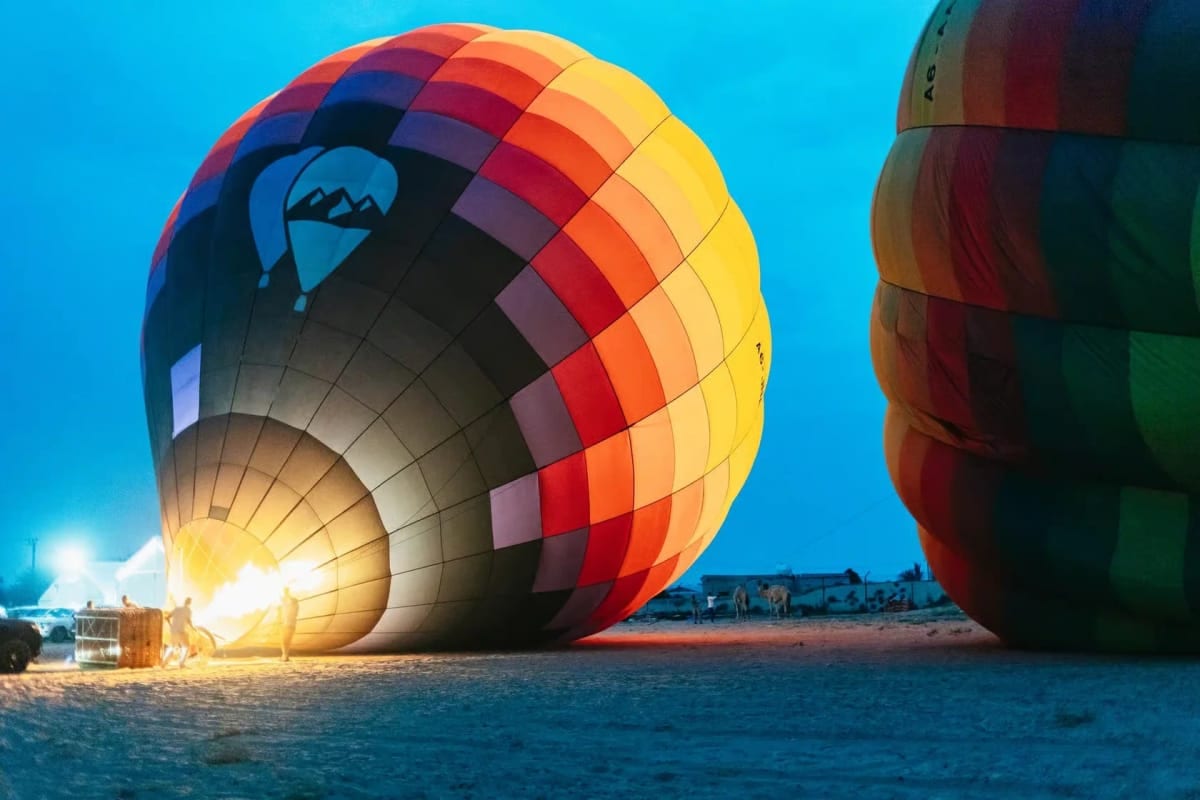
The coldest hour of the trip. You leave the hotel before dawn, step out of a warm car onto open desert and stand for about 30-40 minutes while the envelopes inflate and the pilots brief you. In winter that is 14-20°C in the city and lower on the sand, with a breeze. Wear everything you brought; you will take it off later.
 #2
In the basket
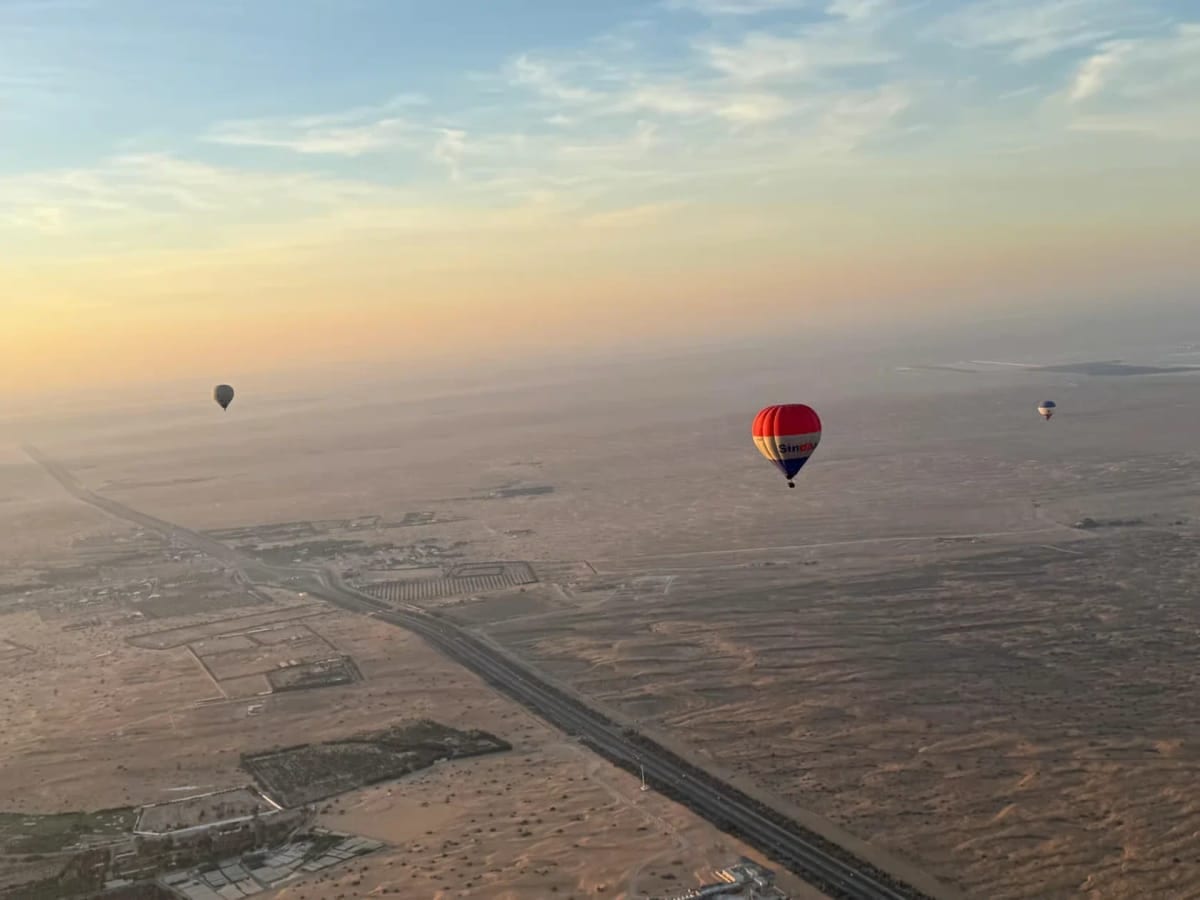
Warmer than the ground. A balloon travels with the wind, so there is no draught, and the burner throws heat downwards every time it fires. Most guests unzip within ten minutes and want sunglasses as soon as the sun clears the Hajar Mountains. A cap keeps the burner's radiant heat off your head and the low sun out of your eyes.
 #3
Landing and the Land Rover
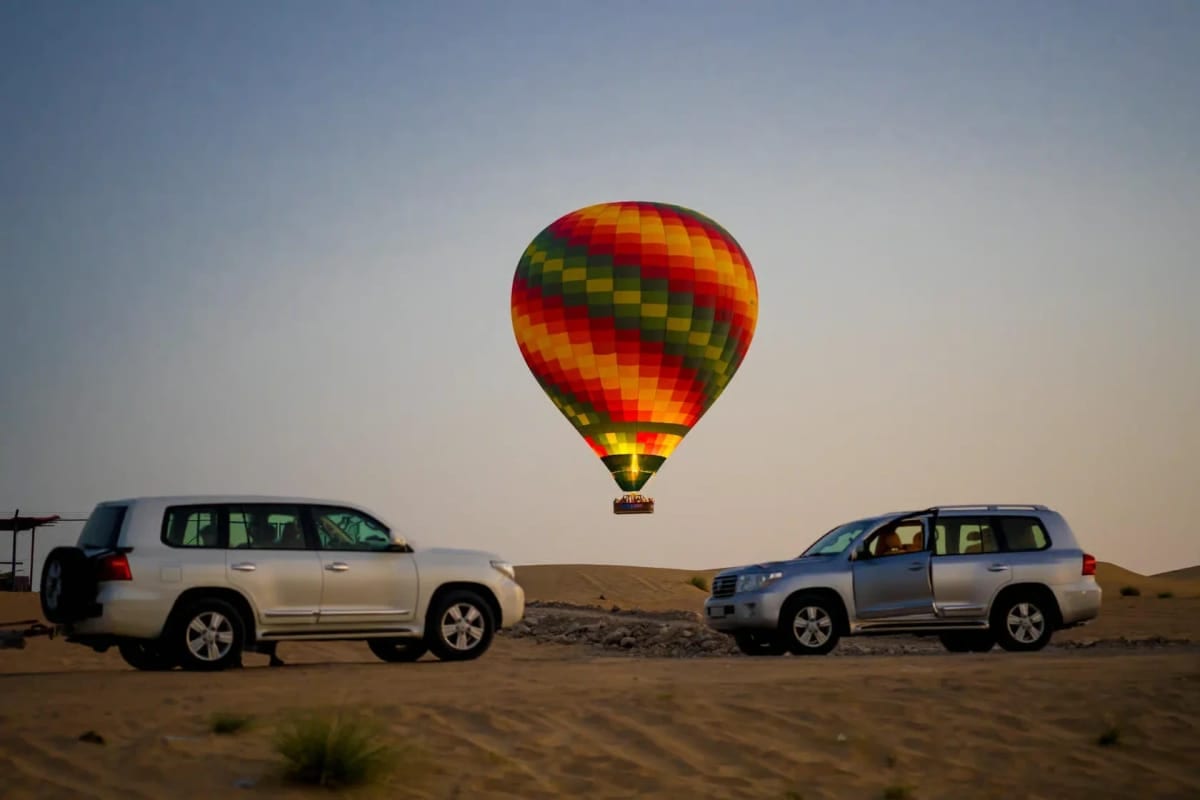
The basket lands on sand and can tip or slide a metre or two before it settles; you brace as the pilot briefed you, then climb out onto a dune. Sandals fill with sand, heels sink, shorts get scraped on the wicker. Trainers and trousers make it a non-event. The vintage Land Rover or SUV to the camp is open to the air and dust, so the jacket goes back on.
 #4
Breakfast, camel and falcon
By now the sun is well up and the desert warms fast, heading for 20-30°C on a winter day and more in spring. Breakfast is gourmet Bedouin-style with veg and non-veg options, then a short camel ride and a falcon photo before the drive back. Sunscreen and sunglasses matter here more than the jacket, and trousers make the camel easy.
What to wear for the balloon: the short answer
Layers, long trousers, closed shoes, a hat. That is the whole answer, and every piece of it exists for a reason you will meet on the morning. The sunrise balloon is 4-5 hours door to door, from a pre-dawn hotel pickup through the inflation, a 40-70 minute flight at 2,000-4,000 feet, the landing on sand and a Land Rover ride to the breakfast camp. In that time the temperature around you can move by 10°C or more, and the ground under you changes from hotel lobby marble to wicker basket to loose dune.
The numbers for the cool season, when most flights happen: November to March overnight lows of 14-20°C in the city, with January the coldest, and the open desert a few degrees below that with a breeze. Days climb to 20-30°C, so by the time you are photographing a falcon at the camp you are in T-shirt weather. In April, May and October the dawn is mild and the same logic applies with one layer fewer.
The rest of this guide goes piece by piece: why the dawn bites, how the layers work, why the shoes rule is not negotiable, what to pack for each month, what you can and cannot bring into the basket, and how to dress for the breakfast, the camel and the falcon on the other side.
Why the dawn is colder than you expect
People pack for Dubai, not for the desert at 5 AM. Sand loses its heat quickly after dark, the take-off site is flat open ground with nothing to block the wind, and you spend about 30-40 minutes standing on it in the dark while the crew lays out the envelopes, runs the fans and then the burners, and the pilots give the safety briefing. In January that can feel like a cold morning in Northern Europe. It is the part of the flight guests most often under-dress for.
Then the basket changes everything. Once you are airborne the balloon moves at the speed of the wind, so the air around you is still; there is no wind chill at all. The burner sits a metre or so above your head and throws heat downwards with every burst, which is why a cap or beanie is worth having even if you would never wear one on the ground. Within ten minutes of lift-off most guests are unzipping the jacket, and once the sun is over the Hajar Mountains the light is strong and low enough that sunglasses go on.
Landing puts you back on the sand, in the breeze, for the walk to the 4x4 and the open-air drive to the camp, so the layers go back on. By breakfast the sun has done its work and the day is warming towards the 20s. The whole morning is a cycle of on, off, on, off, and clothing that zips or buttons is much easier to manage in a shared basket than anything that has to be pulled over your head with a camera round your neck.
The layer system, piece by piece
This is the kit that works from November to March. It is deliberately ordinary: nothing technical, nothing you need to buy for the trip, and all of it fits back into a small bag by the end of breakfast.
- Base layer: a T-shirt or long-sleeved top in cotton or a light synthetic. This is what you will be wearing at the camp, so make it the one you want in the photos.
- Middle layer: a fleece, jumper or hoodie. It comes off in the basket and goes back on at the landing.
- Outer layer: a light jacket or windbreaker. It only needs to stop the breeze at the take-off site; a heavy coat is overkill and a nuisance to carry.
- Trousers: jeans, chinos, leggings or hiking trousers. Long, for the basket step-in, the landing and the sand, and for the camel ride afterwards.
- Shoes: trainers or any flat, closed shoe with a grip. Not sandals, not flip-flops, not heels, not slip-ons that a dune will pull off.
- Hat: a cap or beanie for the take-off site and the burner, swapped for a sun hat or the same cap at the camp.
- Scarf or pashmina: the most useful single item for the cold hour on the ground, and it packs to nothing.
- Light gloves: only in December, January and February, and only if you feel the cold; the burner warms your hands soon enough.
- Sunglasses and sunscreen: for the second half of the flight and the camp, where the sun is low, bright and reflected off pale sand.
Two small things that make a large difference: tie long hair back, because the landing breeze and the burner are both above you, and choose a jacket with zipped pockets for the phone and the passport copy. Nothing should be loose enough to fall out of a basket at 4,000 feet, and nothing will be handed back if it does.
Shoes, trousers and the landing: the rules that are not negotiable
Closed-toe shoes are on the tour's own good-to-know list for a reason. You climb into the basket through foot-holes in the wicker side, which is awkward in anything without a proper sole. You land on sand: the pilot picks the spot, but a balloon has no brakes, and the basket can bump, tip a little and slide before it stops. During the landing briefing you are taught the position, knees bent, holding the rope handles inside the basket, facing away from the direction of travel, and it is far easier to hold in trainers and trousers than in sandals and a sundress.
After the landing you walk across loose dune to the vintage Land Rover or SUV. Sandals fill with sand within three steps, and heels do not work at all. Shorts are legal and nobody will stop you, but the wicker rim of the basket is at thigh height and a cold dawn is not the moment for bare legs. Long, comfortable trousers are the answer for everyone, in every month.
There is no formal dress code on the flight or at the camp, and the modest-in-public standard that applies in malls and Old Dubai is not an issue when the cold makes you cover up anyway. If you want the full city-wide picture, our Dubai dress code guide covers malls, beaches, mosques and the desert in one place.
Month by month: what to pack for the flight
The kit changes at the edges of the season. The table uses the city's seasonal figures; the take-off site is a few degrees cooler at dawn, and sunrise times are approximate for mid-month.
| Month | Dawn (about) | What to wear at take-off | Later at the camp |
|---|---|---|---|
| November | 6:45 AM, 14-20°C | All three layers, scarf | T-shirt, sunglasses |
| December | 7:00 AM, 14-20°C | All three layers, hat, scarf, light gloves optional | T-shirt or jumper, sunglasses |
| January | 7:05 AM, coldest, 14°C or lower on the sand | All three layers, hat, scarf, light gloves | Jumper at first, T-shirt by the end |
| February | 6:50 AM, 14-20°C | All three layers, hat, scarf | T-shirt, sunglasses |
| March | 6:30 AM, cool | Jumper and jacket, hat | T-shirt, sunscreen |
| April and May | 6:00-5:40 AM, mild | T-shirt and a light jacket | T-shirt, sun hat, sunscreen; 30-38°C by afternoon |
| October | 6:25 AM, warm | T-shirt and a light jacket | T-shirt, sun hat, sunscreen |
| June to September | 5:30-6:10 AM, 30°C or more | Light clothing, still long trousers and closed shoes | Sun hat, sunscreen, water; flights are weather-dependent, ask us |
The season runs roughly from September or October to May; summer flights depend on the weather. Full detail in the balloon season guide below.
If you are here in the hottest months and the flight is on, the temptation is shorts and sandals, and the answer is still no: the basket, the landing and the sand do not care what the thermometer says. For everything else about the calendar, from wind cancellations to the best weeks, read hot air balloon season and weather in Dubai.
Cameras, phones and what you can bring on board
Bring a phone or a camera, and bring it on a strap. A basket at 4,000 feet is the one place where a dropped phone is gone for good, and the crew will not go looking for it in the reserve. A wrist strap or a neck strap solves it; a camera bag does not need to come up, because there is nowhere to put it down. In-flight Wi-Fi is included, so a live sunrise post from the basket is realistic, and cold mornings drain batteries faster than you expect, so start at 100% and keep a power bank in the jacket pocket.
The list of what is not allowed is short and firm: no drones, no pets, no large luggage, no smoking and no alcohol, on the flight or in the vehicles. A small daypack or a handbag that sits at your feet in the car is fine; a suitcase is not, so if you are flying on your last morning, leave the luggage with the hotel and collect it after drop-off. The one thing you must bring is a passport or ID, or a clear copy, because the flight manifest is checked before you board.
For the shot list itself, from the burner glow at inflation to the oryx on the dunes and the falcon at the camp, we wrote a separate balloon photo guide. The short version: a phone is enough for the flight, and a camera with a longer lens earns its place only if you want the animals.
The breakfast, the camel and the falcon: dressing for the second half
After landing a vintage Land Rover or SUV takes you to a private Bedouin camp, and the morning turns into a different outing. The sun is up, the sand is bright, and the temperature climbs quickly towards 20-30°C on a winter day. The jacket and jumper go into the bag, the sunglasses and sunscreen come out, and a cap or sun hat is the thing you are gladdest you packed.
Breakfast is a gourmet Bedouin-style spread with veg and non-veg options, eaten unhurried; nobody is dressed up, and the base layer you chose in the dark is what appears in the photos. The short camel ride is where the trousers earn their keep: you sit astride a saddle, the camel rises back legs first so you lean back and hold on, and a dress or shorts make both the mounting and the photos awkward. The falcon photo is done standing, with the bird on a glove the handler usually provides, so nothing extra is needed beyond a sleeve you do not mind a talon near.
Your electronic flight certificate, signed by the pilot, arrives digitally, so there is nothing to carry. You are back at the hotel mid-morning with the day ahead: in winter most guests pair the flight with the full-day desert safari that afternoon, for which the same trousers-and-trainers rule applies with a light jacket for the camp after sunset, or with the 1-hour shared yacht cruise at sunset, where shoes come off at the pier and the yacht packing list takes over. Couples who want the water to themselves take a private charter instead, from AED 400 per hour for a 31 ft boat with captain and crew.
What to leave at the hotel
A short list of things guests bring and regret, all easily avoided the night before.
- Heels, sandals, flip-flops, slip-ons: sand, wicker and a moving basket defeat all of them.
- Dresses and skirts: the step into the basket, the landing position and the camel all argue against them; leggings under a tunic work well if you want the look.
- A heavy coat: you will carry it for four hours after the first fifteen minutes. A light jacket over a jumper is warmer per gram and packs smaller.
- Loose scarves and unpinned hair: the burner is above your head; keep everything tied or tucked.
- Anything you cannot afford to drop: jewellery, an untethered phone, a camera without a strap.
- Suitcases and drones: neither is allowed in the vehicles or the basket; drones need a DCAA permit anywhere in Dubai in any case.
- Alcohol and cigarettes: not on the flight, not in the vehicles; the celebration is one for the hotel afterwards.
Finally, the two things that are not clothing but decide whether you fly: bring the passport or ID copy, and if you are over 120 kg tell us at booking, because an extra fee may apply under the safety regulations. The other eligibility rules, from the minimum age of 7 to the upper limit of 80, are in balloon age limits for kids and seniors, and whether the whole morning is worth $275 to you is answered honestly in is the Dubai balloon worth it.
FAQ
What should I wear for a hot air balloon ride in Dubai?
Three layers you can take off (T-shirt, jumper or fleece, light jacket), long trousers, closed flat shoes and a cap or hat. Between November and March the desert at dawn is 14-20°C or lower with a breeze, the basket is warm once the burner runs, and the breakfast camp is in full sun heading for 20-30°C. Add sunglasses and sunscreen for the second half of the 4-5 hour morning.
Is it cold in a hot air balloon in Dubai?
The cold part is the ground, not the air. You stand at the take-off site in the dark for about 30-40 minutes while the balloons inflate, and in winter that is 14-20°C or lower with wind. Once airborne the balloon moves with the wind, so there is no draught, and the burner above you throws heat down; most guests unzip within ten minutes.
Can I wear sandals or flip-flops on the balloon?
No. Closed-toe shoes are on the flight's own list of requirements: you climb into the basket through foot-holes in the wicker, land on sand where the basket can bump and slide, and then walk across a dune to the 4x4. Trainers or any flat shoe with a grip are ideal; heels do not work at all.
Do I need a hat for the balloon flight?
It helps twice. At the take-off site a cap or beanie keeps the dawn breeze off; in the basket the burner sits a metre above your head and a hat keeps its radiant heat off your scalp. At the camp the same cap or a sun hat handles the low, bright sun during the camel ride and the falcon photo.
Can I bring a bag, a camera or a drone on the balloon?
A phone or camera on a strap, yes; a small daypack that stays at your feet in the vehicle, yes. Drones, pets, large luggage, smoking and alcohol are not allowed on the flight or in the vehicles. Bring a passport or ID, or a clear copy, for the flight manifest. In-flight Wi-Fi is included, so you can post from 4,000 feet.
What should I wear for the breakfast and camel ride after the flight?
The base layer you flew in, with the jacket packed away: by then the sun is up and the camp is warming towards 20-30°C on a winter day. Long trousers make the short camel ride easy, since the camel rises back legs first and you lean back and hold on. Sunglasses, sunscreen and a hat matter more than warmth at this stage.
Is there a dress code for the Dubai balloon flight?
No formal one. Comfort and safety set the rules: layers, long trousers and closed shoes. The take-off site and the Bedouin camp are private, so the modest-in-public standard of Dubai's malls and old quarters is not enforced, though the cold dawn covers most people up anyway. Smart clothes are wasted on the sand.
Recommended Dubai tours for this guide
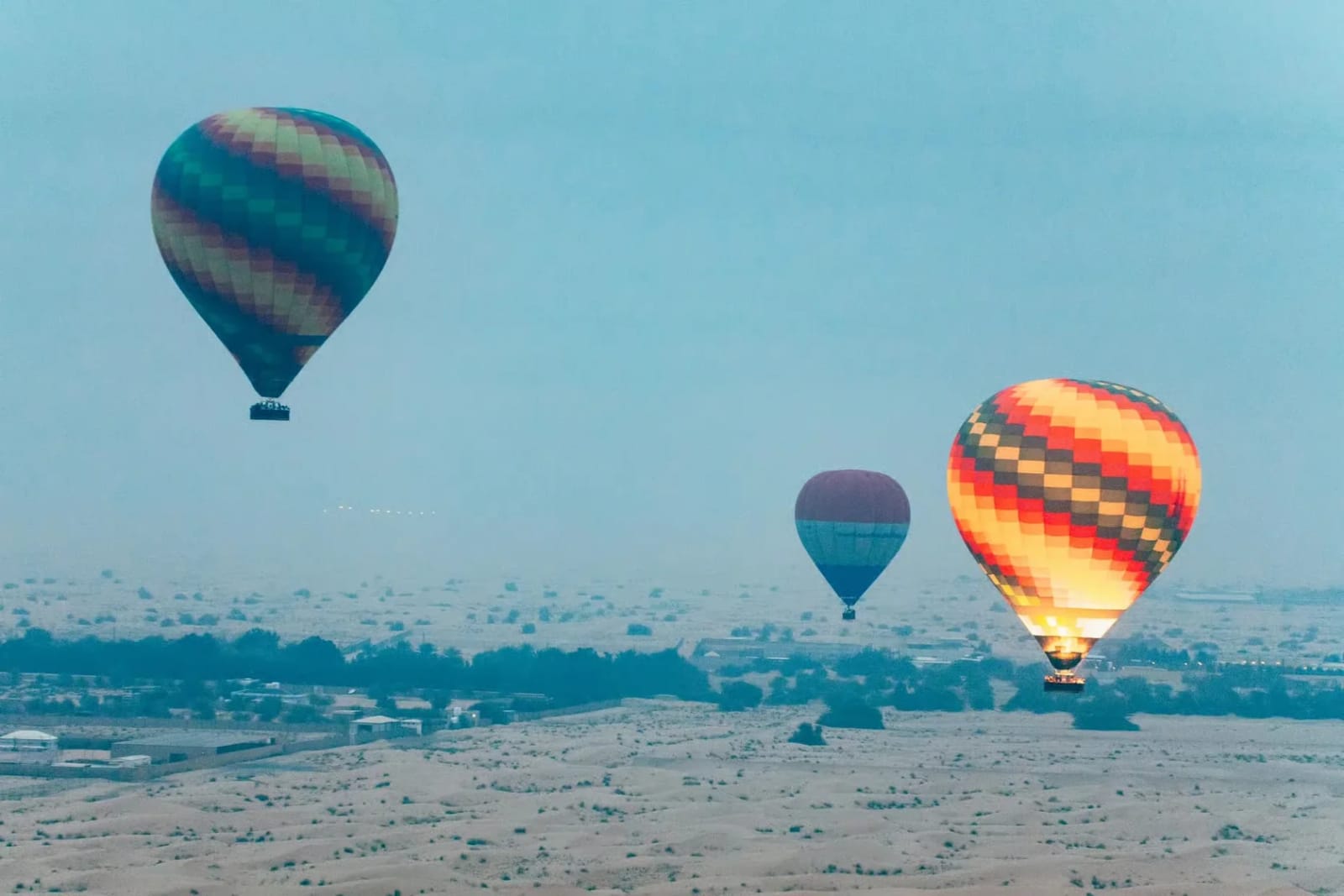
Sunrise Hot Air Balloon in Dubai
It is the desert from above at first light: gazelles, oryx and camels in the Dubai Desert Conservation Reserve, the Hajar Mountains on the horizon and the dunes turning gold. After landing a vintage Land Rover or SUV takes you to a private Bedouin camp for a gourmet breakfast (veg and non-veg options), a short camel ride and a falcon photo, and every guest gets an electronic flight certificate signed by the pilot.
- Duration
- 4-5 hours
- Area
- Dubai Desert Conservation Reserve
- Format
- Shared sunrise balloon flight with breakfast
- Best for
- couples, photographers and anyone who wants the desert at sunrise from above
From $275 per person 30% deposit
View tour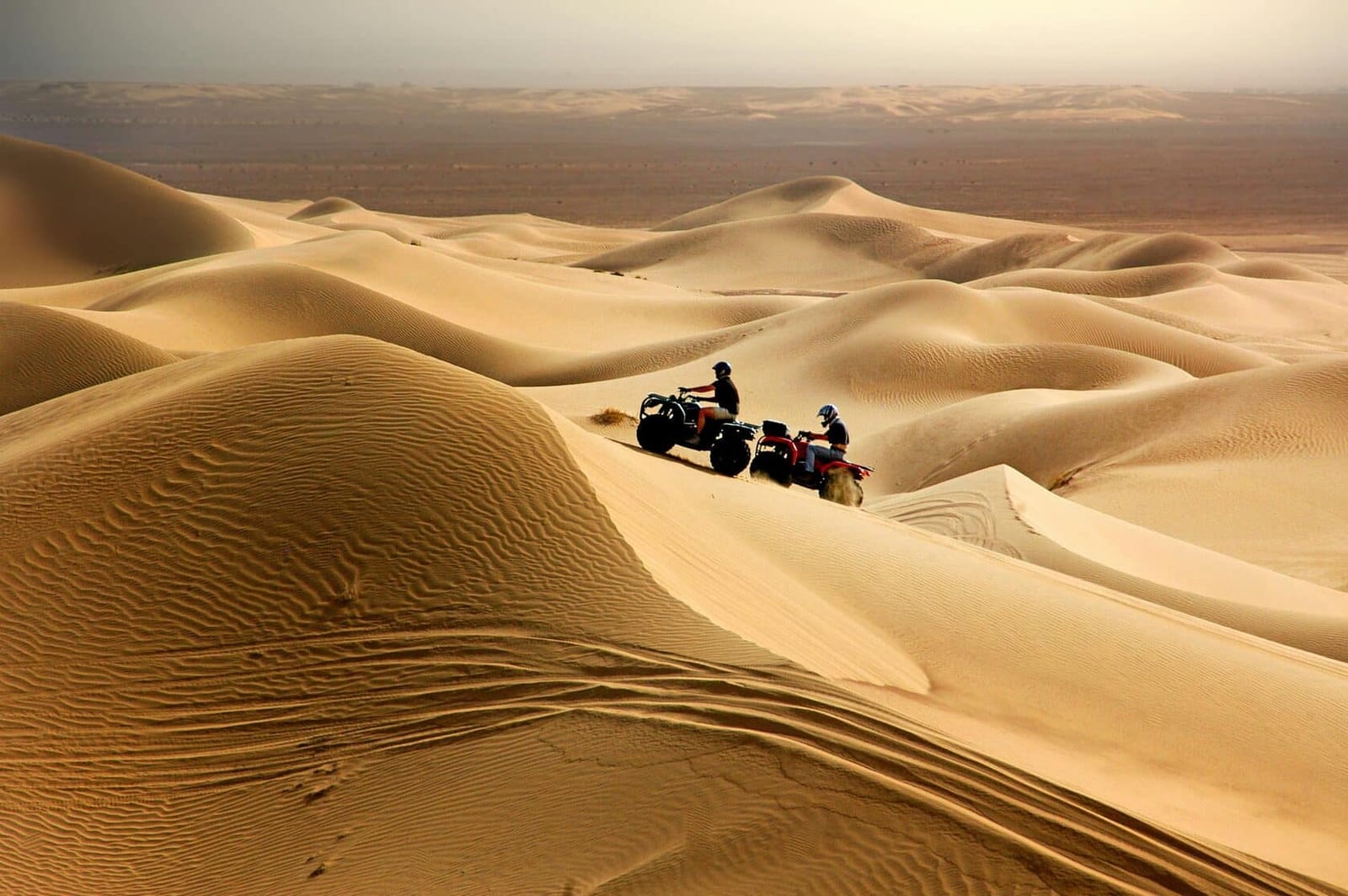
Full-Day Desert Safari in Dubai
It is the slow-travel version of the classic safari: more time on the dunes, sunset without the crowds and a full evening programme at a premium camp with air-conditioned tents, unlimited drinks and a large BBQ buffet with vegetarian and gluten-free options. Everything is arranged from the hotel door — a licensed English-speaking driver, the 4x4, the camp and the shows.
- Duration
- 7 hours
- Area
- Lahbab Desert, Dubai
- Format
- Full-day desert safari
- Best for
- families, couples and first-time desert visitors who want the full evening programme
From $45 per person No prepayment
View tour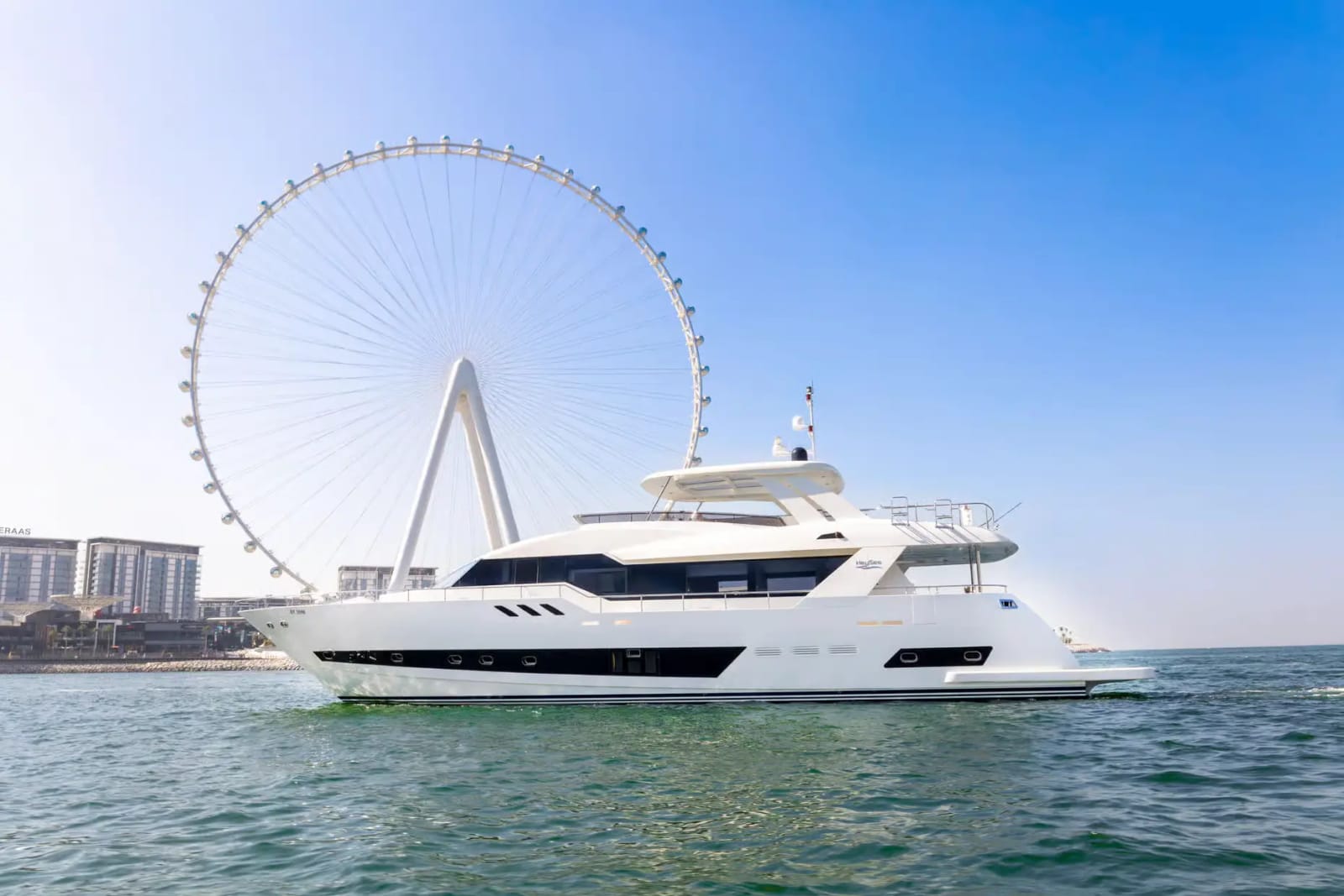
Dubai Marina Shared Yacht Tour
It is the most stylish way to see the skyline without paying for a private charter: a premium yacht with spacious decks and 5-star hospitality, a red carpet at the pier and the crew helping with photos against JBR and Ain Dubai. Full pre-payment secures your slot — the hourly departures sell out — and the yacht leaves strictly on time.
- Duration
- 1 hour
- Area
- Dubai Marina
- Format
- Shared 1-hour sightseeing cruise
- Best for
- families, couples and anyone who wants the Marina skyline from the water without a private charter
From $32 per person Full prepayment
View tour