

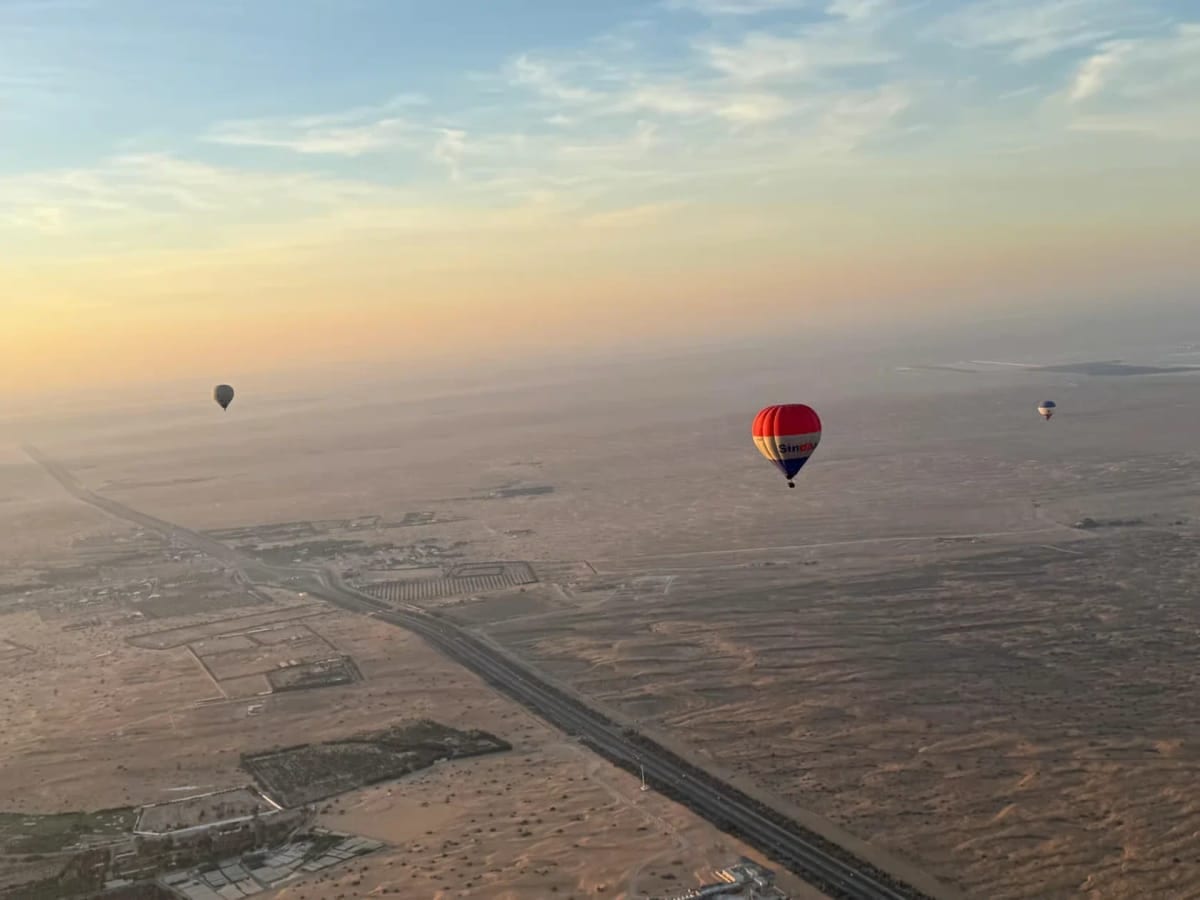
The Dubai balloon is timed for photographers whether you own a camera or not: 40-70 minutes in the air that start in the blue hour and end in full golden light, at 2,000-4,000 feet over the Dubai Desert Conservation Reserve. There are six moments worth planning for: the burner glow at inflation, lift-off, the sun over the Hajar Mountains, the other balloons in the sky, the oryx and gazelles below, and the landing, the camel and the falcon at the camp. A phone on a strap covers five of them; a zoom lens earns its place for the animals. Here is the shot list for the $275 flight.
By SB Excursions · Published 15 September 2026 · Updated 23 October 2026
Tour on this route: Sunrise Hot Air Balloon in Dubai — From $275 per person, 4-5 hours.
What are the best photos to take on a Dubai hot air balloon flight?
Six moments in order: the burner glow inside the envelope at inflation, lift-off in the blue hour, the sun rising over the Hajar Mountains from 2,000-4,000 feet, the other balloons over the gold dunes, the oryx and gazelles of the reserve below, and the landing followed by the camel ride and the falcon photo at the camp. The 40-70 minute flight is entirely in the best light of the day.
This guide also answers:
- Is a phone good enough for hot air balloon photos?
- Can I fly a drone from the balloon or at the camp?
- Can you see and photograph animals from the balloon?
The six frames, in the order they happen
 #1
The glow: inflation in the dark
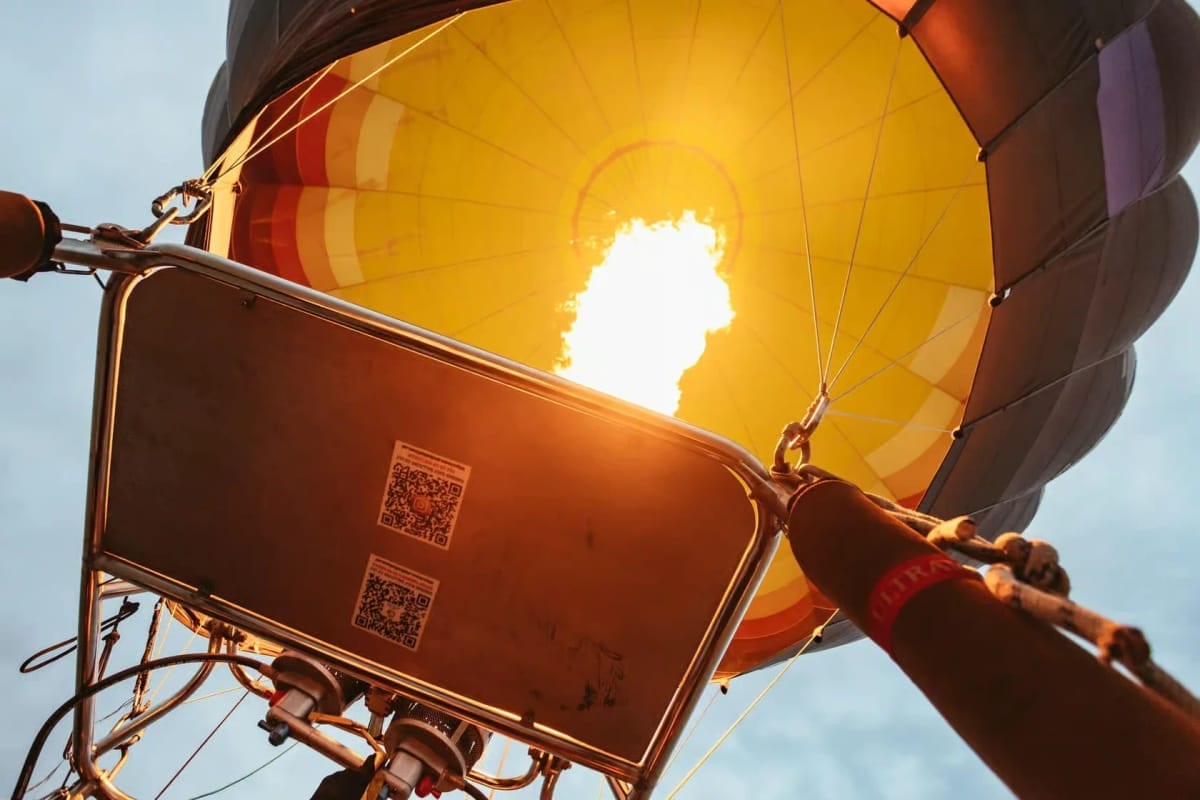
The first photo of the morning is the one most people miss because they are cold and half asleep. As the crew swaps the fans for the burners, each envelope lights up from inside like a lantern, orange against a navy sky. Stand back, switch off the flash, use night mode or a high ISO, and put a person in silhouette in front of it for scale.
 #2
Lift-off in the blue hour
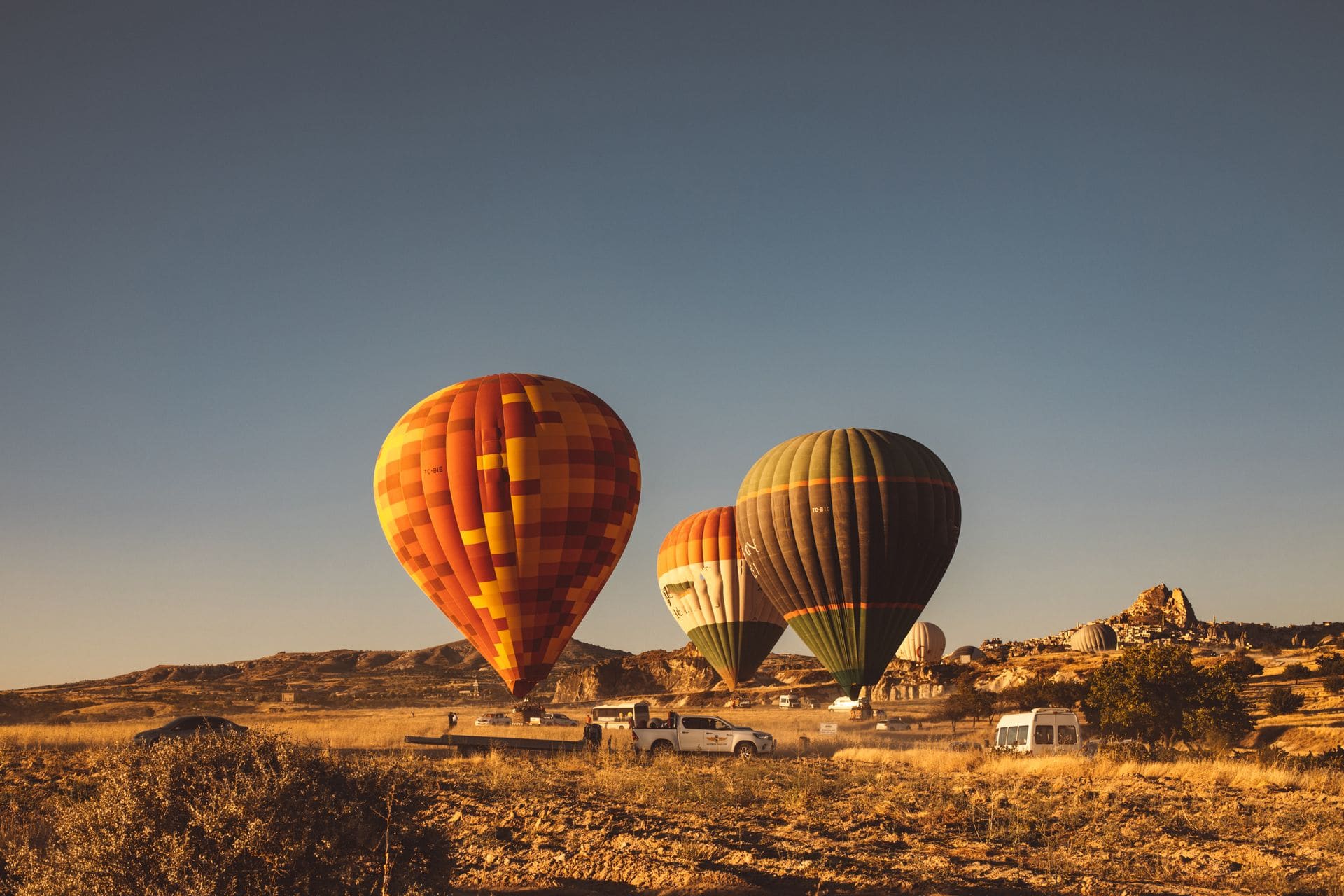
The basket leaves the sand so gently that most guests only notice when the ground crew are suddenly at knee height. Record it as video rather than stills: the burner roar, the silence between bursts, the 4x4s and the other balloons dropping away. Then look up and shoot the burner flame filling the envelope, the shot that says balloon better than any view.
 #3
First light from 2,000-4,000 feet
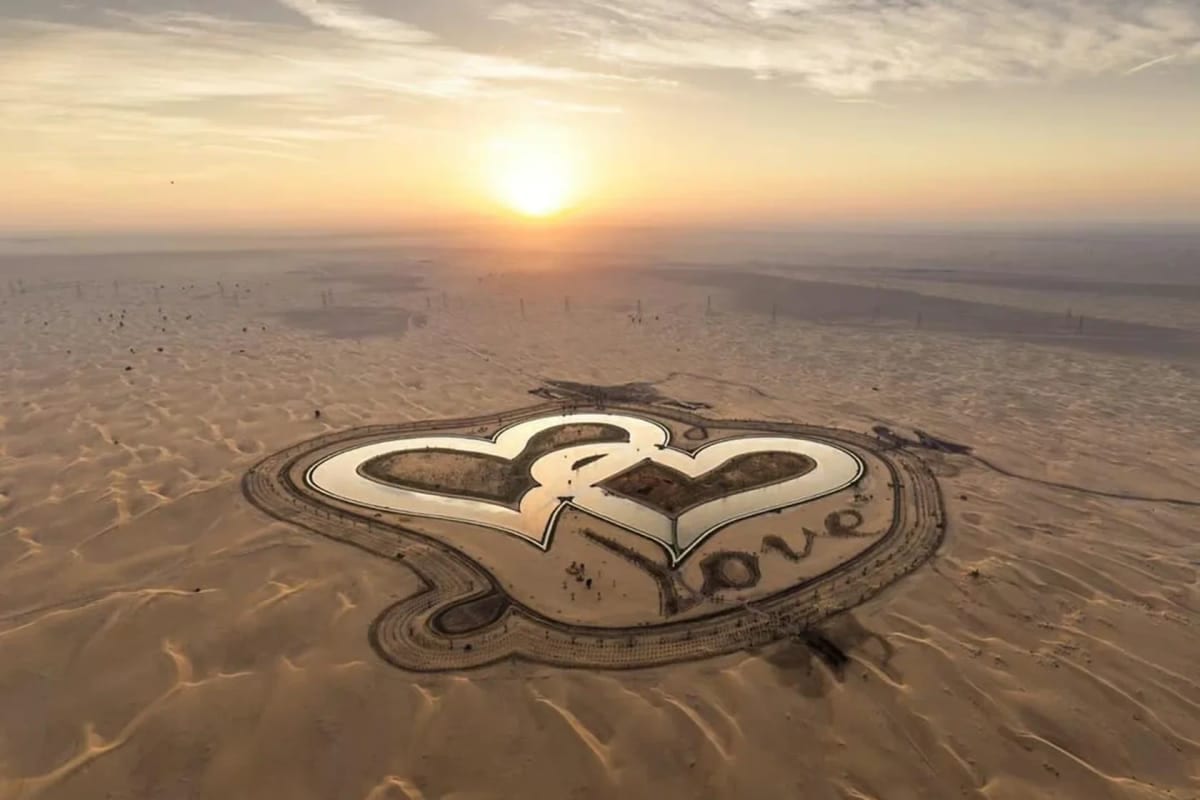
Sunrise arrives while you are already high, so you watch the sun clear the Hajar Mountains on the horizon and the dunes turn from grey to gold beneath you. Tap the bright part of the sky to lock exposure, let the dunes go dark for a silhouette frame, then a second frame exposed for the sand. The pilot turns the balloon slowly, so every side of the basket gets the sunrise.
 #4
Other balloons in the sky
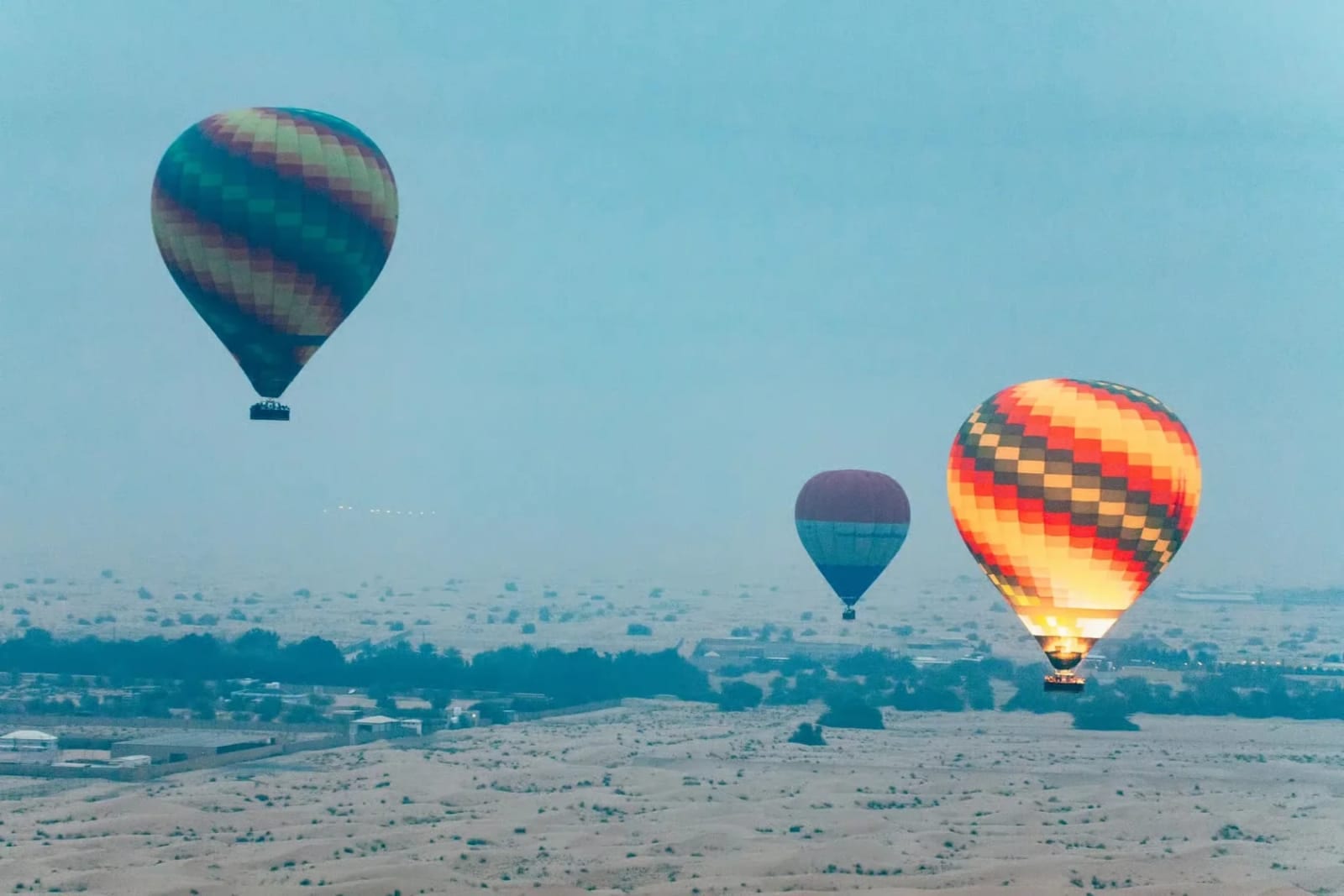
Several balloons fly the reserve on the same morning at different heights, and the picture of one hanging over the gold dunes below you is the one that ends up framed. Use the widest lens you have, put the other balloon in a third of the frame with dune ridges leading to it, and wait for the moment its burner fires, which lights the envelope from within.
 #5
The reserve below: oryx, gazelles, camels
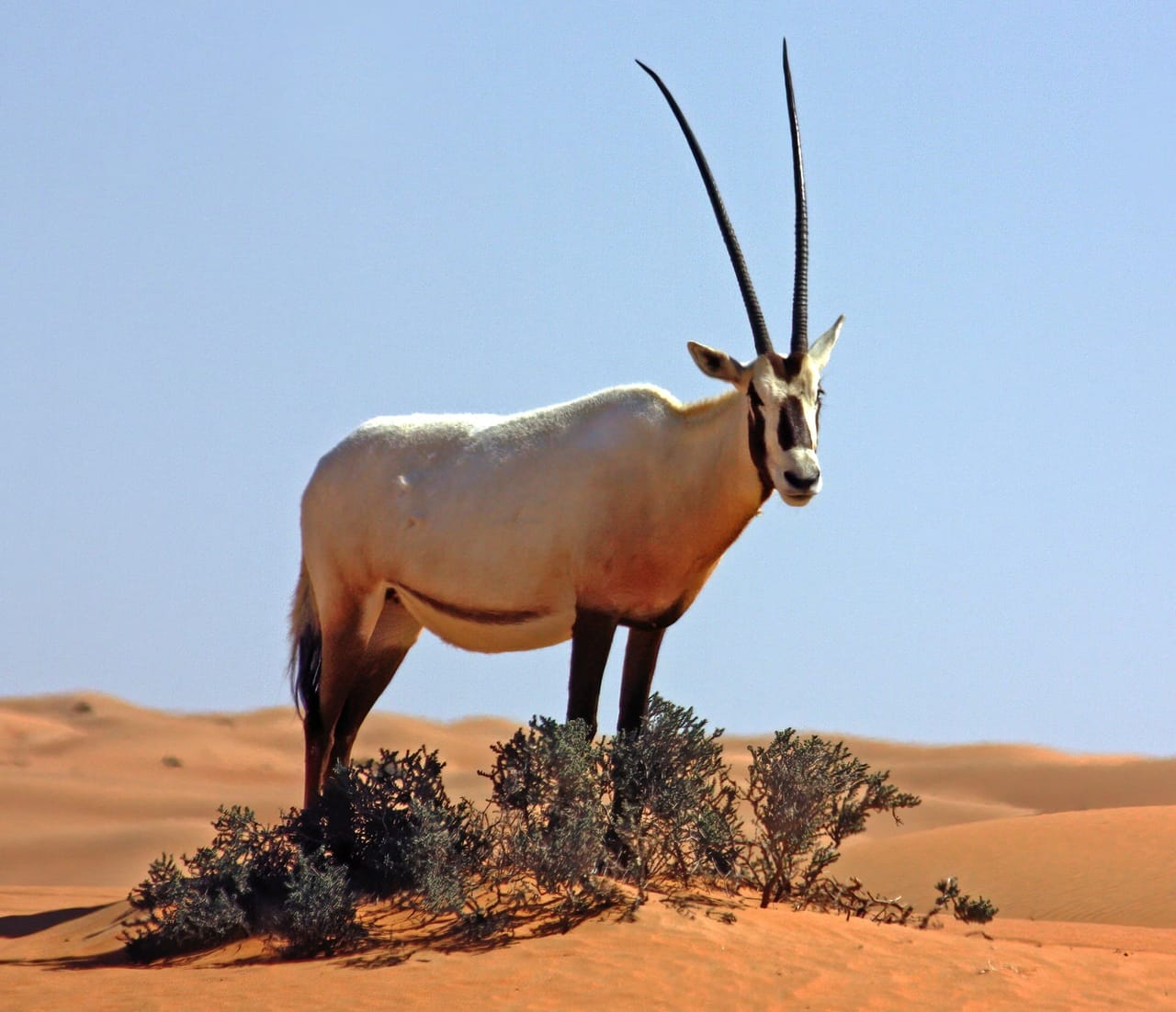
The white Arabian oryx stands out against orange sand even from height, and gazelles and lines of camels appear as the pilot drops lower. This is the one moment a phone struggles: use its 3x or 5x lens, or a camera with 200 mm or more, and shoot when the balloon is nearer 2,000 feet than 4,000. Do not expect frame-filling wildlife; expect animals in a landscape.
 #6
Landing, the Land Rover and the camp
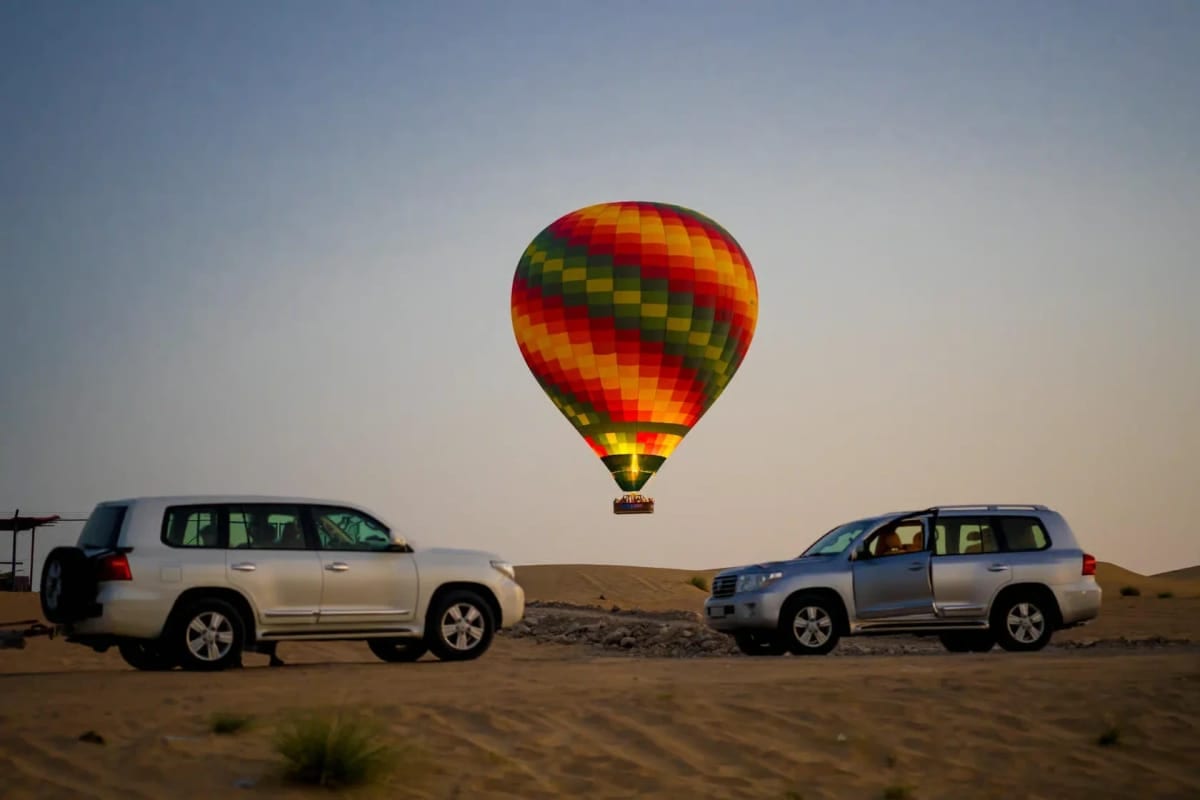
Cameras go away for the landing itself, then come straight back out: the envelope collapsing across the sand, the vintage Land Rover or SUV waiting, the basket on its side. At the private Bedouin camp the light is still low and warm for the short camel ride and the falcon session, where the bird sits on a glove on your hand and the dunes make the background.
The best photos on the Dubai balloon: the short answer
Everything about the sunrise balloon flight happens in good light. You reach the take-off site in the dark, lift off in the blue hour, watch the sun come up from 2,000-4,000 feet and land in full golden light 40-70 minutes later, then spend the next hour at a Bedouin camp with the sun still low. There is no bad-light stretch to wait out, which is why the flight is our first recommendation for photographers and for couples who want one great picture of the trip.
The six moments to plan for, in order: the glow of the burners inside the envelopes at inflation; lift-off; first light over the Hajar Mountains; other balloons in the sky with the dunes below; the animals of the Dubai Desert Conservation Reserve, oryx, gazelles and camels; and the landing, followed by the camel ride and the falcon photo at the camp. A phone on a strap covers five of the six. A camera with a zoom lens is worth carrying only if the animals matter to you.
The rest of this guide walks through each moment with the practical settings, the one piece of kit that changes the result, the rules of the basket (strap everything, no drones, hands free for landing) and what to do with the pictures while you are still in the air, since in-flight Wi-Fi is included at 4,000 feet.
Before the flight: the glow and the blue hour
The pre-dawn pickup delivers you to the site while it is fully dark. The crew unrolls the envelopes on the sand, cold-inflates them with large fans until they lie like beached whales, then fires the burners into the mouth of each one. That is the moment: for a minute or two the envelope glows from within, orange and translucent against a sky just turning navy, and the balloon slowly stands up beside you. If you shoot nothing else before sunrise, shoot this.
How: switch the flash off, because it will light the sand in front of you and kill the glow. On a phone use night mode and hold still, or brace your elbows on the 4x4. On a camera go to ISO 1600-3200, the widest aperture you have and around 1/30 second; the balloon is not moving fast. Put a person between you and the envelope for a silhouette, and get low so the balloon fills the frame against the sky rather than the ground crew's vehicles.
Then the safety briefing from the GCAA-licensed pilots, which is also your last chance to ask the practical question: which side of the basket will face the sunrise. The pilot knows, because the wind direction decides it, and the balloon rotates gently during the flight in any case. The blue hour lasts roughly the half hour before sunrise, and the light changes minute by minute, so keep shooting as you board.
Lift-off and first light
Lift-off is silent except for the burner, and it is undramatic in the best way: no lurch, no acceleration, just the ground crew getting smaller. Record it as a video clip from the moment the pilot says you are off, holding the phone level with the horizon, then tilt up to the flame roaring into the envelope. That flame shot, looking straight up from inside the basket, is the frame that says "we flew a balloon" more clearly than any landscape.
Sunrise comes while you are climbing. Across the flat horizon the Hajar Mountains stand up first, then the sun clears them and the light hits the tops of the dunes before it reaches the hollows, so the desert below turns from grey to gold in stripes. Two frames work here: one exposed for the sky, with the sun just above the ridge and the dunes dark, and one taken a few minutes later exposed for the sand, when the gold has spread and the shadows are long. On a phone, tap the sky to lock exposure for the first, tap the dunes for the second.
Keep the horizon level. A basket is a stable platform, more stable than a boat, and the temptation is to tilt the phone to fit in the other balloons; the picture always looks better straight. Shoot wide for the landscape and vertical for the phone screen, and remember the Wi-Fi: the first sunrise frame from the basket can be on its way to the family before you land.
The two photos everyone wants: other balloons, and the dunes turning gold
Ask a guest which picture they want and they describe the same one: another balloon hanging over the gold dunes below, seen from their own basket. Several balloons fly the reserve on a good morning at different heights, so at some point one will sit below you against the sand. Use the widest lens, put the balloon on a third line rather than dead centre, and let a dune ridge lead into it. Wait for its burner to fire; the envelope lights up for a second and the picture is made.
The second is the dunes themselves. From 2,000 feet the ripples in the sand read as texture, the crests catch the light and the hollows hold shadow; from 4,000 feet the desert becomes a pattern with the mountains as a hard edge. Shoot both, because they are different photographs: the lower one is about detail and the higher one about scale. The gold lasts most of the flight, since Dubai's low winter sun keeps the light warm for a good 30-40 minutes after sunrise, which is about the length of the flight itself.
One habit that pays off: look down as often as you look out. The most striking frames from a balloon are the ones nobody takes from the ground, the balloon's own shadow moving across the dunes, a camel track scored into a slope, the tiny 4x4 of the ground crew following below. They are also the ones that look most like the morning felt.
The reserve: photographing oryx, gazelles and camels from the air
The flight crosses the Dubai Desert Conservation Reserve, and the animals are real: Arabian oryx, white with black markings, sand gazelles and camels, often in lines. The oryx is the easy one, because white on orange sand shows up from surprising height. Gazelles are the colour of the sand and mostly give themselves away by moving. Camels are the biggest and the most common, and a string of them crossing a dune is the most photogenic of the three.
This is the one moment where kit matters. A phone's main lens will show you an oryx as a white dot; its 3x or 5x telephoto turns the dot into an animal, and a camera with a 200 mm lens or longer gives you a proper wildlife frame with the dunes as context. Shoot when the pilot brings the balloon lower, nearer 2,000 feet than 4,000, which happens on the approach to landing and often earlier in the flight too. Set a fast shutter, 1/500 or quicker, because the zoom magnifies every small movement of your hands.
Set expectations honestly: this is animals in a landscape, not a safari close-up. The pilots do not chase or herd the wildlife, the balloon goes where the wind goes, and some mornings the animals are simply on a different part of the reserve. Treat every sighting as the bonus it is, and treat the dunes as the guaranteed subject.
Landing, the Land Rover and the camp: the second half of the shot list
For the landing itself the camera goes away, and that is not optional. The pilot will tell you when to take the landing position, knees bent, hands on the rope handles inside the basket, backs to the direction of travel, and a phone in your hand at that moment is a phone that will be dropped. Strap it, pocket it, zip the pocket, then hold on. The basket touches down on sand, may bump or slide a little and settles. Then the cameras come straight back out, because the next five minutes are full of pictures.
The envelope is the first: as the pilot lets the air out it sinks and spreads across the dune like a dropped cloth, still glowing where the sun hits it. The basket lying on its side with the ground crew around it is the second, and the vintage Land Rover or SUV waiting on the sand, with the 4x4s of the other crews behind, is the third. The light is still low and warm, the sand is bright, and this is the most relaxed shooting of the morning because nobody is going anywhere for a few minutes.
At the private Bedouin camp the shot list ends with two set pieces: the short camel ride, best photographed from the ground with the sun behind the camera so the rider is lit, and the falcon session, where the bird sits on a glove on your hand and the handler stands beside you. Put the dunes behind you, not the camp furniture, and take the falcon frame in portrait mode. Your electronic flight certificate, signed by the pilot, arrives digitally afterwards and makes the last picture of the set.
Phone or camera? Kit, settings and what not to bring
For most guests the honest answer is the phone, and the table shows why: it wins or draws on five of the six moments. The camera earns its place for the animals and for anyone who wants large prints of the dunes. Either way the rules of the basket are the same, and they are about not losing your kit over the side.
- A strap, always: wrist strap for a phone, neck strap for a camera. There is no shelf in a basket and no recovery from 4,000 feet.
- Batteries: cold dawns drain them faster; start at 100% and keep a power bank in a zipped pocket.
- One lens: do not change lenses in a shared basket; there is no room, and the landing raises dust. A 24-70 mm or a 24-200 mm zoom is the practical choice.
- No tripod, no bag on the floor: the basket is shared and every foot of floor is somebody's standing room. A small bag can stay in the vehicle.
- No drones: not allowed on the flight or in the vehicles, and any drone in Dubai needs a DCAA permit in any case.
- Dust: wipe the lens before the flight and again after landing; a fingerprint from the cold-inflation stage ruins every sunrise frame after it.
- Hands free for landing: everything stowed when the pilot says so, without exception.
| Moment | Phone | Camera | Setting to start from |
|---|---|---|---|
| The glow at inflation | Night mode, flash off | ISO 1600-3200, wide open, 1/30 s | Brace on the vehicle, silhouette a person |
| Lift-off | Video, level horizon | Video or burst | Tilt up to the burner flame |
| First light | Tap the sky to lock exposure | Expose for the highlights, 1/250 s | Two frames: sky, then sand |
| Other balloons | Widest lens, rule of thirds | 24 mm or wider | Wait for their burner to fire |
| Animals below | 3x or 5x lens, still a small subject | 200 mm or longer, 1/500 s or faster | Shoot at the lower altitudes |
| Camp, camel, falcon | Portrait mode | 50-85 mm | Sun behind you, dunes behind them |
Sharing the photos, and where the morning goes next
In-flight Wi-Fi is part of the package, so the sunrise frame can go out from the basket rather than from the hotel four hours later. The better habit is to post one and keep shooting; the golden light is short and the reserve does not repeat itself. Back at the hotel by mid-morning, you have the flight, the camp and the certificate, and the rest of the day for the second half of the Dubai album.
Two of our tours are built around the same low light at the other end of the day. The full-day desert safari reaches the Lahbab Red Dunes for sunset, the camel silhouettes and the couple-on-a-dune picture, from $45 with hotel pickup and no prepayment. The 1-hour shared yacht cruise puts the Marina towers, JBR and Ain Dubai behind you from the water, from $32, and the crew are used to helping with the photos; for a photographer who wants the deck to themselves and the Palm from the sea, a private charter starts from AED 400 per hour for a 31 ft boat with captain and crew.
For the wider shot list across the city, from Burj Park to the Palm from The View, see best photo spots in Dubai and best sunset spots in Dubai. For the balloon itself, what to wear covers the layers and the zipped pockets that keep your kit safe, season and weather explains when the light and the wind are kindest, and if the picture you are planning has a ring in it, proposing on the Dubai balloon is the guide to read next.
FAQ
What are the best photos to take on a Dubai hot air balloon flight?
Six moments in order: the burner glow inside the envelope at inflation, lift-off in the blue hour, the sun rising over the Hajar Mountains from 2,000-4,000 feet, the other balloons over the gold dunes, the oryx and gazelles of the reserve below, and the landing followed by the camel ride and the falcon photo at the camp. The 40-70 minute flight is entirely in the best light of the day.
Is a phone good enough for hot air balloon photos?
Yes for five of the six moments. Use night mode without flash for the glow, video for lift-off, tap the sky to lock exposure at sunrise, the widest lens for the other balloons and portrait mode at the camp. The one weakness is the animals below, where the 3x or 5x lens helps but a camera with 200 mm or more does better. Keep the phone on a wrist strap.
Can I fly a drone from the balloon or at the camp?
No. Drones are not allowed on the flight or in the vehicles, along with pets, large luggage, smoking and alcohol, and any drone in Dubai needs a DCAA permit under local law. The balloon itself is the aerial platform: 2,000-4,000 feet over the reserve, with the pilot turning the basket so every side gets the view.
Can you see and photograph animals from the balloon?
Usually. The flight crosses the Dubai Desert Conservation Reserve, home to Arabian oryx, sand gazelles and camels. The white oryx shows up from height; gazelles are sand-coloured and harder. Shoot when the pilot brings the balloon lower, with a zoom lens and a shutter of 1/500 or faster, and expect animals in a landscape rather than close-ups. Sightings depend on where the wind takes you.
Can I post photos from the balloon during the flight?
Yes. In-flight Wi-Fi at 4,000 feet is included in the $275 package, so a sunrise frame can go out from the basket. Post one and keep shooting; the golden light lasts roughly the length of the flight and the animals below do not wait. Your electronic flight certificate, signed by the pilot, arrives digitally afterwards.
What camera settings work for sunrise from a hot air balloon?
Start at 1/250 second for landscapes and 1/500 or faster with a zoom for animals, aperture f/5.6-8, auto ISO. Expose for the sky at first light and let the dunes go dark, then take a second frame for the sand once the gold spreads. At inflation in the dark, ISO 1600-3200 and 1/30 second wide open. Keep the horizon level; the basket is steadier than it feels.
Do I get a photo with the falcon after the flight?
Yes. The falcon photo session at the private Bedouin camp is included, together with the gourmet breakfast, the short camel ride and the electronic flight certificate. The bird sits on a glove on your hand with the handler beside you; ask for the dunes as the background and take the frame in portrait mode while the sun is still low.
Recommended Dubai tours for this guide
Sunrise Hot Air Balloon in Dubai
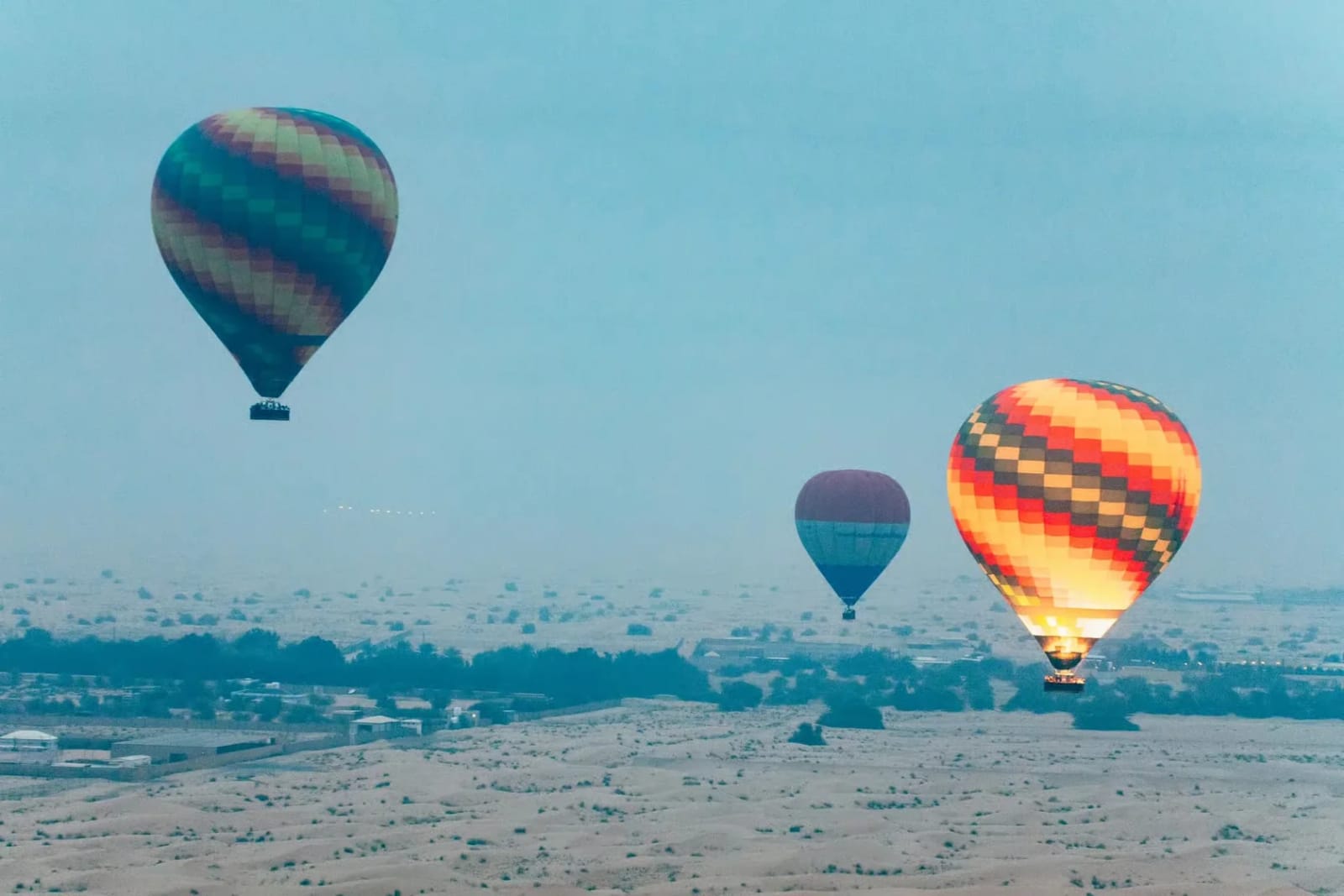
It is the desert from above at first light: gazelles, oryx and camels in the Dubai Desert Conservation Reserve, the Hajar Mountains on the horizon and the dunes turning gold. After landing a vintage Land Rover or SUV takes you to a private Bedouin camp for a gourmet breakfast (veg and non-veg options), a short camel ride and a falcon photo, and every guest gets an electronic flight certificate signed by the pilot.
- Duration
- 4-5 hours
- Area
- Dubai Desert Conservation Reserve
- Format
- Shared sunrise balloon flight with breakfast
- Best for
- couples, photographers and anyone who wants the desert at sunrise from above
From $275 per person 30% deposit
View tour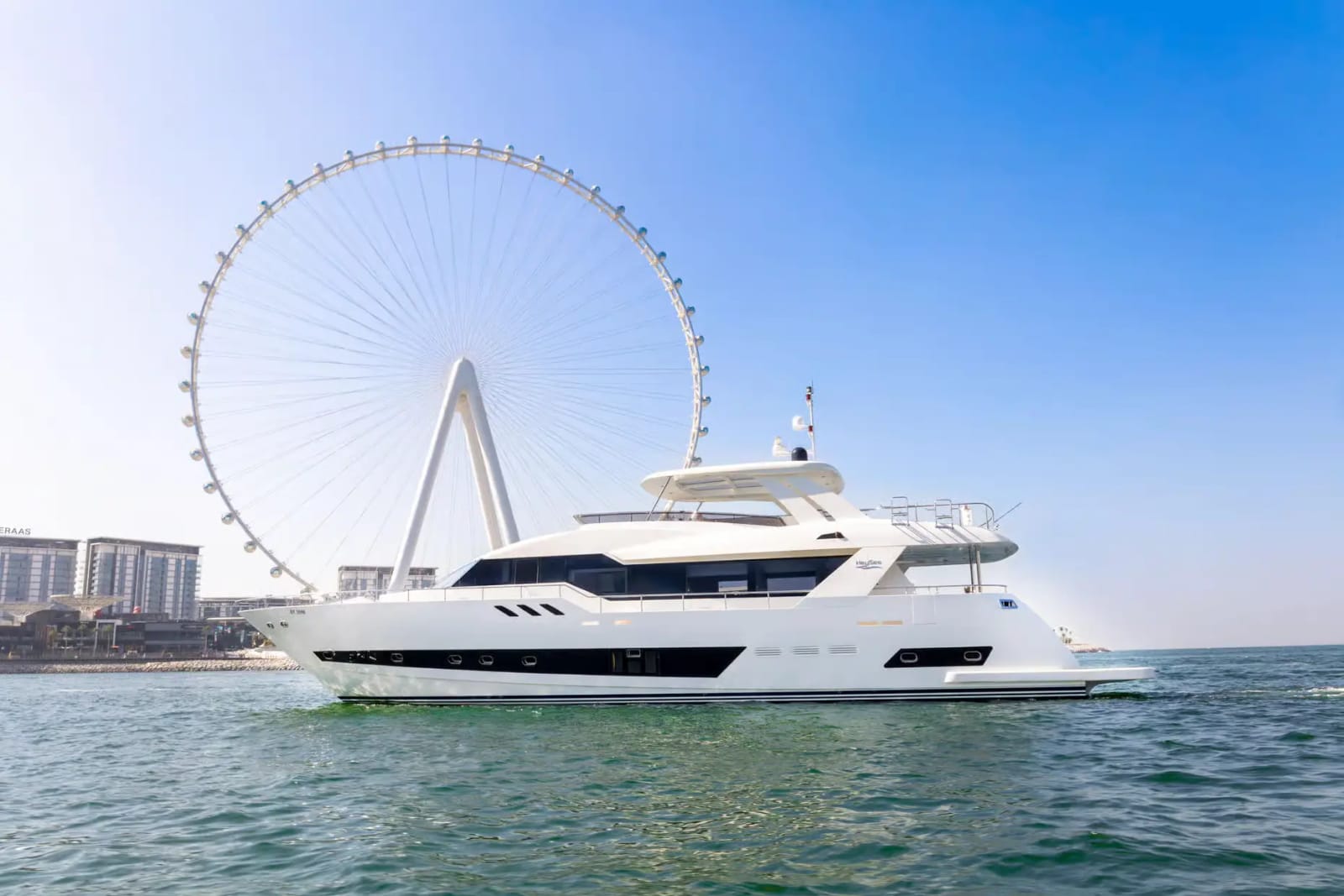
Dubai Marina Shared Yacht Tour
It is the most stylish way to see the skyline without paying for a private charter: a premium yacht with spacious decks and 5-star hospitality, a red carpet at the pier and the crew helping with photos against JBR and Ain Dubai. Full pre-payment secures your slot — the hourly departures sell out — and the yacht leaves strictly on time.
- Duration
- 1 hour
- Area
- Dubai Marina
- Format
- Shared 1-hour sightseeing cruise
- Best for
- families, couples and anyone who wants the Marina skyline from the water without a private charter
From $32 per person Full prepayment
View tour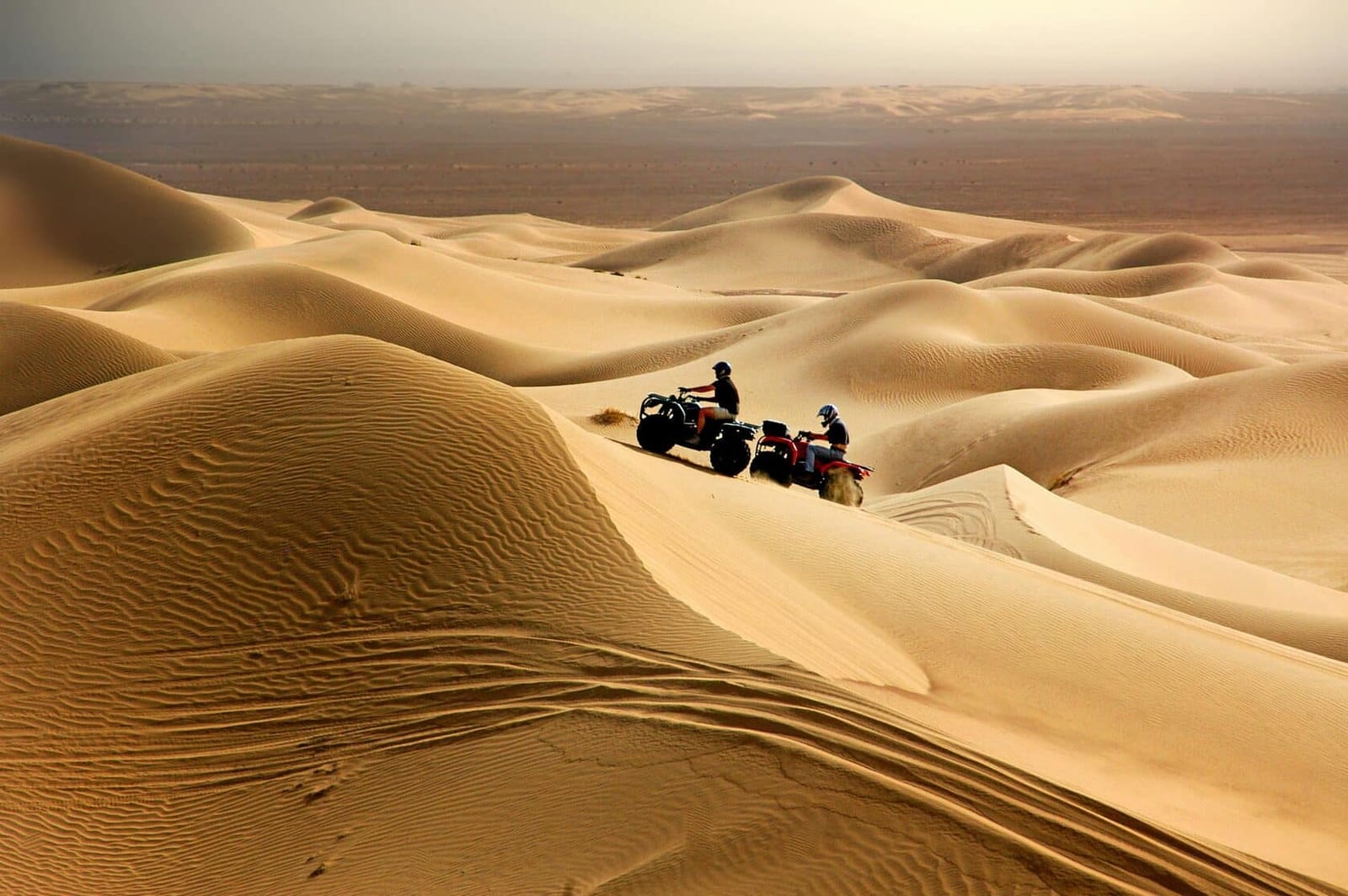
Full-Day Desert Safari in Dubai
It is the slow-travel version of the classic safari: more time on the dunes, sunset without the crowds and a full evening programme at a premium camp with air-conditioned tents, unlimited drinks and a large BBQ buffet with vegetarian and gluten-free options. Everything is arranged from the hotel door — a licensed English-speaking driver, the 4x4, the camp and the shows.
- Duration
- 7 hours
- Area
- Lahbab Desert, Dubai
- Format
- Full-day desert safari
- Best for
- families, couples and first-time desert visitors who want the full evening programme
From $45 per person No prepayment
View tour📚 Keep reading
Photos: The reserve below: oryx, gazelles, camels — Charles J. Sharp, CC BY-SA 3.0 (Wikimedia Commons).