

Light, breathable clothes you do not mind filling with sand, closed shoes or sandals, a hat, sunglasses, high-SPF sunscreen — and a layer for after sunset. That is the whole answer for our full-day desert safari, and the details depend on the month: from November to March the camp drops to 14-20°C after dark and you want a light jacket; from May to September the afternoon on the dunes is 38-45°C and the jacket stays at the hotel. Add trainers and long trousers if you are riding the $65 quad bike. Here is the rundown by season, by activity and by what goes in the bag.
By SB Excursions · Published 15 September 2026 · Updated 23 October 2026
Tour on this route: Full-Day Desert Safari in Dubai — From $45 per person, 7 hours.
What should I wear on a desert safari in Dubai?
Light, breathable clothes — a T-shirt or loose long sleeve with shorts, trousers or a long skirt — comfortable closed shoes or sandals, sunglasses, a sun hat and high-SPF sunscreen. From December to February bring a light jacket for the camp, where the evening is 14-20°C; from May to September the afternoon is 38-45°C and the jacket stays at the hotel. Closed shoes and long trousers for the quad bike.
This guide also answers:
- Is it cold in the desert at night?
- What should I wear for quad biking in the desert?
- Do women need to cover up on a desert safari?
Dress for the four parts of the day
 #1
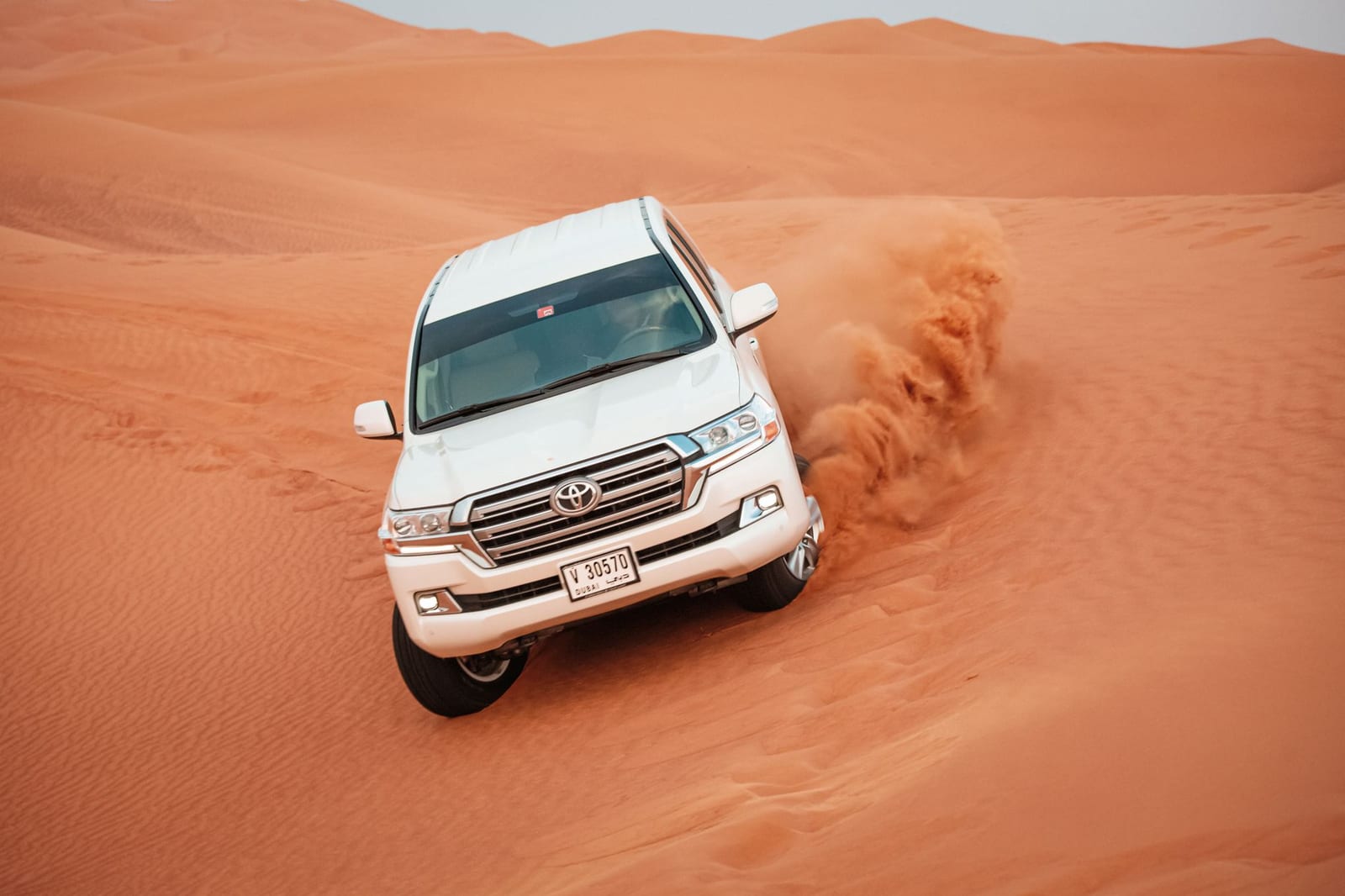
The 4x4 and the dune bashing
You are strapped into an air-conditioned 4x4 for a rollercoaster on sand. Wear something you can sit in for an hour and that will not ride up, keep sunglasses on for the moments the windows open, and leave anything that dangles — long scarves, big earrings, loose caps — in the hotel safe.
 #2
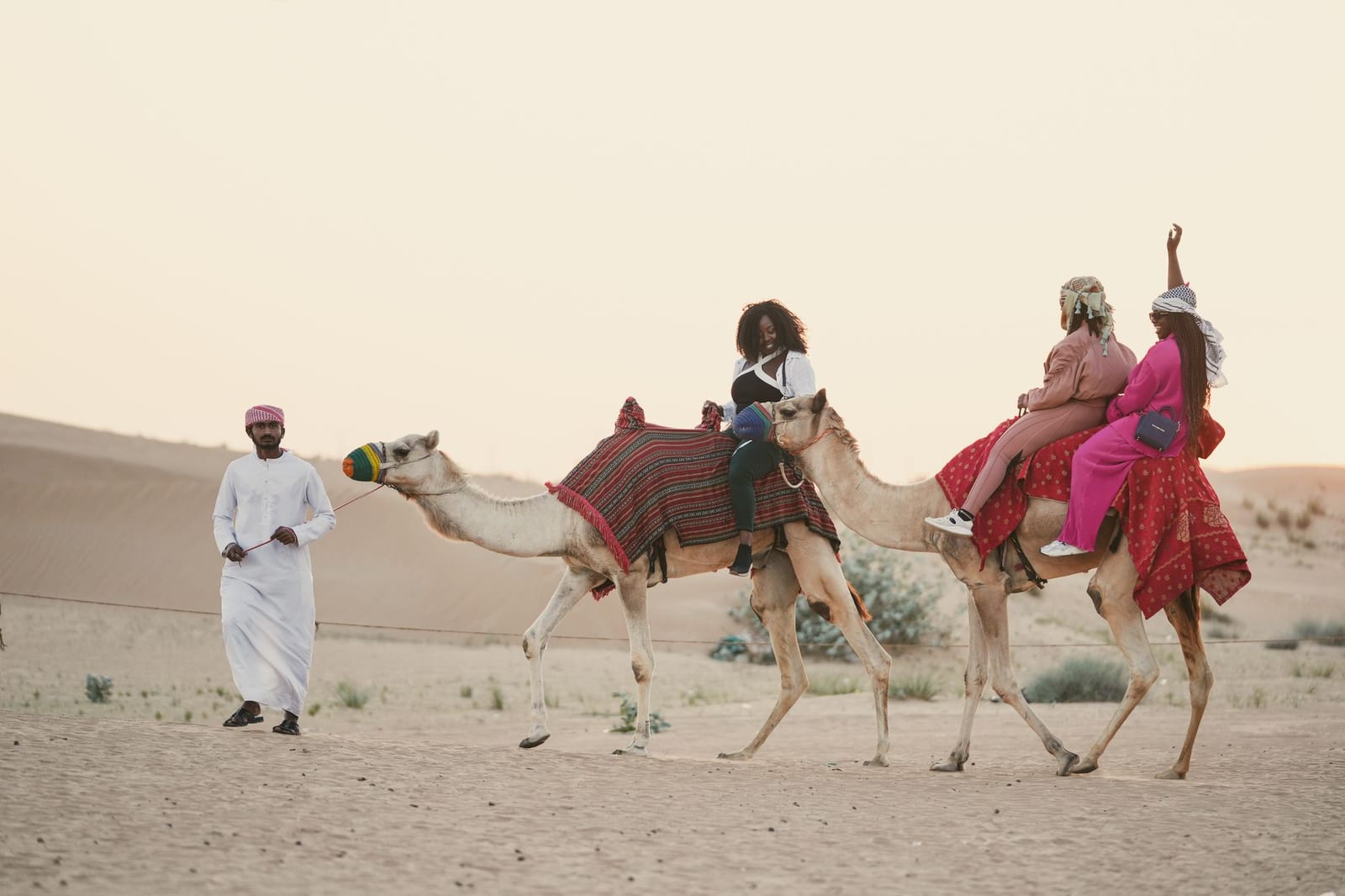
Sandboarding and the camel ride
Sand up to the ankle and the sun still high. Sandals you can empty or trainers you can shake out both work; a hat and sunglasses are not optional, and a light long sleeve protects arms better than sunscreen alone. Trousers or a long skirt make the camel easier to mount and dismount.
 #3
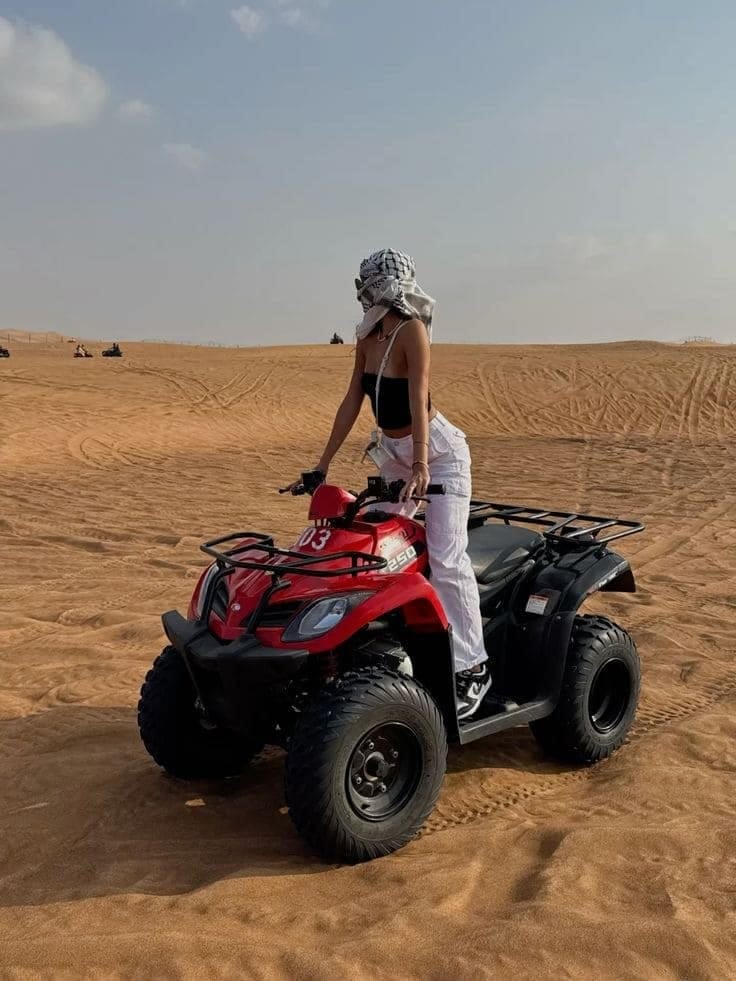
The quad bike or buggy
The one part of the day with a real dress rule: closed shoes, long trousers and sunglasses or goggles, because sand comes off the wheels at speed. Tie hair back, empty your pockets into a bag, and put on whatever safety gear the guide hands you before you start the engine.
 #4
Sunset and the camp
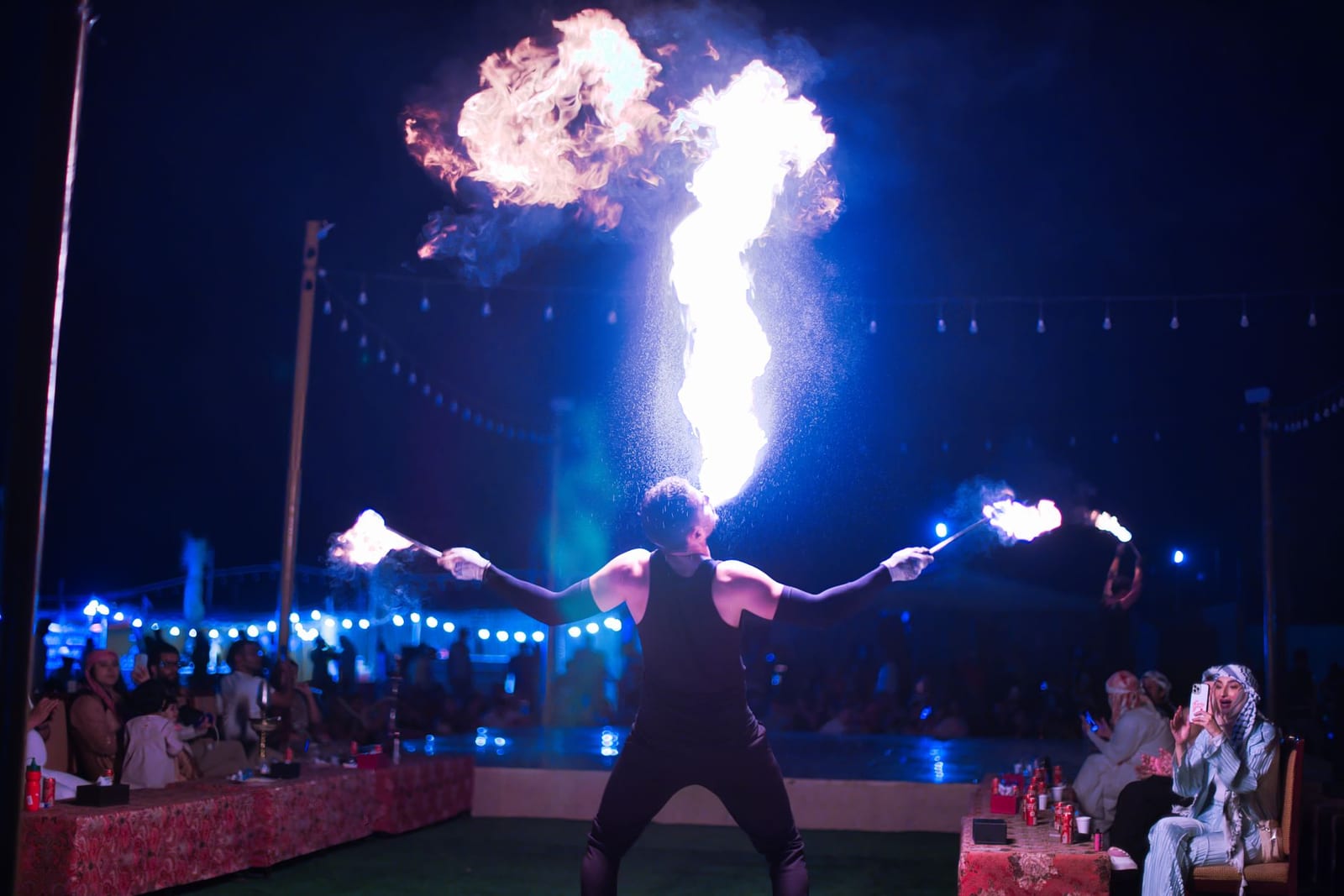
The desert cools fast once the sun goes. In winter the camp is 14-20°C after dark and a light jacket or pashmina is the difference between enjoying the fire show and shivering through it. In summer the tents are air-conditioned and a thin layer is more than enough.
What to wear on a desert safari: the short answer
Wear light, breathable clothing — cotton or linen, a T-shirt or a loose long sleeve, shorts, trousers or a long skirt — with comfortable closed shoes or sandals, sunglasses, a sun hat and high-SPF sunscreen. Bring a light jacket for the evening between December and February, and trainers and long trousers if you are booking the quad bike. That is the advice we give for our own full-day safari, and it applies to every safari in Dubai.
There is no dress code on the safari beyond common sense. Shorts and T-shirts are normal on the dunes and at the camp; the polite Dubai standard of covered shoulders and knees applies in malls, Old Dubai and mosques, not in the desert. Dress as you would for a hot beach day with a rough car ride in the middle, and pack for the temperature drop.
The rest of this guide goes through the seasons, the shoes, the sun, the sunset chill, the quad bike rules and the packing list — the things that decide whether the 7 hours are comfortable.
By season: what the desert feels like at pickup and at the camp
Dubai has two desert seasons and two shoulder months, and the difference between an afternoon pickup and a camp after dark is 10°C or more in winter. This is the table we use when guests ask what to pack.
| Months | Afternoon on the dunes | Evening at the camp | What to wear |
|---|---|---|---|
| November to March | 20-30°C, sunny and dry | 14-20°C, coolest in January | T-shirt and trousers or a long skirt; a light jacket, hoodie or pashmina for the camp; closed shoes or sandals |
| April and October | 30-38°C | Warm and pleasant | Light and breathable; a thin layer for the tents' air conditioning; a hat is essential |
| May to September | 38-45°C, humid from July | 30°C or more | The lightest fabrics you own, a hat, sleeves against the sun; no jacket — the tents are air-conditioned |
Sunset is about 5:30 PM in December and about 7:10 PM in June; the camp programme follows it. Rare rain showers happen between December and March.
Winter is the season the safari is famous for, and the one that catches people out: a 28°C afternoon turns into a 15°C night, and the fire show is outdoors. Summer runs the other way — see the desert safari in summer for how the 7 hours work in the heat, and the month-by-month guide for each month's temperatures and sunset times.
Three outfits that work, head to toe
Most guests fall into one of three cases: a winter safari, a summer safari, or a safari with the quad bike or buggy added. This is the same outfit built three ways, and any of them is right for the camel, the camp and the photos.
| Winter (November-March) | Summer (May-September) | With the quad bike or buggy | |
|---|---|---|---|
| Top | T-shirt or thin long sleeve | The lightest T-shirt or linen shirt, sleeves for the sun | A long sleeve you can get dusty |
| Bottom | Trousers, jeans or a long skirt | Shorts, loose trousers or a long skirt | Long trousers, always |
| Shoes | Trainers or closed sandals, spare socks | Sandals you can empty, or trainers | Trainers or closed shoes, no sandals |
| Head and eyes | Hat, sunglasses | Wide-brimmed hat, sunglasses, scarf | Sunglasses or goggles, hair tied back |
| Layer | Light jacket, hoodie or pashmina for the 14-20°C camp | None, or a thin layer for the air-conditioned tent | As the season |
| Bag | Small backpack, sealed bag for the phone | The same, plus sunscreen to reapply | The same, and everything out of your pockets before you ride |
April and October sit between the two columns: dress for summer in the afternoon and carry the thin layer.
One outfit covers the whole 7 hours — there is nowhere to change on the dunes, and the camp is where you arrive as you are. If you are booking the $65 quad bike version, dress for the right-hand column from the moment you leave the hotel and you will not have to think about it again.
Shoes: the sand decides
Sand on the Big Red is fine, deep and hot in the afternoon, and every activity involves walking through it. Two kinds of footwear work: sandals you can empty in a second and trainers you do not mind shaking out at the hotel. Flip-flops come off on the dune faces, heels do not belong anywhere near the desert, and anything suede or white will come home a different colour.
For sandboarding, most people go barefoot or in socks on the board — the sand is soft and the landing is sand. For the camel ride, closed shoes make mounting easier. For the quad bike or buggy, closed shoes are the rule, not a preference. Bring a spare pair of socks in the bag: the evening at the camp is nicer with clean feet, and the 45-60 minute drive home is nicer still.
Sun and sand: hat, sunglasses, sunscreen and a scarf
The afternoon part of the safari happens under a sun that is strong in every month, and the glare off the sand adds to it. Sunglasses do two jobs: the glare, and the sand that blows into the 4x4 when the windows open and off the quad bikes at speed. A hat with a brim beats a cap on the camel and at the sunset stop. Apply high-SPF sunscreen before pickup and again after sandboarding; the convoy does not wait while you look for it.
A light cotton scarf is the most useful single item on the list: sun on the neck, wind on the dune ridges, sand when a quad passes, and a warm layer at the camp in winter. A thin long-sleeved shirt over a T-shirt does the same for arms, and is cooler than bare skin in direct sun.
The sunset chill: why you need a layer after a 35°C afternoon
Desert air holds no heat once the sun goes. Between November and March the drop from the afternoon to the camp is 10°C or more, and the camp evening — dinner, henna, the fire show, the Tanoura — happens mostly outdoors around the stage, with the air-conditioned tents there for the heat rather than the cold. A light jacket, a hoodie or a pashmina in the bag weighs nothing and is used on every winter night.
In April and October a thin layer is enough. From May to September the evening is still 30°C or more and the layer is for the tents' air conditioning, if at all. Whatever the month, the drive back is 45-60 minutes in an air-conditioned 4x4, so a sweatshirt to wear or lean on is never wasted.
Quad bike and buggy gear: the one part with real rules
The optional quad bike or dune buggy session — $65 or $240 with the whole safari — is self-drive, around 30 minutes, in a designated area of the dunes, and the guide's instructions are followed at all times. The clothing rules are the same as for any off-road machine.
- Closed shoes — trainers, not sandals; your feet sit on footpegs or pedals with sand flying past them.
- Long trousers — sand off the front wheels stings bare shins, and the seat and engine get hot in summer.
- Sunglasses or goggles — non-negotiable; the rider in front of you is throwing sand backwards.
- Hair tied back, pockets empty — phones and sunglasses cases go in a zipped bag with the driver, not in your shorts.
- Whatever safety gear the guide provides, put on before you start; no driving licence is needed, and under-16s ride accompanied by an adult.
- Skip it if you are pregnant or have a back or heart problem — the same rule as the dune bashing.
What to bring, and what to leave at the hotel
The 4x4 has room for a small bag, the camp has tables, and everything else is sand. This is the list we recommend.
- A small backpack or tote — hands free for the dunes, closed against sand.
- A sealed bag for phone and camera — a zip bag or a proper dry bag; sand is the enemy of lenses and charging ports. Drones need the DCAA permit Dubai law requires, so leave the drone unless you hold one.
- A power bank — the sunset and the fire show empty a phone battery faster than you expect.
- A refillable bottle, optional — unlimited chilled water, soft drinks, tea and Arabic coffee are included, so this is convenience, not need.
- Motion-sickness tablets if you get carsick, taken as the packet says before pickup, and a light meal 2-3 hours before, not a heavy one.
- Cash for tips, optional — a tip for the driver-guide is welcome but never required in Dubai.
- Leave behind: jewellery you would mind losing in the sand, heels, white trousers, suitcases, and anything loose that can fly out of a 4x4 with the window open.
Dress for the photos
The safari photos are taken in two lights: the bright afternoon on red sand and the golden hour before sunset. Plain colours photograph best against the dunes — white, cream, sand, deep blue, rust — and flowing fabrics move in the wind on the ridge. Black absorbs the afternoon heat and disappears at dusk.
Practicalities beat style at three moments: the dune bashing (nothing loose), the camel (trousers or a long skirt rather than a short dress) and the quad bike (closed shoes, long trousers). Change nothing else. For the rest of Dubai's dress rules — malls, Old Dubai, the Grand Mosque on the Abu Dhabi tour, the yacht party — see the Dubai dress code guide and what to wear on a yacht.
If you are also flying the sunrise balloon, that is a different wardrobe altogether — closed-toe shoes and layers for a cold dawn in the desert; what to wear for the balloon has the details.
FAQ
What should I wear on a desert safari in Dubai?
Light, breathable clothes — a T-shirt or loose long sleeve with shorts, trousers or a long skirt — comfortable closed shoes or sandals, sunglasses, a sun hat and high-SPF sunscreen. From December to February bring a light jacket for the camp, where the evening is 14-20°C; from May to September the afternoon is 38-45°C and the jacket stays at the hotel. Closed shoes and long trousers for the quad bike.
Can I wear shorts on a desert safari?
Yes. Shorts and T-shirts are normal on the dunes and at the camp; there is no dress code on the safari beyond common sense. The covered-shoulders-and-knees standard applies in Dubai's malls, Old Dubai and mosques, not in the desert. Long trousers are only required if you ride the quad bike or buggy, and they make the camel ride easier.
Sandals or trainers for a desert safari?
Either, as long as you can empty them. Sandals are cooler in summer and quick to shake out; trainers are better for the camel ride and mandatory for the quad bike. Avoid flip-flops, which come off on the dune faces, and anything white or suede. Bring a spare pair of socks for the camp and the drive home.
Is it cold in the desert at night?
In winter, yes: between November and March the camp drops to 14-20°C after dark, with January the coolest, against a 20-30°C afternoon. A light jacket, hoodie or pashmina is enough. From May to September the night stays at 30°C or more and the only cool place is the air-conditioned tent.
What should I wear for quad biking in the desert?
Closed shoes such as trainers, long trousers, and sunglasses or goggles, with hair tied back and pockets emptied. Put on whatever safety gear the guide provides and follow the instructions; no driving licence is needed and under-16s ride accompanied by an adult. The session is around 30 minutes and costs $65 with the whole safari, or $240 in a dune buggy.
Do women need to cover up on a desert safari?
No. The safari has no dress code; shorts, T-shirts and dresses are all normal on the dunes and at the camp. A light scarf is useful for sun, wind and the winter evening rather than for modesty. A long skirt or trousers is simply more practical for the camel ride and the 4x4, and a short dress is the one thing to avoid.
Do I need to bring water or food on the safari?
No. Unlimited chilled water, soft drinks, tea and Arabic coffee are included throughout the tour, and the BBQ buffet dinner at Al Khayma camp is part of the $45 price. The only food advice is negative: avoid a heavy meal in the 2-3 hours before pickup, because dune bashing and a full stomach do not mix.
Recommended Dubai tours for this guide
Full-Day Desert Safari in Dubai
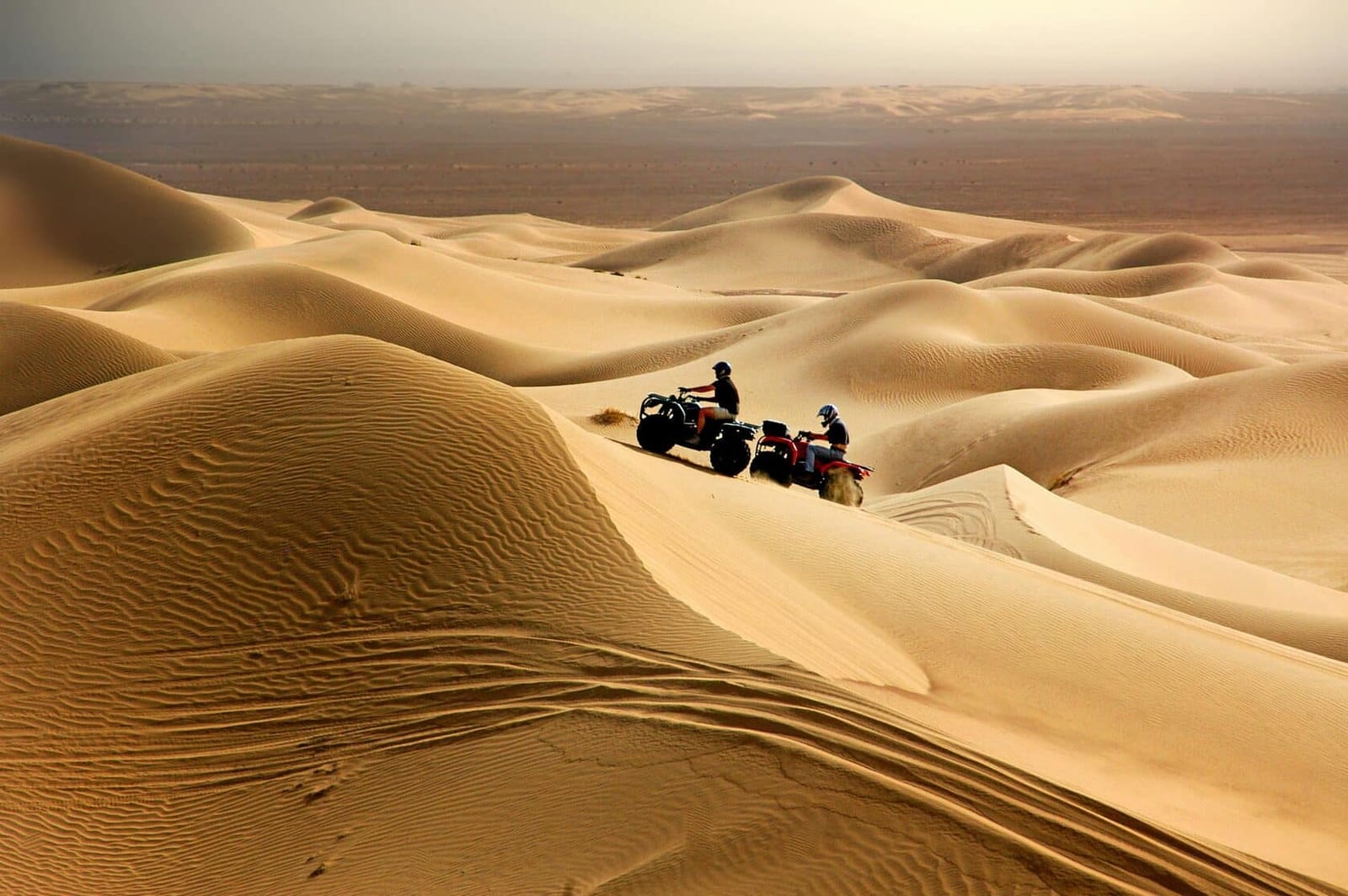
It is the slow-travel version of the classic safari: more time on the dunes, sunset without the crowds and a full evening programme at a premium camp with air-conditioned tents, unlimited drinks and a large BBQ buffet with vegetarian and gluten-free options. Everything is arranged from the hotel door — a licensed English-speaking driver, the 4x4, the camp and the shows.
- Duration
- 7 hours
- Area
- Lahbab Desert, Dubai
- Format
- Full-day desert safari
- Best for
- families, couples and first-time desert visitors who want the full evening programme
From $45 per person No prepayment
View tour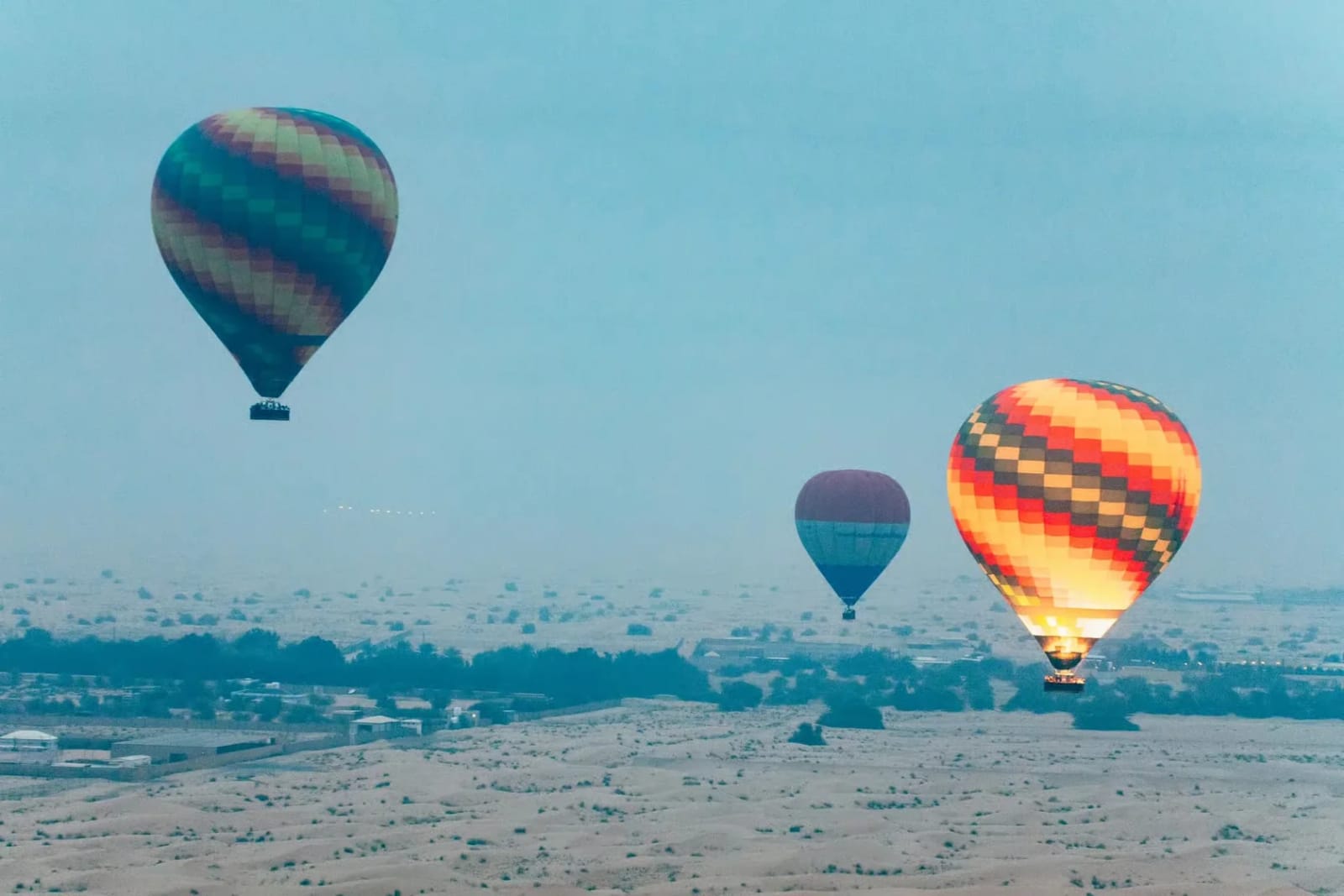
Sunrise Hot Air Balloon in Dubai
It is the desert from above at first light: gazelles, oryx and camels in the Dubai Desert Conservation Reserve, the Hajar Mountains on the horizon and the dunes turning gold. After landing a vintage Land Rover or SUV takes you to a private Bedouin camp for a gourmet breakfast (veg and non-veg options), a short camel ride and a falcon photo, and every guest gets an electronic flight certificate signed by the pilot.
- Duration
- 4-5 hours
- Area
- Dubai Desert Conservation Reserve
- Format
- Shared sunrise balloon flight with breakfast
- Best for
- couples, photographers and anyone who wants the desert at sunrise from above
From $275 per person 30% deposit
View tour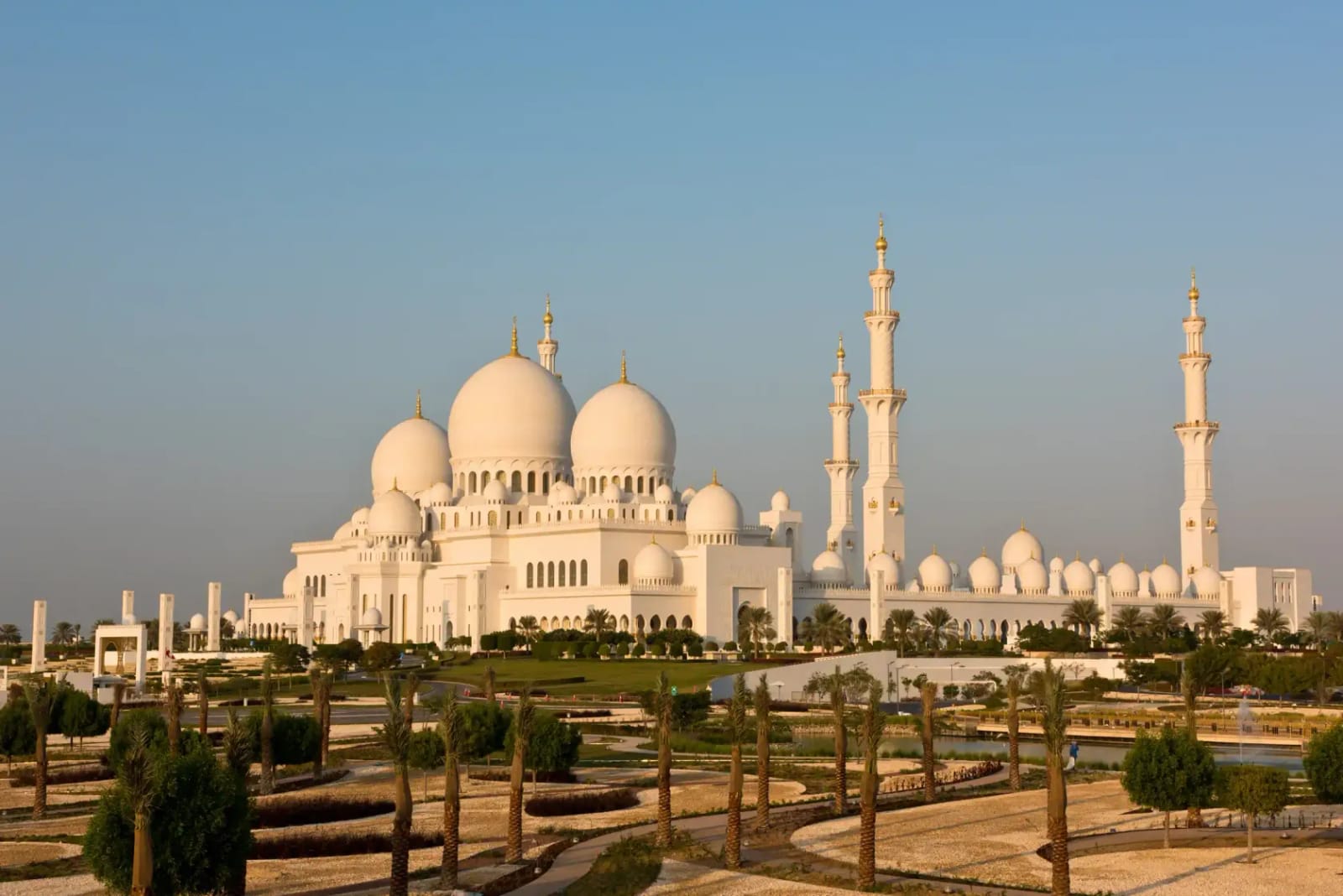
Abu Dhabi City Tour from Dubai
It is the classic capital day in one organised loop: the mosque before the midday heat and crowds, the newly opened BAPS Mandir, the skyline from the Corniche, Bedouin history at Heritage Village and a photo op at Ferrari World. Transport, a licensed guide, mosque registration assistance and bottled water are included; the $45 shared tour covers all free-entry sites, and a private VIP car for up to 7 people is $245.
- Duration
- 9 hours
- Area
- Abu Dhabi, UAE
- Format
- Full-day guided city tour (shared or private)
- Best for
- families, seniors and first-time visitors who want the capital's landmarks in one day
From $45 per person No prepayment
View tour