

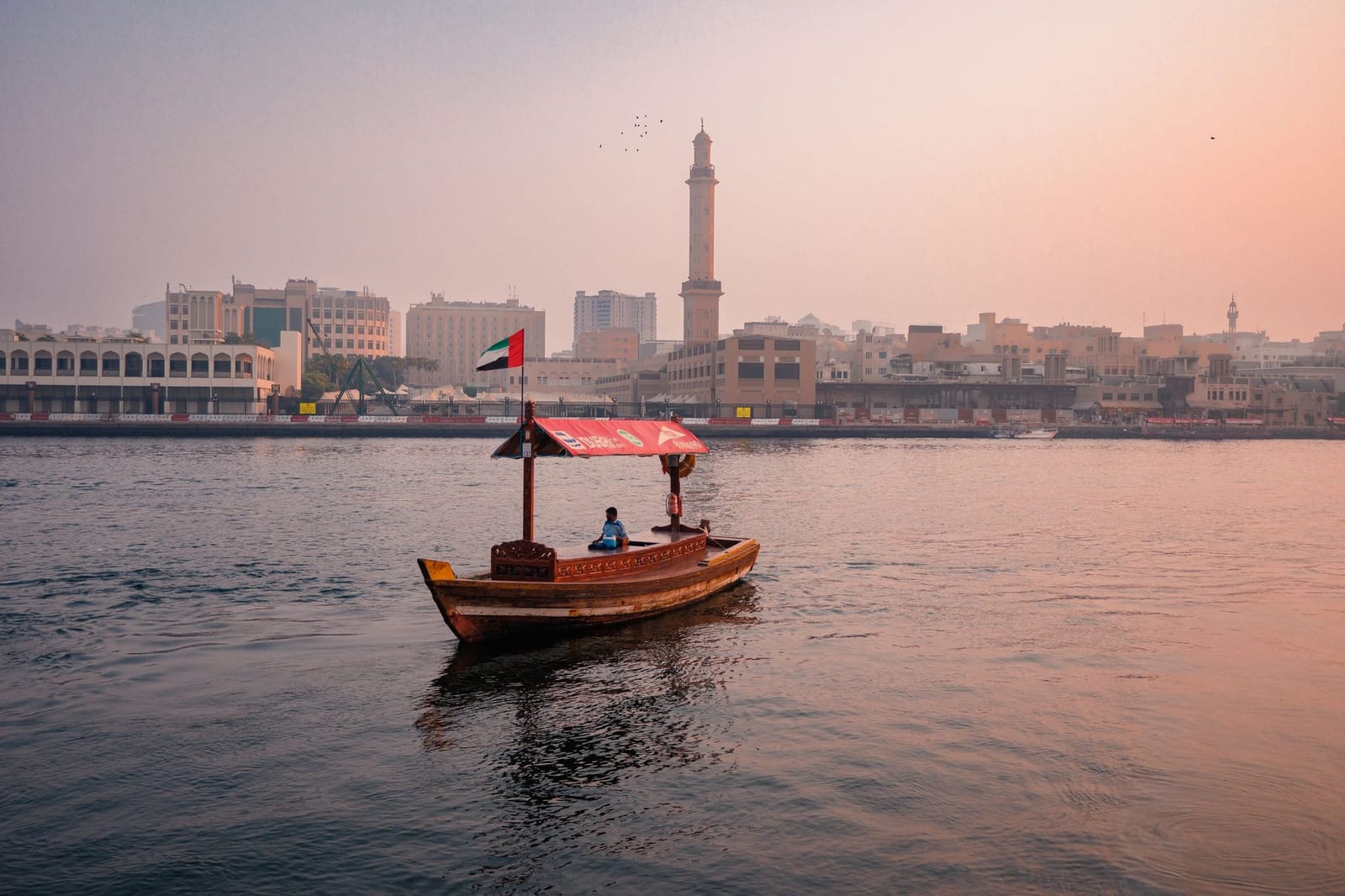
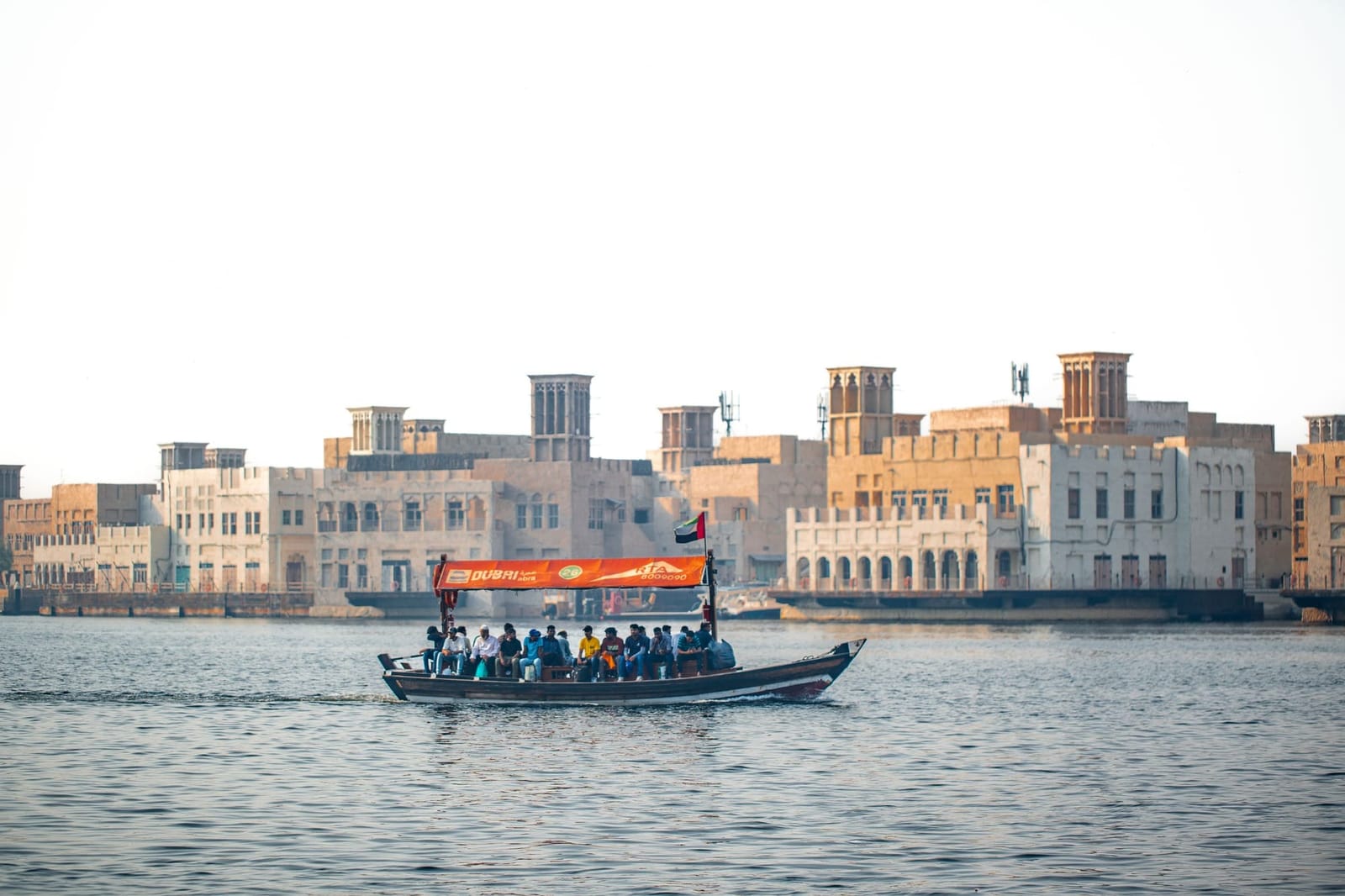
An abra ride across Dubai Creek costs AED 1 in cash on the traditional wooden boats, and the crossing from the Bur Dubai bank to the Deira Old Souq landing takes only a few minutes. There is no ticket to book, the boat leaves when it is full, and the light is best in late afternoon from November to April. This guide gives the fares (AED 2 on the heritage petrol abras, about AED 120 an hour for a private boat), the stations, how to board, when to go and what to see on each bank.
By SB Excursions · Published 29 October 2026 · Updated 29 October 2026
Tour on this route: Old Dubai Walking Tour — From $35 per person, 3-4 hours.
How much does an abra ride in Dubai cost?
AED 1 per person for one crossing on the traditional abra, paid in cash. The heritage petrol abras charge AED 2, and a private traditional abra is about AED 120 per hour for the boat. The RTA runs the service and can change fares, so check at the landing.
This guide also answers:
- Can I pay for an abra with a card or a Nol card?
- What is the best time to ride an abra?
- Can I hire a private abra?
Five stops to build around the crossing
 #1
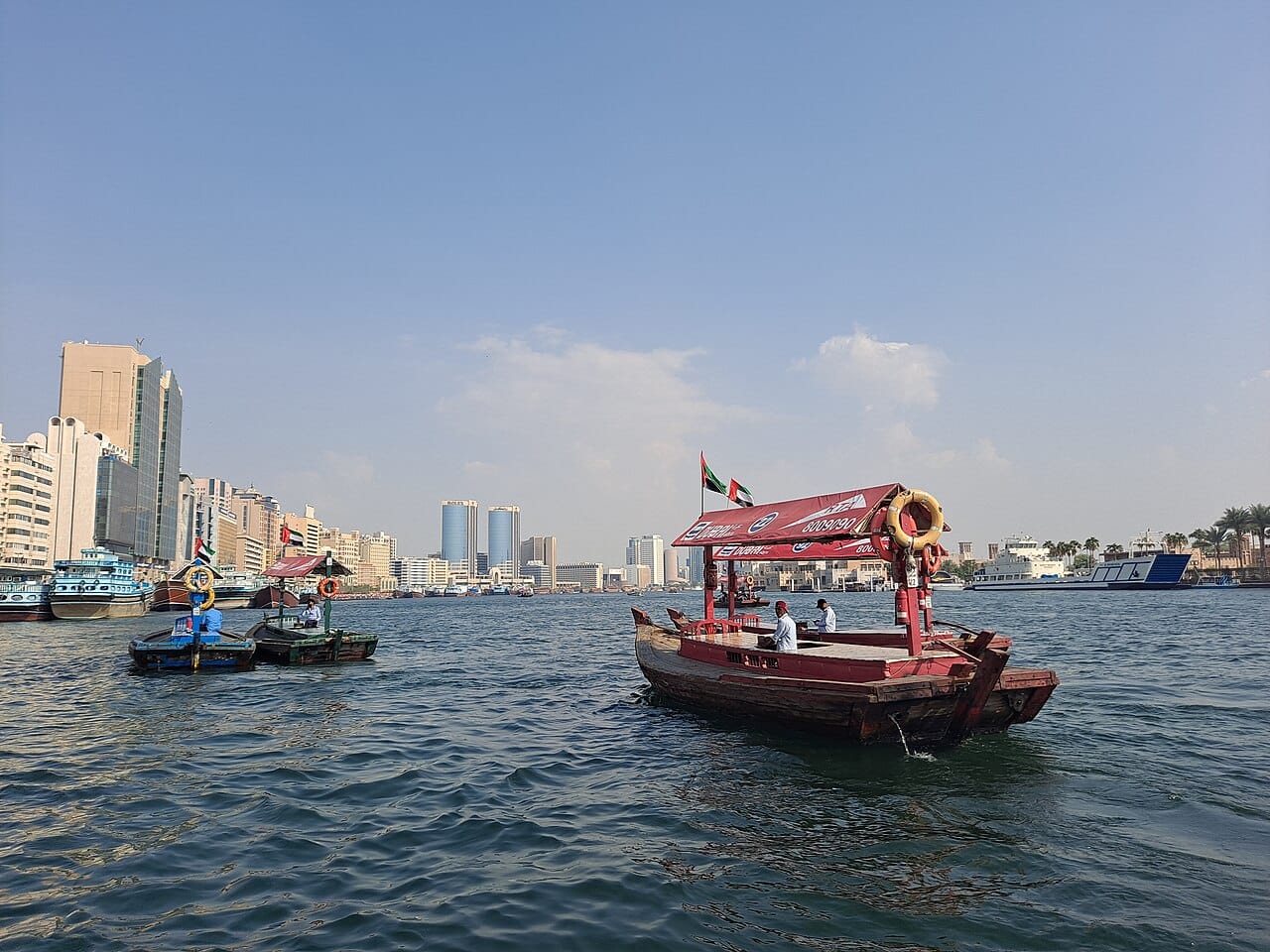
The crossing: Bur Dubai to Deira Old Souq
The ride this guide is about. A wooden boat with a canopy and benches along both sides, an engine at the back, a boatman who takes the fare in cash and a crossing of the Creek that lasts a few minutes. Go for the water-level view of the wind-tower skyline and the moored dhows, not for the distance, and keep a coin or a small note ready.
 #2
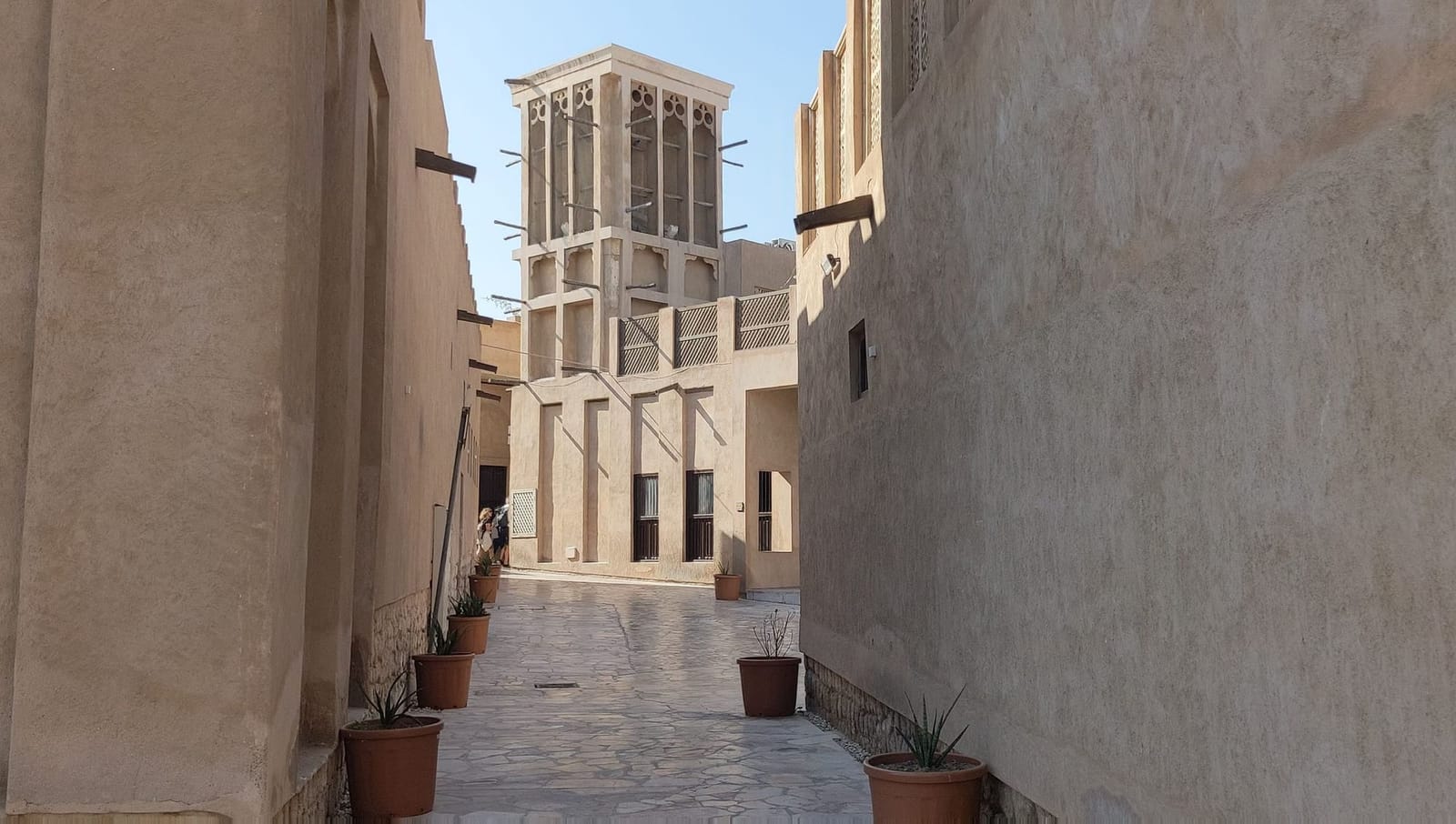
Al Fahidi: the wind-tower quarter
Restored coral-stone houses with wind towers, narrow lanes and small galleries sit a short walk from the Bur Dubai landing. It is the best start to a Creek loop because the lanes are quiet and shaded early in the day. Our Old Dubai walking tour meets in Al Fahidi before it heads down to the water and the abra.
 #3
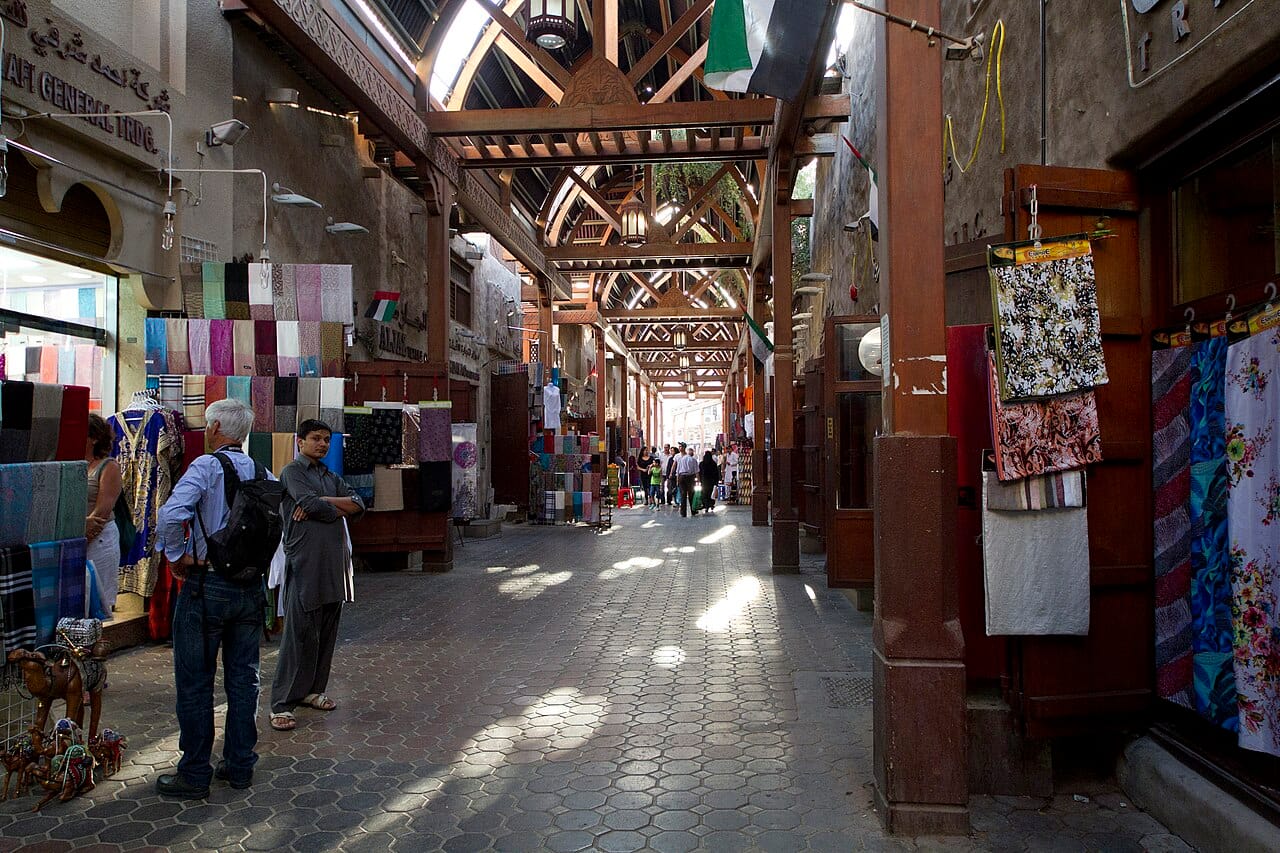
The Textile Souk beside the landing
A covered arcade of pointed timber arches with fabric shops, scarves and souvenirs, a short walk from the Bur Dubai landing. It is the easiest place to wait out the heat of the day, and prices are open to a polite haggle. It is also a good place to buy a light scarf for a mosque visit.
 #4
The Spice Souk on the Deira bank
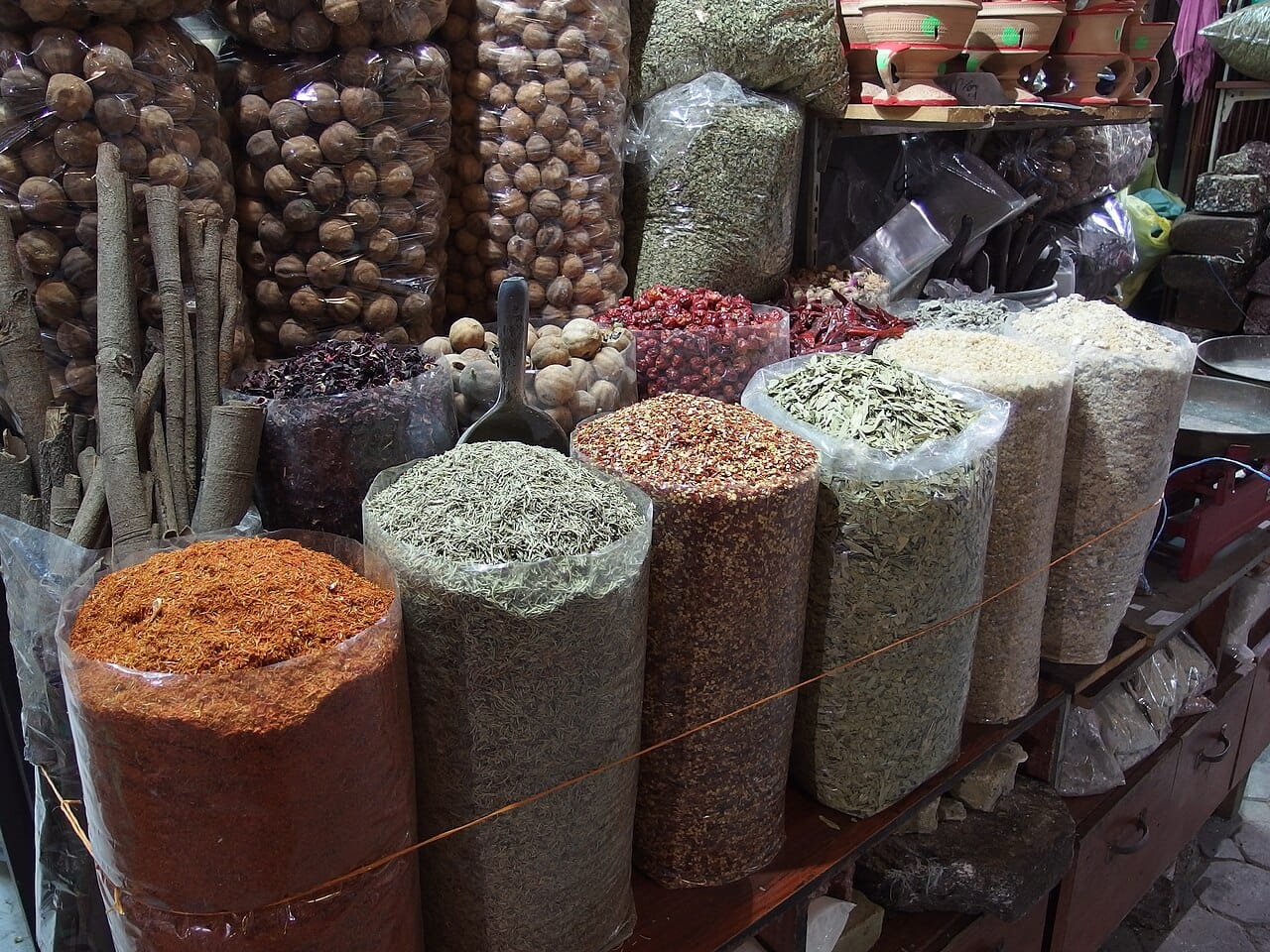
The first thing that meets you on the Deira side: open sacks of dried chillies, cinnamon bark, dried limes, saffron and frankincense, and shopkeepers who will let you smell before you buy. The Gold Souk lies a little further inland. Buy in small amounts, ask the price before the bag is filled, and carry small notes.
 #5
Al Seef: lanterns and the heritage waterfront
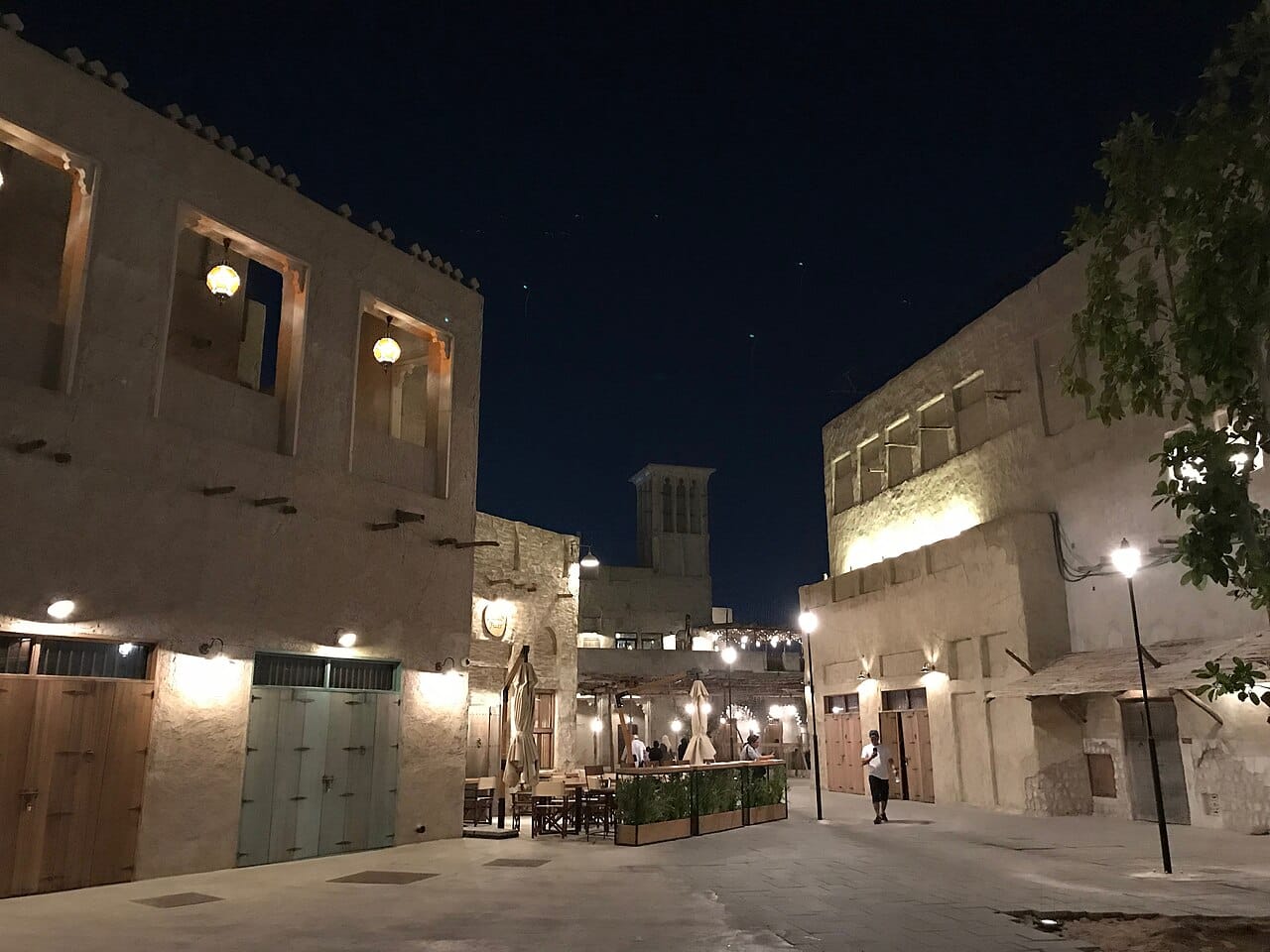
Al Seef is the stretch of Creek-side lanes built in the old style, with lantern-lit cafes, restaurants and a long promenade. It has its own heritage abra route to Baniyas on the Deira side at AED 2, and it is at its best after dark, when the lanterns come on. It is where a souk day turns into an evening out.
Abra ride on Dubai Creek: the short answer
The traditional abra costs AED 1 in cash per person for one crossing. Board at the Bur Dubai side, sit on a bench, and the boat crosses the Creek to the Deira Old Souq landing in a few minutes. The same boats run back, and a second route links the Dubai Old Souq station with Al Sabkha along the Deira bank. It is one of the cheapest rides in Dubai.
There is no ticket office and nothing to book. The boat leaves when it is full, so the wait is usually a few minutes. The best time is late afternoon to sunset from November to April, when the light is warm and the heat has gone. The RTA runs the abras and sets the fares, so check the board at the landing.
Abra fares: AED 1, AED 2 and private hire
Four different boats get called an abra, and the fare depends on which one you step into.
| Boat | Route | Fare (about) | Good for |
|---|---|---|---|
| Traditional motorised abra | Bur Dubai Abra Station to Deira Old Souq Abra Station, and Dubai Old Souq to Al Sabkha | AED 1 per person, cash | The classic crossing |
| Petrol heritage abra, Creek | Dubai Old Souq to Baniyas, Al Fahidi to Al Sabkha, Al Fahidi to Deira Old Souq, Al Seef to Baniyas | AED 2 per person | A more modern boat that seats up to 20 |
| Private traditional abra | Any route on the Creek, by agreement | About AED 120 per hour for the boat | A small group that wants its own pace |
| Petrol heritage abra, Dubai Water Canal | Sheikh Zayed Road marine station and back, about 45 minutes | About AED 25 per person (minimum of 6 passengers) | Seeing the canal and the waterfall, not the old Creek |
Fares and routes are the RTA's at the time of writing and can change. The traditional abra takes cash, so carry coins or small notes.
In practice the first row is the one almost everyone wants. The AED 2 boats follow different routes and are a more modern type of boat, but they do not give a better view of the Creek. The Canal abra is a separate tourist ride in modern Dubai, not a crossing, and it needs six people to run.
Where to board: the stations on each bank
The classic crossing links two landings that face each other across the Creek, the Creek being a 14 km waterway that divides Deira and Bur Dubai. On the Bur Dubai bank the abra station sits beside the old souk and the Textile Souk. On the Deira bank the Deira Old Souq Abra Station is by the Spice Souk, with the Gold Souk a little further in. The Bur Dubai starting points are Bur Dubai Abra Station and Dubai Old Souq, and the Deira landings are Deira Old Souq and Al Sabkha, so read the sign on the pier to see where each boat is heading.
By Metro, the Green Line is the way: get off at Al Fahidi or Al Ghubaiba on the Bur Dubai side, or at Al Ras on the Deira side next to the Gold Souk, and walk to the water. Our Metro guide covers the lines and the Nol card, and how to get around Dubai compares taxis and buses if you are coming from the Marina or Downtown.
How to ride an abra, step by step
There is nothing to learn, but a few habits make it smoother.
- Pick the right pier. Each landing can serve more than one route, so ask the boatman 'Deira?' or 'Bur Dubai?' before you step down.
- Have cash ready. The traditional abra takes AED 1 per passenger in cash, and coins or a small note are easier than a large one.
- Step down carefully. The boat sits low and moves when you board. Take the boatman's hand, mind the gap and sit down at once.
- Stay seated. Benches run along both sides. Keep your phone on a wrist strap and do not stand up for the photo; that is how phones end up in the Creek.
- Wait for it to fill. The boat leaves when it is full, usually within a few minutes. In summer wait in the shade of the landing, not on the boat.
- Keep children seated next to an adult, and do not lean over the side to touch the water.
Best time for an abra ride
The Creek is at its best when the sun is low and the temperature is bearable. From November to April daytime highs are roughly in the mid-20s to low 30s Celsius, which makes the whole souk loop pleasant. From May to September it is 40 degrees and above by midday in July and August; the boat has a canopy, but the landings and the lanes do not.
| When | What it is like | Verdict |
|---|---|---|
| Early morning, from about 7 AM | Cool, quiet landings, soft light on the wind towers, shops still opening | Best for photos without crowds |
| Late morning to mid-afternoon | Busiest with tour groups, hot from April to October | Fine in winter, skip in summer |
| Late afternoon to sunset | Warm light, golden water, the souks at their liveliest | The one we would pick |
| After dark | Lit buildings on both banks and the lanterns of Al Seef, quieter on the water | A good second ride after dinner |
The traditional abras leave when full, from early morning into the evening. Ask at the landing for the last departure of the night.
If you can visit only once, take the late-afternoon crossing and stay on the Deira side for the souks as the shops fill. Our month-by-month guide covers the weather for the rest of the trip, and Dubai in summer explains how to do the Creek in the heat.
A Creek loop: from one hour to a half day
The abra works best as the middle of a walk, a bridge between the two halves of Old Dubai. A simple loop starts in Al Fahidi in the cool of the morning or late afternoon, drops to the Bur Dubai landing, crosses to Deira, spends time in the Spice Souk and Gold Souk, then takes the Green Line back from Al Ras or crosses again. Allow 3-4 hours for the full loop; that is also the length of our walking tour.
The Old Dubai guide has the half-day plan stop by stop, and Deira or Bur Dubai explains the two banks if you are choosing where to stay. For the food along the way, the Old Dubai food tour guide lists what is worth eating and what to skip.
Go alone or join our Old Dubai walking tour
Doing it alone costs AED 1 plus coffee. What you do not get is the story behind the lanes. Our Old Dubai walking tour runs 3-4 hours from Al Fahidi with an English-speaking local guide, and the abra ride across the Creek is included, along with Al Seef, the Spice Souk and the Gold Souk, Arabic coffee or tea, dates, water and entry to a heritage house. It costs from $35 per person, and the $55 option adds Emirati street-food tastings.
Full prepayment confirms your place, with free cancellation or a date change up to 24 hours before the start. Wear comfortable shoes and light clothes; May to September is very hot. The tour is not suitable for children under 2, wheelchair users or anyone with limited mobility, and pushchairs, luggage and large bags are not allowed. A fair rule: go alone if you want the crossing and an hour of wandering, and join the group if you want the history and the tastings without reading a map.
Abra or dhow cruise: who should skip the abra
An abra is a commuter boat, not a cruise. It does not circle, narrate or serve dinner, and the ride is over before you have found the best seat. If you want an hour on the water with a meal or a guide, compare a dhow cruise with a Creek dhow dinner cruise. If you would rather see modern Dubai from the sea, our 1-hour shared yacht tour from $32 per person passes Dubai Marina, JBR and Bluewaters with a photo stop at Ain Dubai.
The abra suits curious travellers, budget travellers, families with older children and photographers. Skip it if the step down into a low boat is difficult for you, or if you are visiting in July or August and can only go at midday; in that case the Creek is better at dusk.
FAQ
How much does an abra ride in Dubai cost?
AED 1 per person for one crossing on the traditional abra, paid in cash. The heritage petrol abras charge AED 2, and a private traditional abra is about AED 120 per hour for the boat. The RTA runs the service and can change fares, so check at the landing.
How long is the abra ride across Dubai Creek?
A few minutes. The boat leaves when it is full, so the wait for a seat is usually longer than the crossing itself, and a private abra is the only way to stretch the ride.
Where do you catch an abra in Dubai?
At the Bur Dubai Abra Station by the old souk and the Textile Souk, or at the Deira Old Souq Abra Station by the Spice Souk. A second route runs between Dubai Old Souq and Al Sabkha. By Metro, use Al Fahidi or Al Ghubaiba on the Green Line for Bur Dubai, or Al Ras for Deira.
Can I pay for an abra with a card or a Nol card?
The traditional abra takes cash, AED 1 per passenger, so carry coins or small notes. Check the board at the landing for how the other boats and routes are paid.
What is the best time to ride an abra?
Late afternoon to sunset from November to April, when the light is warm and the temperature is comfortable. Early morning is quiet and good for photos. From May to September avoid midday, when temperatures pass 40 degrees.
Can I hire a private abra?
Yes. The RTA lists a private traditional abra at about AED 120 per hour for the boat. Agree the route and the time with the boatman before you set off, and carry the cash.
Is the abra ride included in your Old Dubai tour?
Yes. The abra ride across the Creek is part of our 3-4 hour Old Dubai walking tour, which costs from $35 per person, or $55 with street-food tastings.
Recommended Dubai tours for this guide
Old Dubai Walking Tour
It is the Dubai that is walked rather than driven: the Creek where the city began as a trading port, the restored wind-tower quarter and the souks that still trade spices and gold. A local guide tells the story along the way. The $35 walk includes the abra, Arabic coffee or tea, dates and water; the $55 option adds street-food tastings.
- Duration
- 3-4 hours
- Area
- Old Dubai: Bur Dubai and Deira
- Format
- Shared group walk
- Best for
- first-time visitors, food lovers and anyone who wants the old trading side of Dubai on foot
From $35 per person Full prepayment
View tour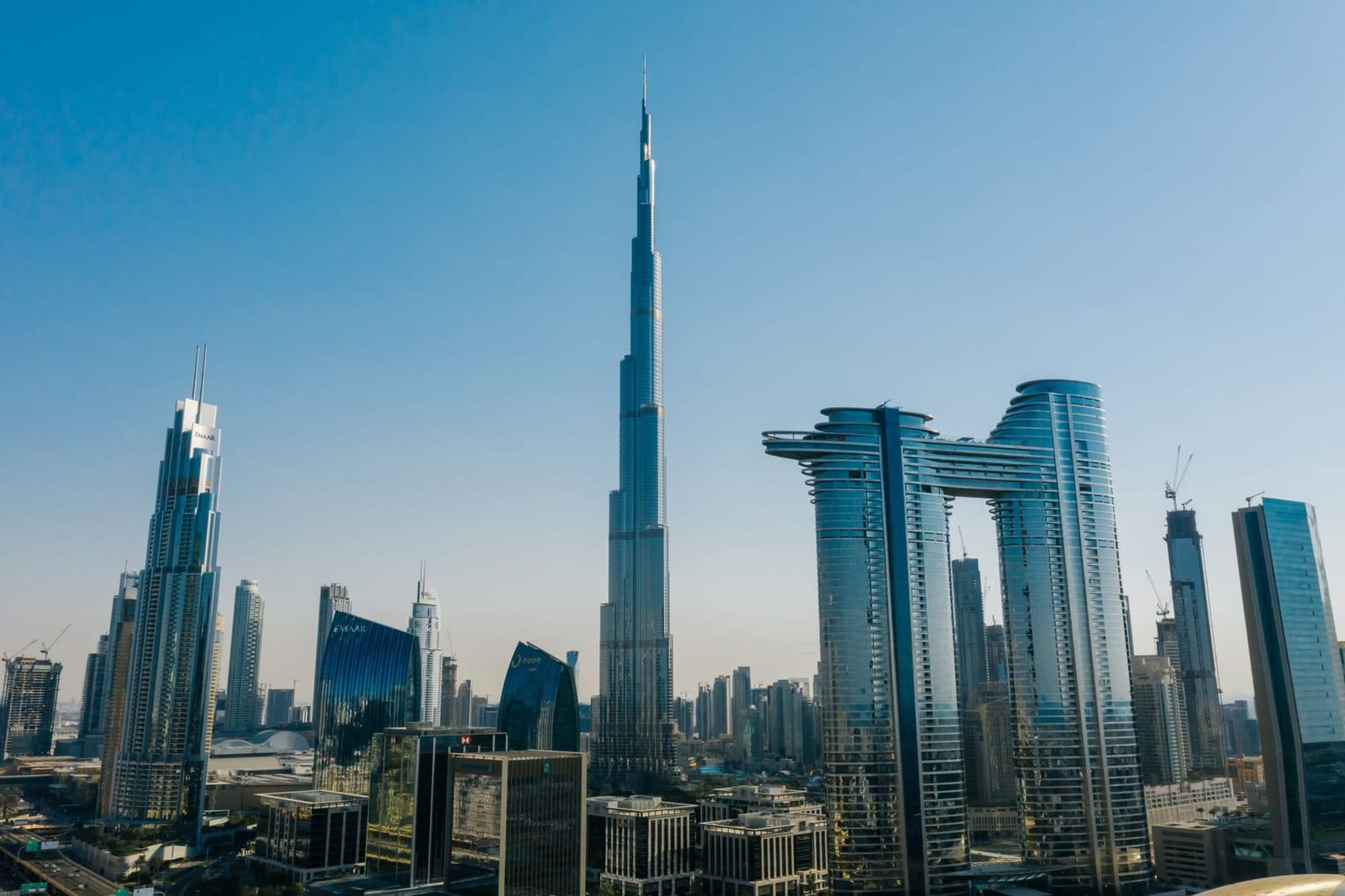
Burj Khalifa Observation Deck
It is a ticket, not a guided tour: you pick the date and time slot, we book it and send the e-tickets on WhatsApp, and you make your own way to The Dubai Mall. Levels 124 and 125 suit most visitors; SKY adds Level 148 at 555 m with priority access, a multilingual host and refreshments. On request we also book Sky Views Observatory, The View at The Palm and Dubai Frame.
- Duration
- 1.5-2 hours
- Area
- Downtown Dubai
- Format
- Timed-entry ticket
- Best for
- first-time visitors, couples and families who want Dubai from the observation decks of the 828-metre Burj Khalifa
From $55 per person Full prepayment
View tour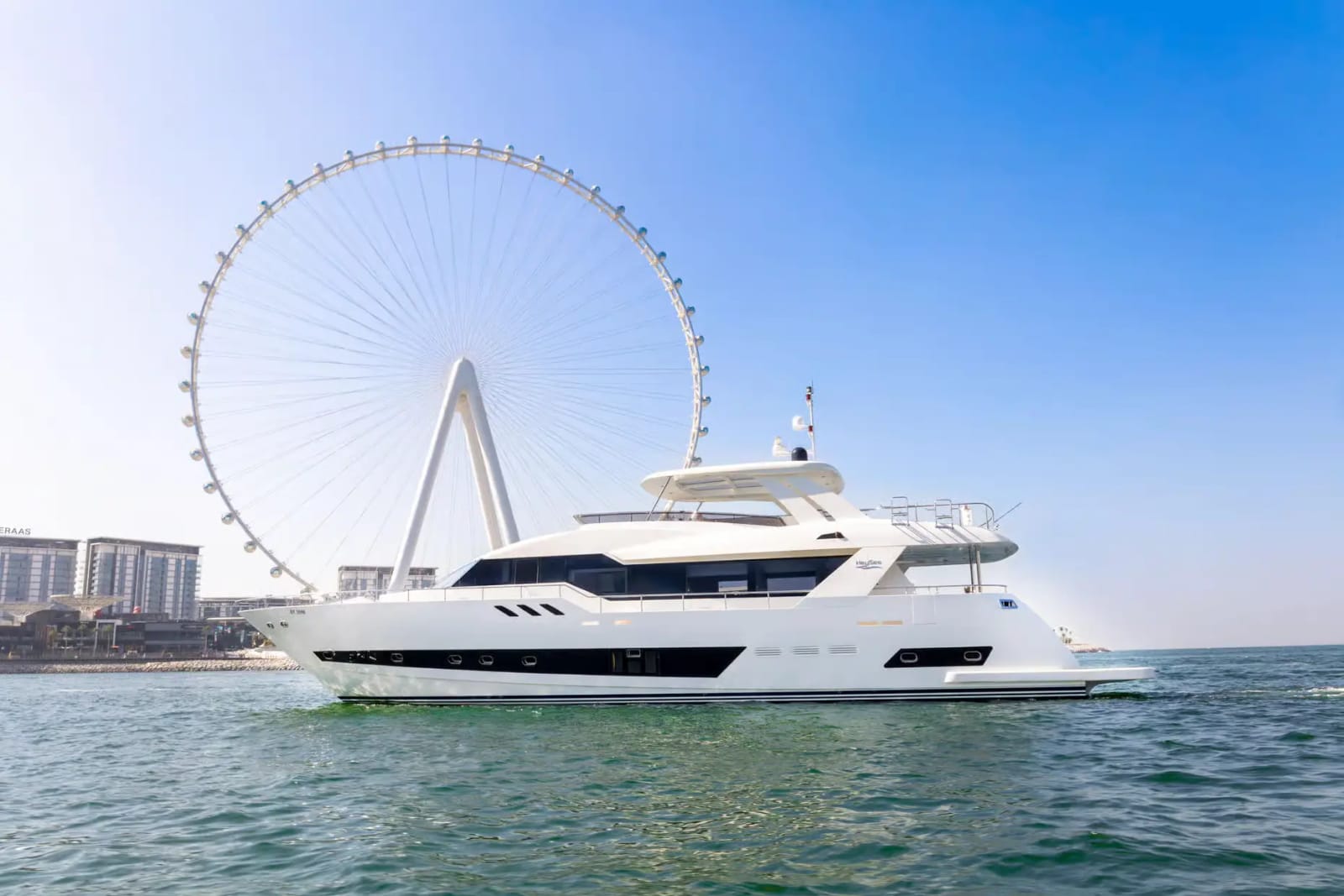
Dubai Marina Shared Yacht Tour
It is the most stylish way to see the skyline without paying for a private charter: a premium yacht with spacious decks and 5-star hospitality, a red carpet at the pier and the crew helping with photos against JBR and Ain Dubai. Full pre-payment secures your slot — the hourly departures sell out — and the yacht leaves strictly on time.
- Duration
- 1 hour
- Area
- Dubai Marina
- Format
- Shared 1-hour sightseeing cruise
- Best for
- families, couples and anyone who wants the Marina skyline from the water without a private charter
From $32 per person Full prepayment
View tour📚 Keep reading
Photos: The Textile Souk beside the landing — trolvag, CC BY-SA 3.0, The Spice Souk on the Deira bank — Guilhem Vellut from Annecy, France, CC BY 2.0, Al Seef: lanterns and the heritage waterfront — Poorva90, CC BY-SA 4.0 (Wikimedia Commons).