

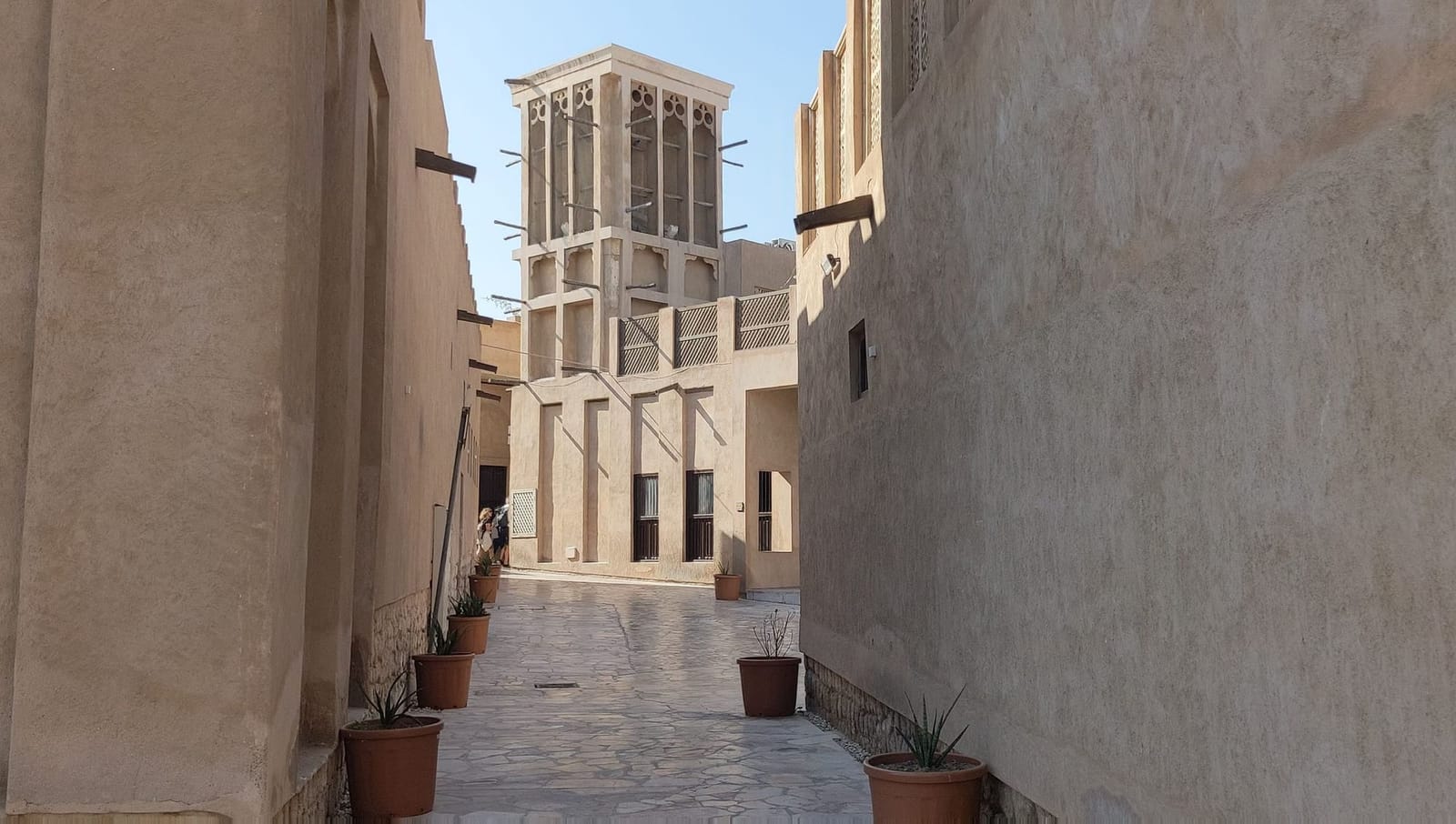
Al Fahidi Historical Neighbourhood is free to walk and takes 1-2 hours. It is the restored quarter of coral-stone houses and wind towers in Bur Dubai, 5-10 minutes on foot from Sharaf DG metro on the Green Line, with a coffee museum, galleries, courtyard cafés and a cultural centre inside the lanes. This guide gives a walking route to the Creek and the abra, the best hours (before 11 AM or after 4 PM from October to April), what to wear, and how our Old Dubai walking tour, from $35, fits around it.
By SB Excursions · Published 28 October 2026 · Updated 29 October 2026
Tour on this route: Old Dubai Walking Tour — From $35 per person, 3-4 hours.
Is Al Fahidi Historical Neighbourhood free?
Yes. Walking the lanes costs nothing, and you pay only for the museums, cafés and the cultural meal you choose. Allow 1-2 hours for the lanes, or 3-4 hours if you add the Creek, the abra and the souks as our Old Dubai walking tour does.
This guide also answers:
- Which metro station is nearest to Al Fahidi?
- What is the best time to visit?
- How is Al Fahidi different from Al Seef?
Five stops worth your time in Al Fahidi
 #1
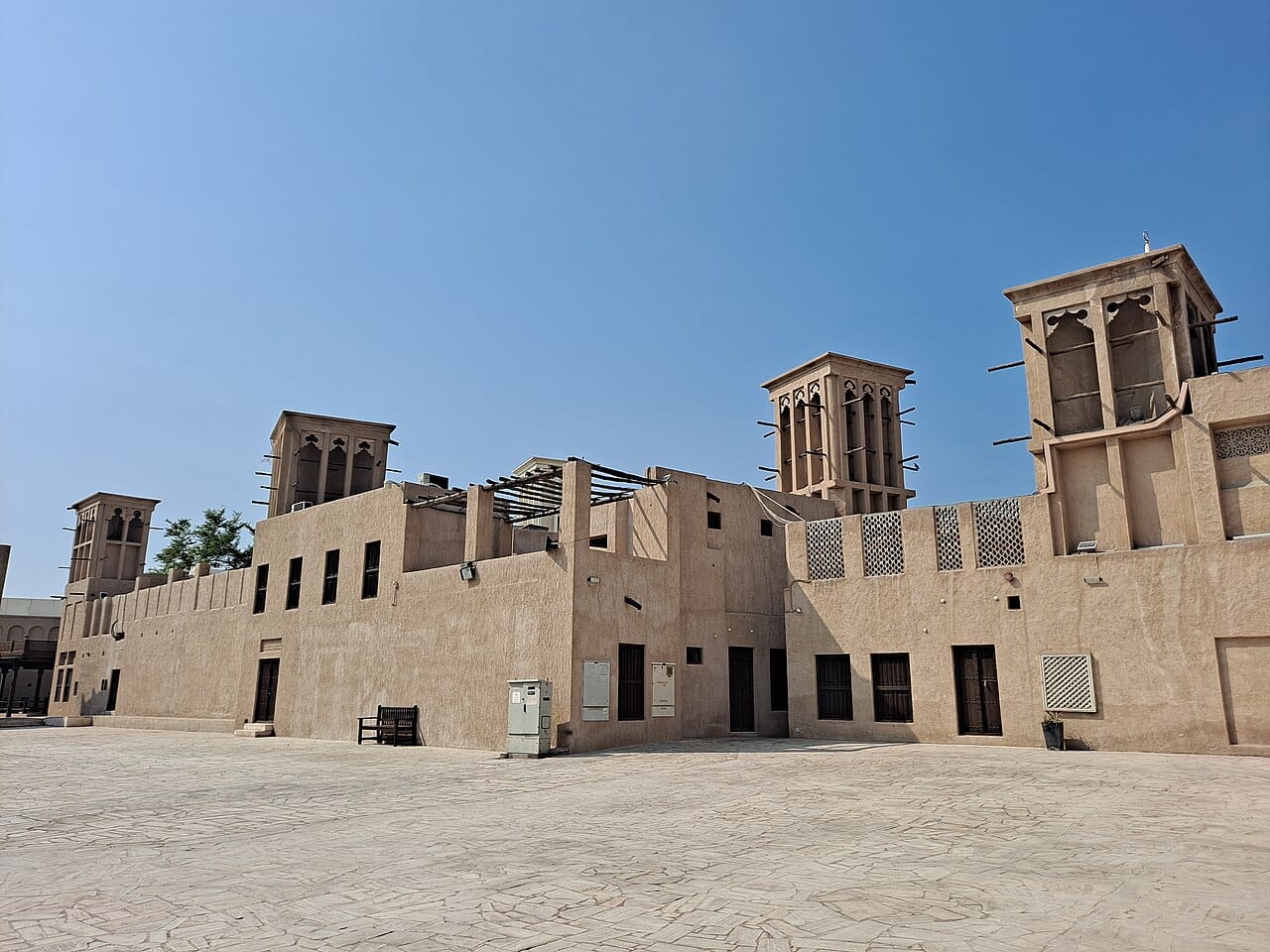
The wind-tower lanes
The main event is the lanes themselves: restored coral-and-gypsum houses, shaded alleys, open courtyards and rows of barjeel wind towers against a blue sky. Walk them slowly and look up. Allow 30-45 minutes, wear flat shoes for the uneven ground, and go before 11 AM or after 4 PM for the best light and the fewest people.
 #2
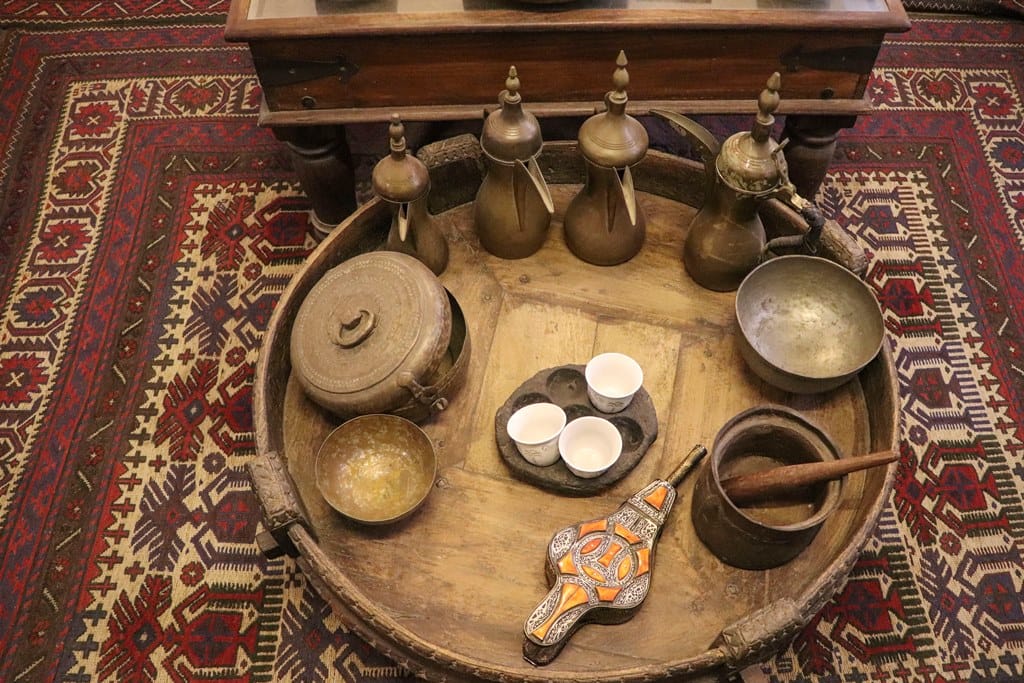
The Coffee Museum
A small museum in a majlis-style room with brass dallah pots, cups, a roasting pan and trays laid out on a red carpet. It tells how Arabic coffee is roasted, brewed and served, and it is a good place to learn the etiquette: take the small cup in your right hand and tip it gently from side to side when you have had enough. Allow 20-30 minutes and check the opening hours on the day.
 #3
A courtyard café
Several houses have been turned into cafés with shaded courtyards and cushioned seating, and they are the best way to stay in the quarter for an hour without feeling the heat. Order Arabic coffee with dates, or karak tea, and budget for a normal café bill. They are busiest at lunchtime and quietest mid-morning.
 #4
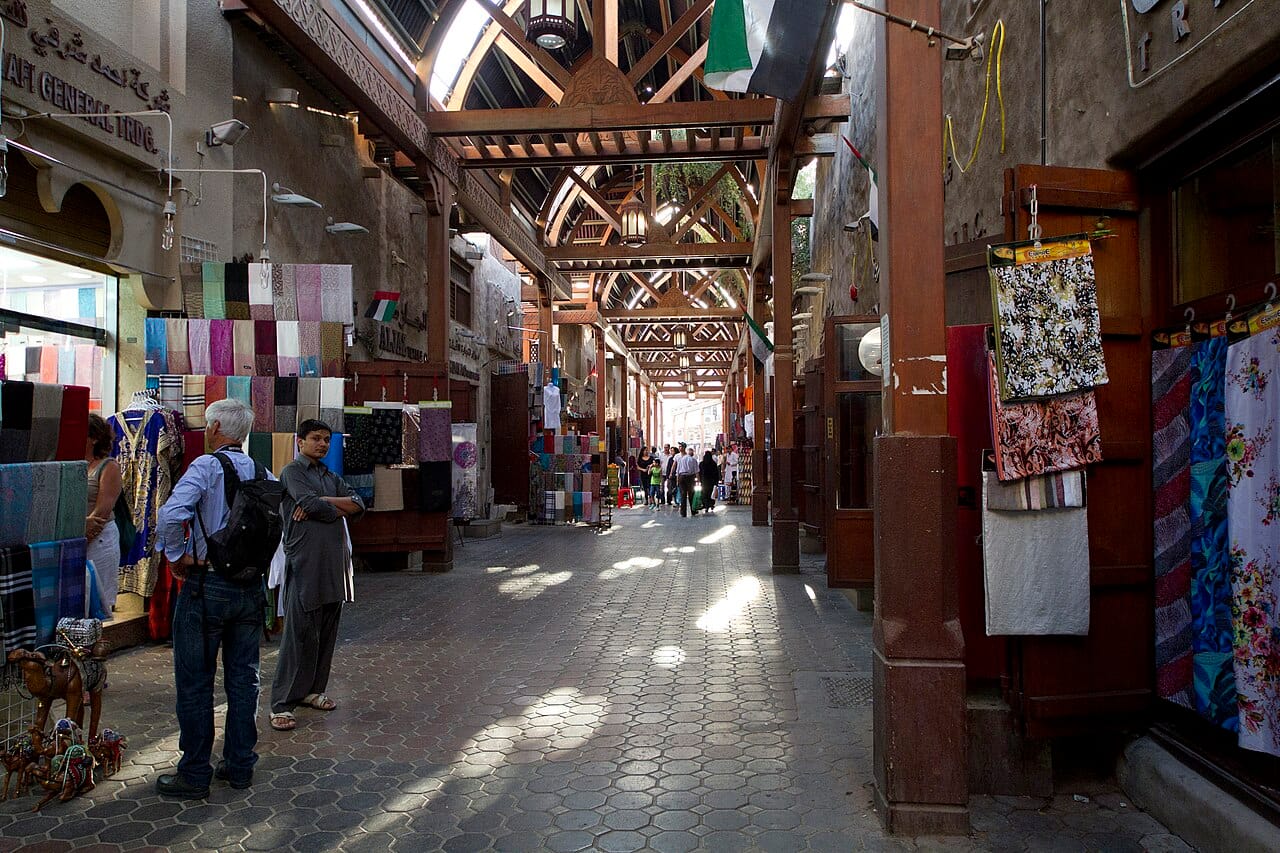
The Textile Souk and the Creek bank
The covered timber arcade of the Bur Dubai Textile Souk is the natural next stop: shops hang scarves and bolts of cloth outside, tailors work in the back, and the Creek is a few steps beyond. Prices are open to a polite counter-offer. It is a good place to buy a pashmina, and much shadier than the waterfront.
 #5
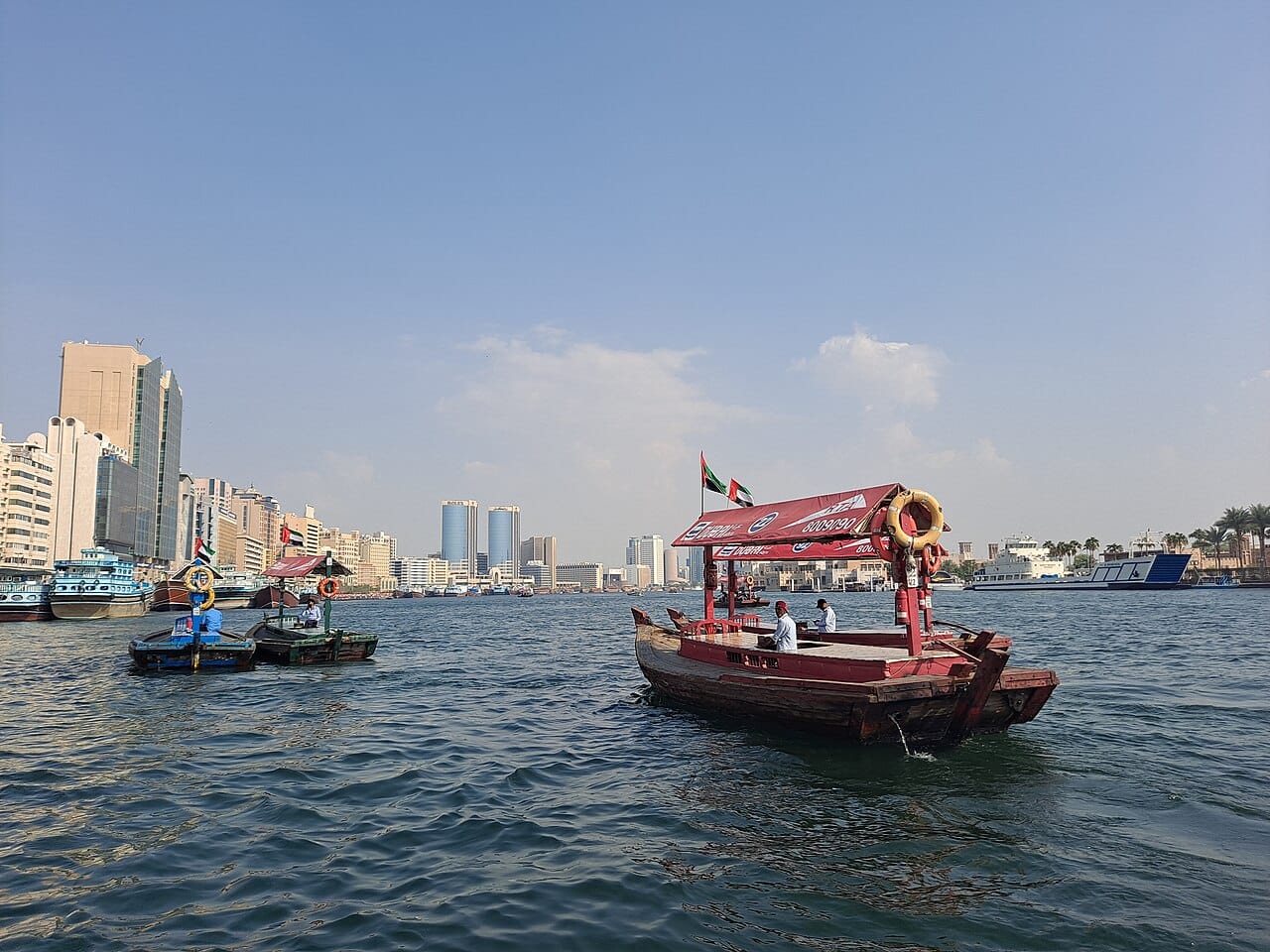
The abra across the Creek
A wooden abra carries passengers across Dubai Creek to the Deira side in a few minutes, leaving when it fills and taking cash on board. It is the cheapest boat ride in Dubai and the natural end to an Al Fahidi morning, with dhows moored on both banks and the Spice Souk lanes waiting on the other side.
Al Fahidi in one minute
Al Fahidi Historical Neighbourhood, also called Bastakiya, is a free, walkable quarter of restored wind-tower houses in Bur Dubai, and one to two hours is enough. There is no ticket at the entrance: you pay only for the museums, galleries and cafés you choose to enter. It sits between Sharaf DG metro station and Dubai Creek, so it slots straight into the standard Old Dubai loop of lanes, Creek, abra and souks.
The houses date from the 1890s, when merchants from the town of Bastak, in what is now southern Iran, settled on the Dubai side of the Creek to trade; that is where the name Bastakiya comes from. They are built of coral stone, gypsum and timber around shaded courtyards, and each carries a barjeel, the square wind tower that catches the breeze and funnels it down into the house. Today most of the houses are galleries, cafés, small museums and offices rather than homes.
It is a small, quiet place, and it is not for everyone. If you want rides, big exhibits or air-conditioned halls, skip it. If you want shade, texture and photographs without a queue, it is the best free hour in the city. From October to April go before 11 AM or after 4 PM; from May to September it is a morning-only visit.
What is in the lanes: stop by stop
The quarter is compact, so the choice is not where to go but what to go inside. The table sets out the main stops with a rough time for each. Prices and opening hours change, so treat the cost column as a guide and check on the day.
| Stop | What it is | Time | Cost |
|---|---|---|---|
| Wind-tower lanes | Restored coral-stone houses, courtyards and wind towers | 30-45 min | Free |
| Coffee Museum | Brass dallahs, roasting pans and a majlis room telling the story of Arabic coffee | 20-30 min | Low; check on the day |
| Sheikh Mohammed Centre for Cultural Understanding | A courtyard Emirati breakfast and conversation about local customs, at House 26 | 1.5 hours | Book ahead; price on the centre's website |
| Art galleries | Small private galleries in restored houses, such as XVA Gallery and the Majlis Gallery | 15-30 min each | Usually free to enter |
| Courtyard cafés | Arabic coffee, karak and light meals in shaded courtyards, such as the Arabian Tea House | 30-60 min | A café bill |
| Al Fahidi Fort | The old fort from the late 1700s that housed the Dubai Museum, a few minutes from the lanes | Check it is open | Check Dubai Culture's website |
Opening hours and prices change, and Friday mornings are slow; check each place before you plan around it.
Do not try to do all six. A good short visit is the lanes, the Coffee Museum and a courtyard café. A long one adds the cultural meal. The fort is the optional extra, and worth it only if it is open and a quick history stop appeals.
The cultural centre: breakfast and conversation
House 26 in the quarter is the home of the Sheikh Mohammed Centre for Cultural Understanding, whose motto is open doors, open minds. Its Cultural Meal is a one-and-a-half-hour Emirati breakfast in the courtyard, seated on floor cushions, with Arabic coffee, dates, local dishes and dessert, and a conversation with your host about everyday life and traditions in the UAE. You book it in advance through the centre's website, which lists office hours of 8 AM to 8 PM daily; confirm the meal times and the price when you book.
It is the one stop here where you can sit down and ask what you like, which makes it the best answer in the district to the question of what Emirati life is actually like. The same centre runs the guided visit to Jumeirah Mosque, covered in our Jumeirah Mosque guide.
A 90-minute walking route
This route starts at the metro and ends at the Creek, about 2 km in all including the lanes. It works in either direction, but starting at the station keeps the abra for the finish.
- Sharaf DG station, Green Line. Leave towards the Creek and walk 5-10 minutes into the quarter. Many maps still call this station Al Fahidi.
- Al Fahidi Fort, 10 minutes. Look at the fort from outside, and go in only if it is open.
- The lanes, 30-45 minutes. Wander the alleys between the houses, look up at the wind towers and step into any open courtyard or gallery door. The paving is uneven and there are steps, so wear flat shoes.
- Coffee Museum, 20-30 minutes. A short, easy stop that explains the coffee you are about to drink.
- A courtyard café, 30 minutes. Sit in the shade with Arabic coffee or karak and something sweet.
- The Textile Souk and the Creek, 20-30 minutes. Walk to the water. The souk's timber arcade is next to the abra station.
- The abra to Deira, 5 minutes. AED 1-2 across the Creek, then the Spice Souk lanes. The abra ride guide has the stations and the fare.
To turn it into an evening, walk about 15 minutes along the Creek to Al Seef, the modern waterfront built in the same heritage style, for dinner facing the water. The Al Seef guide and the wider Old Dubai guide have the cafés and a half-day plan.
When to go, what to wear and what to know
The lanes are public and open through the day, but the places inside them keep their own hours, and a few things catch visitors out.
- Best hours: before 11 AM or after 4 PM from October to April. From May to September the lanes give some shade, but the walk to the Creek is exposed, so go at opening and carry water.
- Fridays and Ramadan: Friday mornings are slow, with many places opening in the afternoon, and Ramadan shifts hours again. The Ramadan guide covers what changes.
- Dress: shoulders and knees covered is the polite standard in Old Dubai. The dress code guide has the detail.
- Photos: the houses, lanes and towers are fair game. Ask before you photograph staff or residents, and women in particular.
- Mobility: the ground is paved but uneven, with steps and narrow gates, so a pushchair or wheelchair is awkward.
- Next door: Al Shindagha Museum, on the Creek towards the sea, is the next heritage stop by taxi; see the Al Shindagha Museum guide.
On your own or with a guide
The lanes are free, and a map and an hour will do. A guide adds the order and the stories: why the houses face inward, who the Bastakis were, how the Creek made the city. Our Old Dubai walking tour meets in Al Fahidi near Sharaf DG metro with Arabic coffee or tea and dates in a heritage house, then walks the lanes, Al Seef and the Creek, crosses by abra to the Spice Souk and ends at the Gold Souk. It is a shared group walk of 3-4 hours with an English-speaking local guide, from $35 per person, or $55 with street-food tastings.
Entry to a heritage house with old photos and artefacts is included; entry to Al Fahidi Fort is not. Full prepayment confirms your place, with free cancellation or a date change up to 24 hours before the start, and the pin follows after payment. The walk is mostly outdoors, so May to September is very hot. It is not for children under 2, wheelchair users or limited mobility, and pushchairs, luggage and large bags are not allowed.
The honest rule: go alone if you have one hour, like wandering and are happy with a coffee. Book the walk if you want the Creek and the souks in a sensible order with the history explained. The Old Dubai food tour guide explains what the $55 tastings add.
Old and new in one day
Al Fahidi works best as the morning half of a day with a contrast. In the evening, a Burj Khalifa ticket from $55 puts you on the observation decks above the Downtown skyline, and the Dubai Frame guide explains the gold frame that looks at old and new Dubai from two sides.
If you would rather leave the city altogether, the full-day desert safari is 7 hours from $45 with hotel pickup in Dubai, Sharjah or Ajman, and you pay on the day. For more heritage stops, see our ranking of the best museums in Dubai.
FAQ
Is Al Fahidi Historical Neighbourhood free?
Yes. Walking the lanes costs nothing, and you pay only for the museums, cafés and the cultural meal you choose. Allow 1-2 hours for the lanes, or 3-4 hours if you add the Creek, the abra and the souks as our Old Dubai walking tour does.
Which metro station is nearest to Al Fahidi?
Sharaf DG on the Green Line, about 5-10 minutes on foot from the lanes. Many maps still show it as Al Fahidi. From the Red Line, change to the Green Line at BurJuman or Union.
Is Al Fahidi the same as Bastakiya?
Yes. Bastakiya is the older name, taken from Bastak, the town in southern Iran that the first merchants came from. The official name is Al Fahidi Historical Neighbourhood, and it covers the same restored quarter.
What is the best time to visit?
Before 11 AM or after 4 PM from October to April. From May to September go at opening, because temperatures climb quickly and the walk to the Creek is in the open. Friday mornings are slow, with many places opening in the afternoon.
Can you go inside the wind-tower houses?
Many have become galleries, cafés and small museums that you can enter during their opening hours, while some are offices and stay closed. A heritage house with old photos and artefacts is included on our Old Dubai walking tour.
How is Al Fahidi different from Al Seef?
Al Fahidi is the restored original quarter, with real old houses, and it is about quiet lanes and small museums. Al Seef is the modern waterfront built in the same heritage style, with café terraces on the Creek. They are about 15 minutes apart on foot, and most people see both.
Recommended Dubai tours for this guide
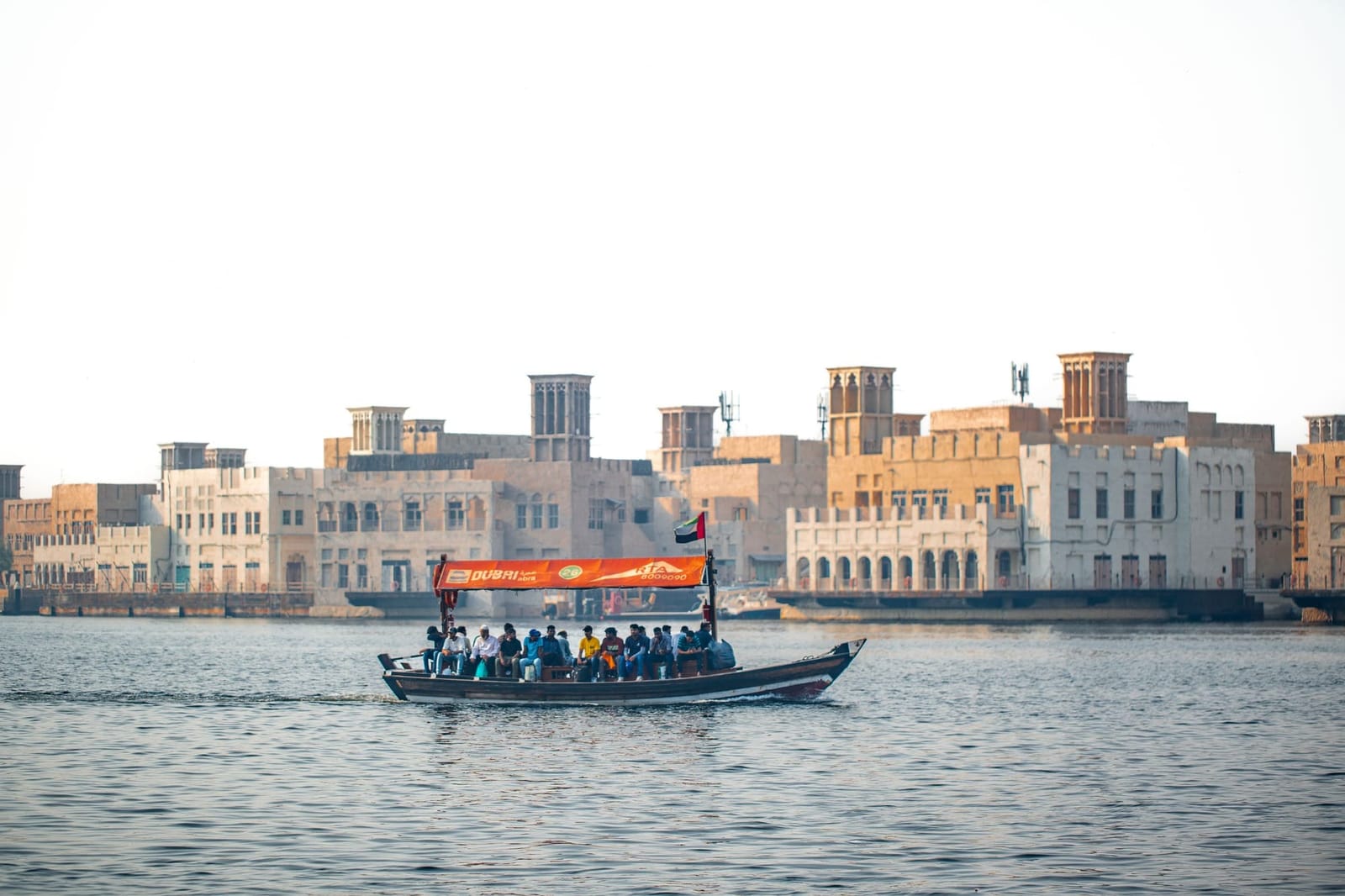
Old Dubai Walking Tour
It is the Dubai that is walked rather than driven: the Creek where the city began as a trading port, the restored wind-tower quarter and the souks that still trade spices and gold. A local guide tells the story along the way. The $35 walk includes the abra, Arabic coffee or tea, dates and water; the $55 option adds street-food tastings.
- Duration
- 3-4 hours
- Area
- Old Dubai: Bur Dubai and Deira
- Format
- Shared group walk
- Best for
- first-time visitors, food lovers and anyone who wants the old trading side of Dubai on foot
From $35 per person Full prepayment
View tour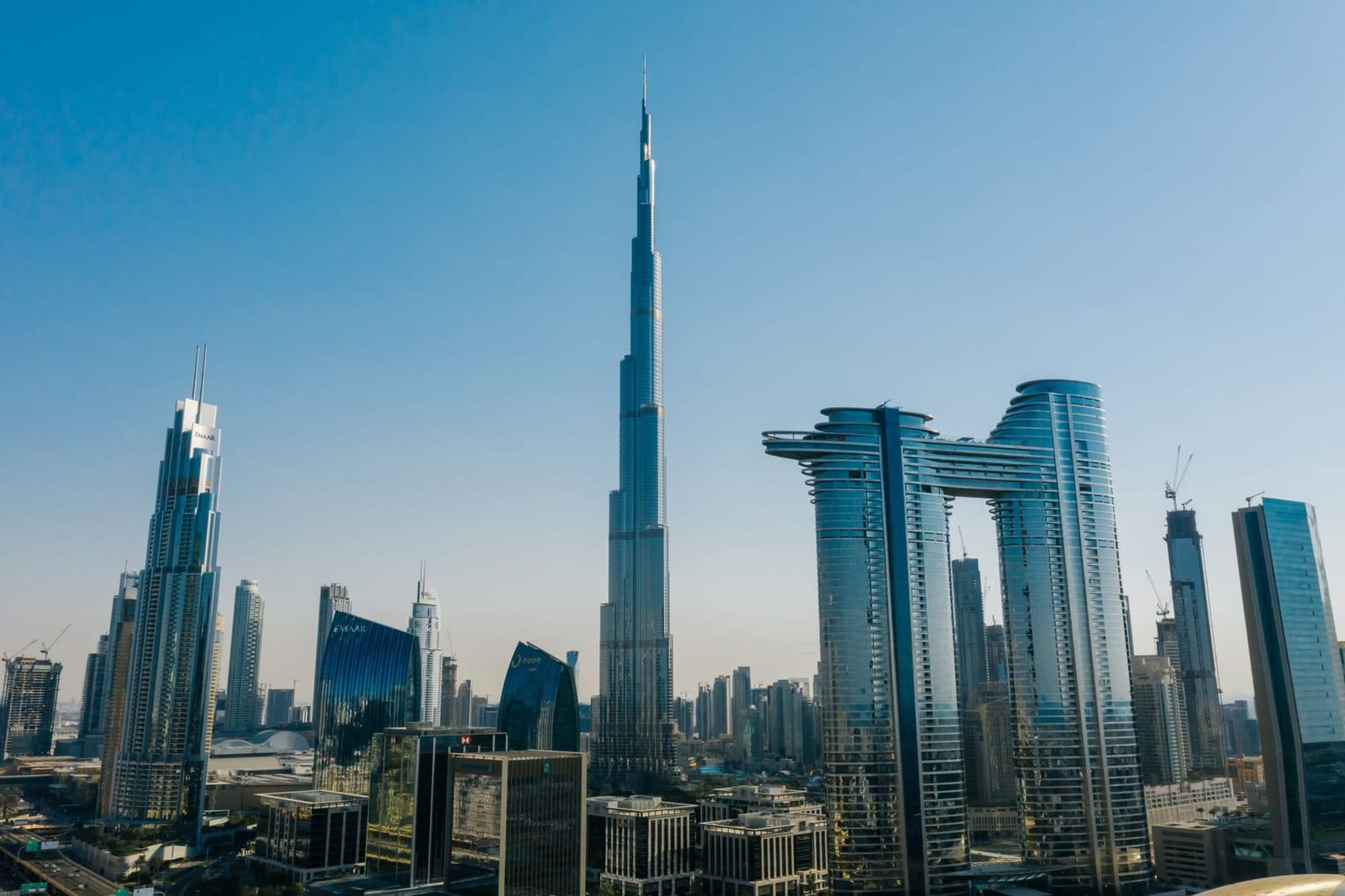
Burj Khalifa Observation Deck
It is a ticket, not a guided tour: you pick the date and time slot, we book it and send the e-tickets on WhatsApp, and you make your own way to The Dubai Mall. Levels 124 and 125 suit most visitors; SKY adds Level 148 at 555 m with priority access, a multilingual host and refreshments. On request we also book Sky Views Observatory, The View at The Palm and Dubai Frame.
- Duration
- 1.5-2 hours
- Area
- Downtown Dubai
- Format
- Timed-entry ticket
- Best for
- first-time visitors, couples and families who want Dubai from the observation decks of the 828-metre Burj Khalifa
From $55 per person Full prepayment
View tour
Full-Day Desert Safari in Dubai
It is the slow-travel version of the classic safari: more time on the dunes, sunset without the crowds and a full evening programme at a premium camp with air-conditioned tents, unlimited drinks and a large BBQ buffet with vegetarian and gluten-free options. Everything is arranged from the hotel door — a licensed English-speaking driver, the 4x4, the camp and the shows.
- Duration
- 7 hours
- Area
- Lahbab Desert, Dubai
- Format
- Full-day desert safari
- Best for
- families, couples and first-time desert visitors who want the full evening programme
From $45 per person No prepayment
View tour📚 Keep reading
Photos: The Coffee Museum — Clemens Schmillen, CC BY-SA 4.0, The Textile Souk and the Creek bank — trolvag, CC BY-SA 3.0 (Wikimedia Commons).