

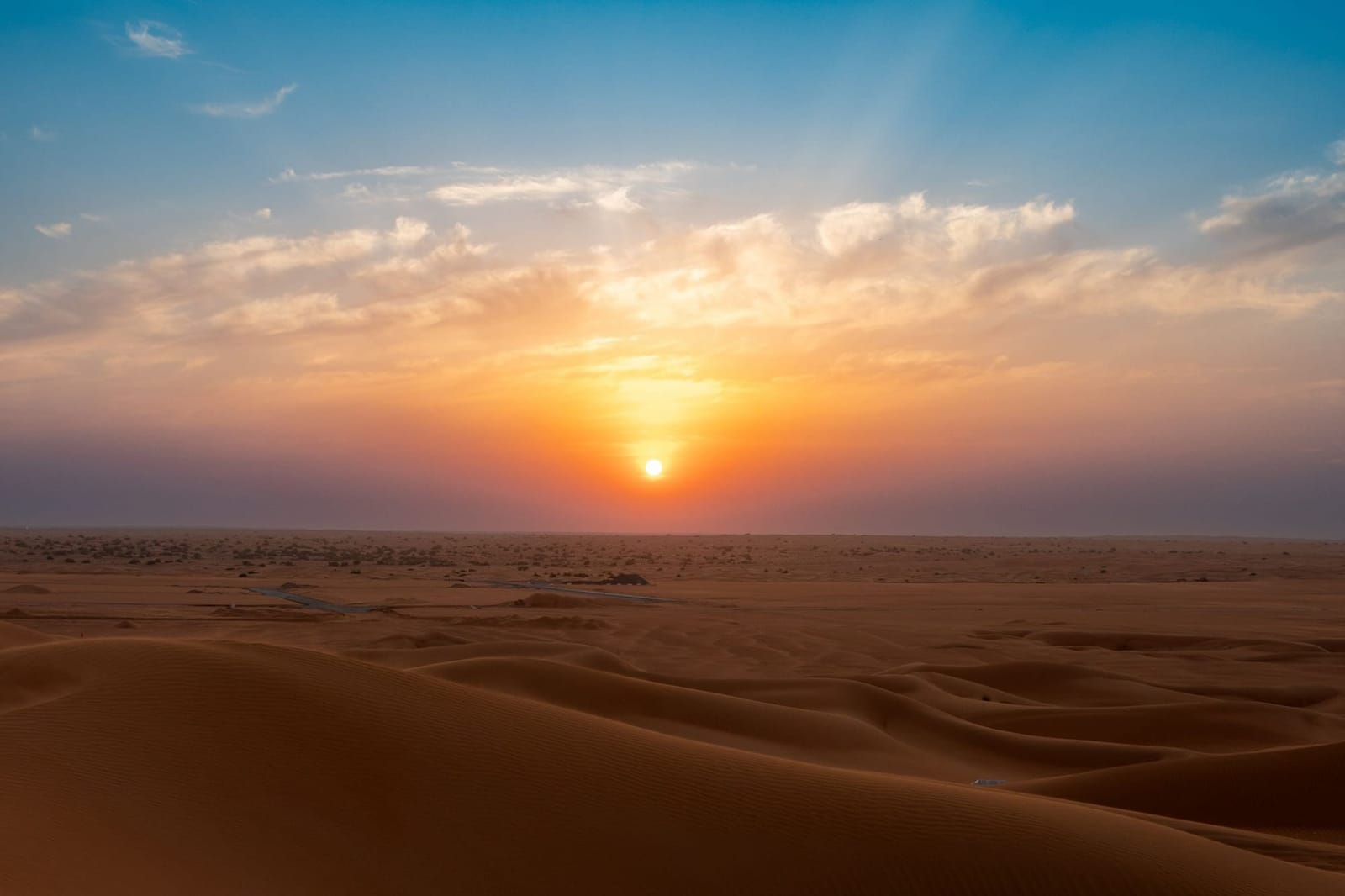
For the best stargazing near Dubai, pick a night within a few days of new moon, drive 40 minutes or more from the city and go between November and April for comfort. City glow hides most stars inside Dubai; the desert at Al Qudra and the Hatta road is better, and Mleiha in Sharjah and Hatta are darker. A guided night with the Dubai Astronomy Group is listed at about AED 550 per person for 1.5-2 hours. Below: sites, moon phase, season, what to bring and how our desert safari fits.
By SB Excursions · Published 29 October 2026 · Updated 29 October 2026
Tour on this route: Full-Day Desert Safari in Dubai — From $45 per person, 7 hours.
What is the best time for stargazing in the Dubai desert?
A night within three or four days of new moon, starting about 1.5 hours after sunset when the sky is fully dark. For comfort, go between November and April; the Milky Way's bright core shows from about March to October.
This guide also answers:
- How much does a stargazing tour in Dubai cost?
- Is it cold in the desert at night?
Five places to look up from near Dubai
 #1
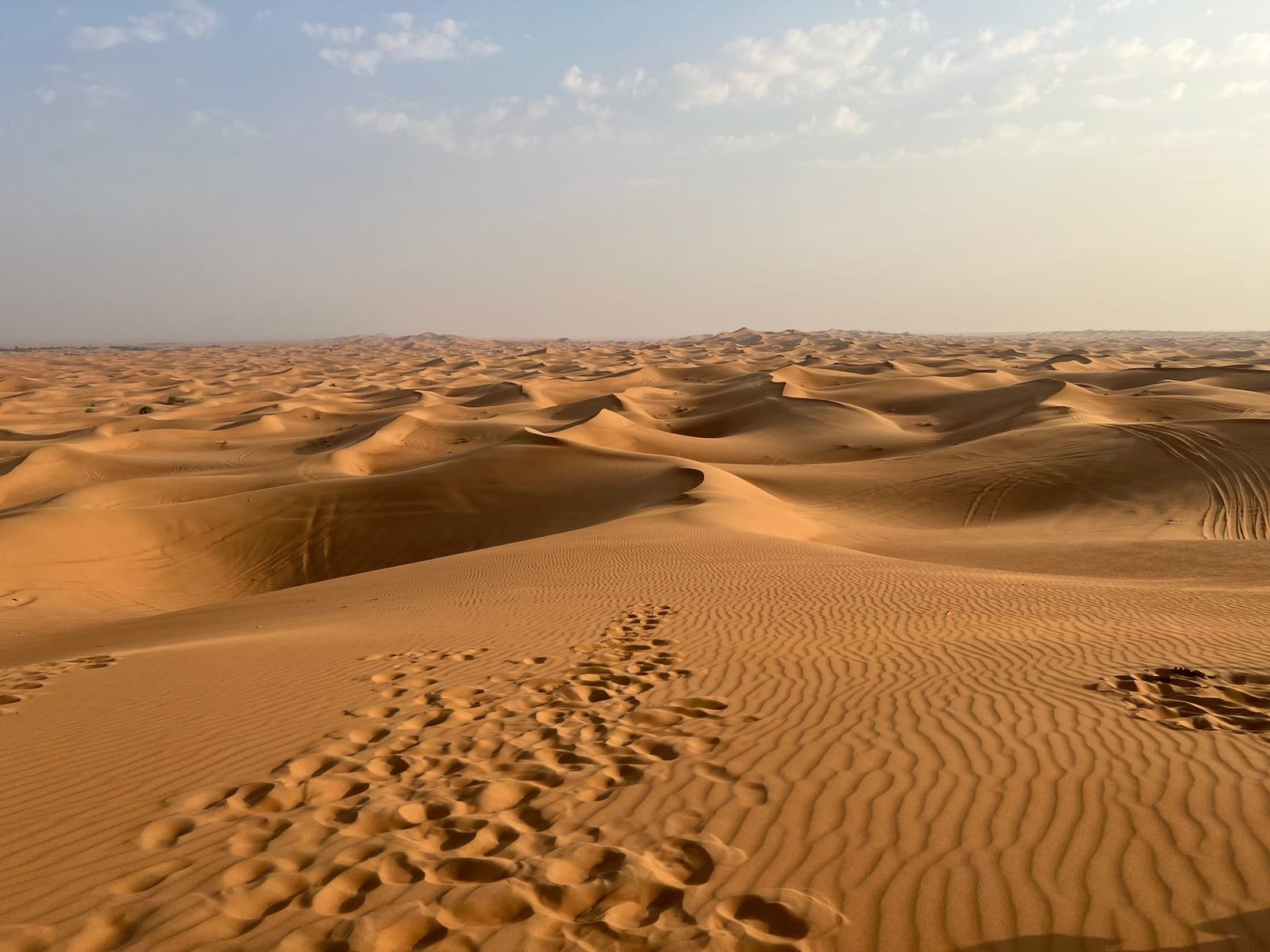
A guided night with the Dubai Astronomy Group
The easiest way to do it properly. The group's desert stargazing tour is listed at about AED 550 per person (AED 1,100 for two) and includes an astronomer guide, professional telescopes, Arabic coffee and dates. A separate Milky Way trip to a dark site in Abu Dhabi, in season only, is listed at AED 1,800 for up to two people. Check prices and dates on the group's own site, and book ahead.
 #2
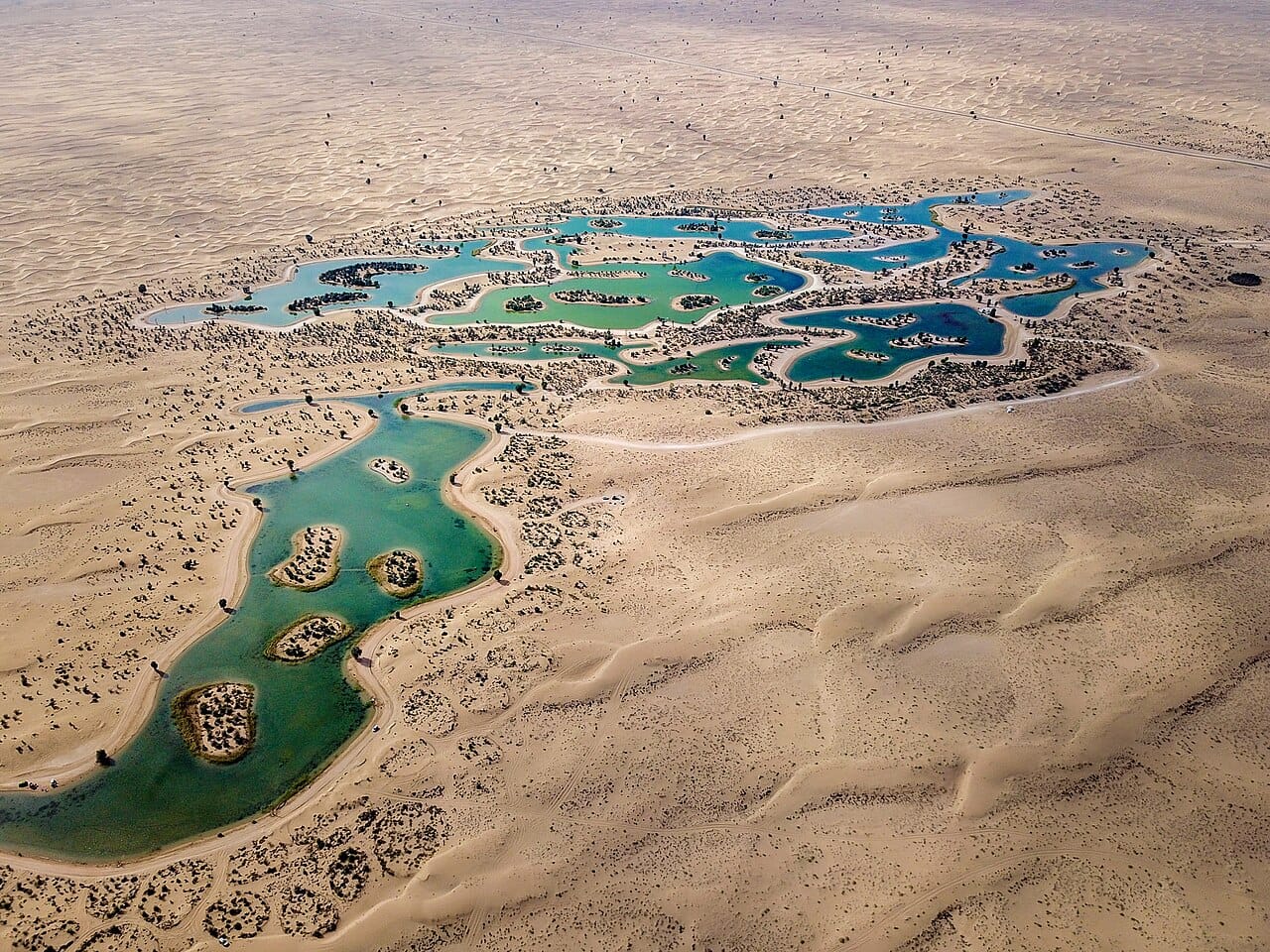
Al Qudra desert
The nearest respectable dark-ish ground, with open horizons and no buildings, and the Dubai Astronomy Group has listed meteor-shower evenings in the Al Qudra desert. City glow still lifts the sky on one side, so turn your back on Dubai. There are no facilities after dark, so bring water, warm clothes and a charged phone, and do not drive off the tarmac without experience.
 #3
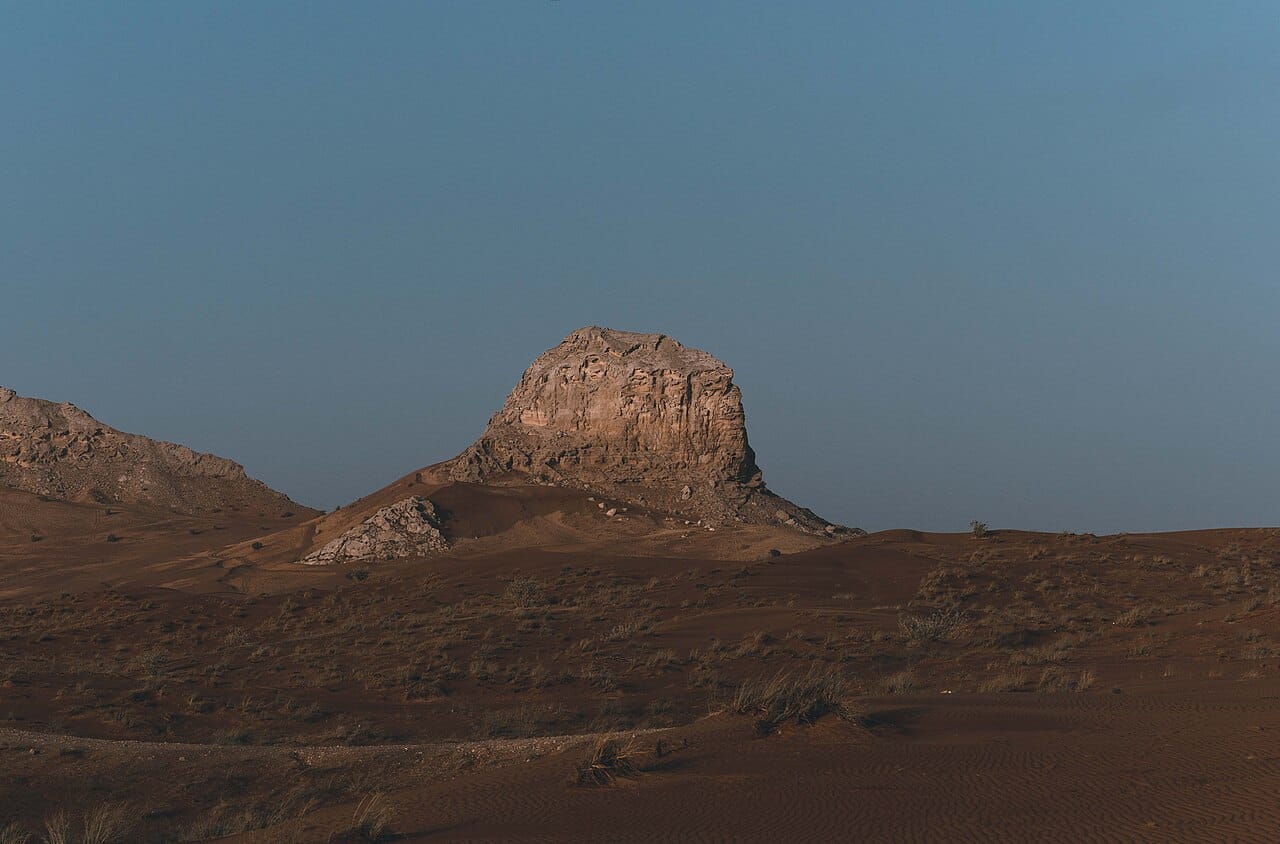
Mleiha and Fossil Rock, Sharjah
Fossil Rock, the limestone outcrop above the dunes near Mleiha, sits further from Dubai's glow and has a name for desert nights and camps. It is a longer drive, so it suits a planned evening, not a spur-of-the-moment one. Ask the operators what they currently offer after dark, and check opening times and access rules before you set off.
 #4
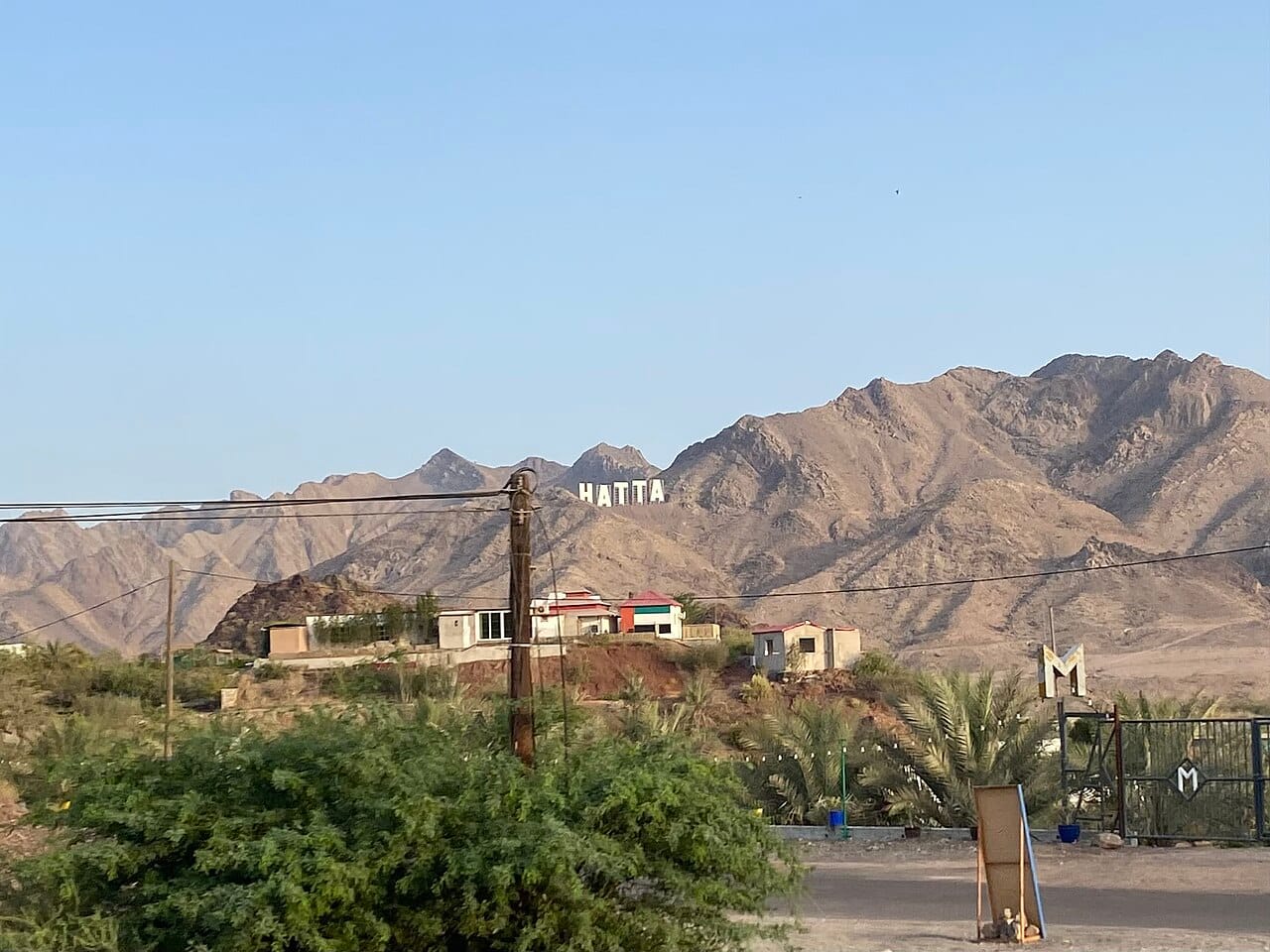
Hatta and the Hajar Mountains
Hatta is far from Dubai's lights and a good place for a winter night, though the mountains cut the horizon on every side, so you see less of the low sky. It is cooler than the coast, and in winter you will want a coat. The drive is long enough that you either stay the night or accept a late return; see our Hatta guide for the road and the options.
 #5
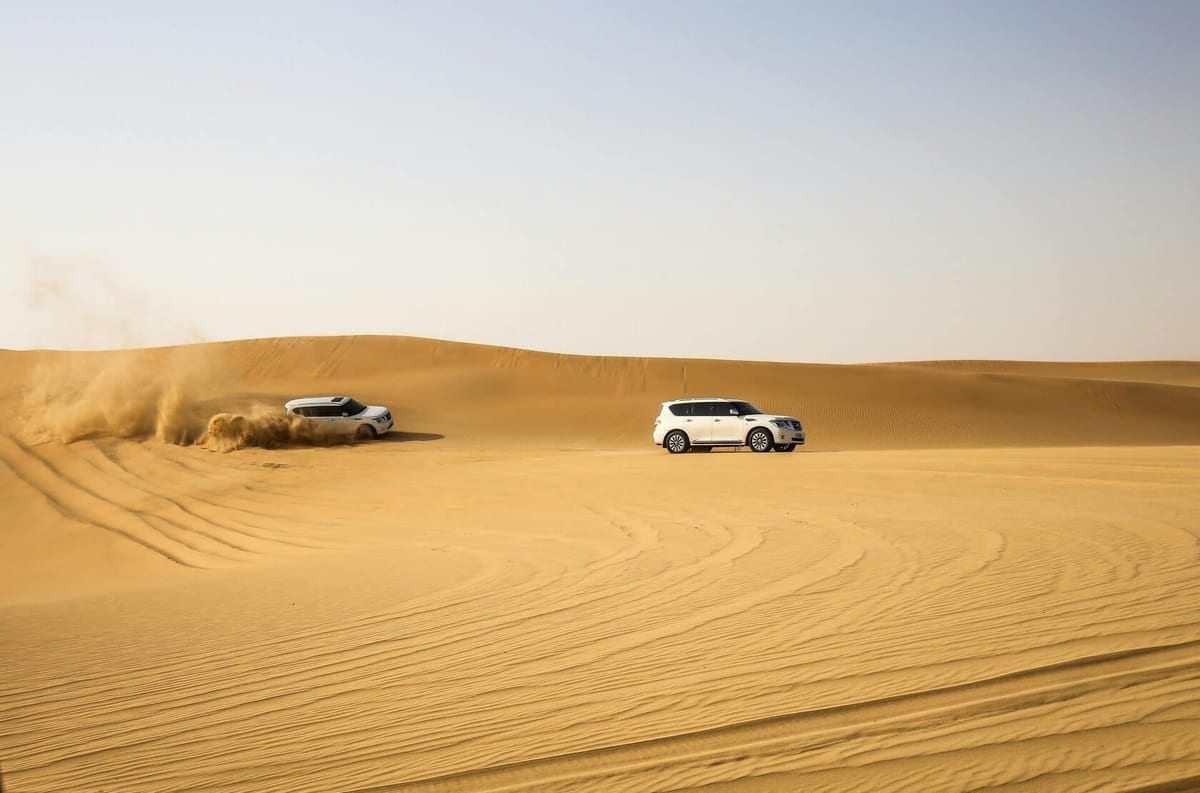
Lahbab Red Dunes: sunset first, stars second
Where our full-day safari takes place, and an honest note: it is a sunset and camp evening, not an astronomy trip. The camp is lit for dinner and the fire, Tanoura and belly dance shows, and the drive back starts after the programme. On a clear night you may notice more stars than in the city, but plan a separate evening if the sky is what you want.
Stargazing in the Dubai desert: the short answer
Go on a night within three or four days of new moon, at least 40 minutes from the city, and wait until about 1.5 hours after sunset so the sky is fully dark. The easiest route is a guided night with the Dubai Astronomy Group, listed at about AED 550 per person for 1.5-2 hours with an astronomer and telescopes. The comfortable months are November to April; the Milky Way's bright core shows from about March to October, so the best sky and the best weather only half overlap.
Be realistic about what you will see. Inside Dubai, the glow of the city leaves the Moon, the brightest planets and a few dozen of the brightest stars. In the open desert, or in the mountains at Hatta, thousands of stars appear and the Milky Way becomes visible on a good night. Distance from the city lights matters more than the exact spot.
Where to go: from the city edge to the darkest skies
Dubai's glow reaches a long way across flat desert, so the rule is simple: go further, and turn your back on the city. These are the places people use, in order of distance.
| Place | From Dubai | Sky | Notes |
|---|---|---|---|
| Inside the city, on a beach | 0 | Poor: city glow | The Moon, bright planets and the brightest stars only |
| Al Qudra desert | About 35-45 minutes | Better, with the city glow on one side | Open horizons; no facilities after dark; the astronomy group has listed meteor-shower evenings here |
| Lahbab and the Hatta road desert | 45-60 km | Good, further from the glow | Where our safari goes; the camp is lit |
| Mleiha and Fossil Rock, Sharjah | Roughly an hour | Darker | Known for desert nights and camps; check what operators offer |
| Hatta and the Hajar Mountains | About 130 km, 1.5-2 hours | Dark, but the mountains block the low sky | Cooler than the coast; a long drive back |
| Dark sites in Abu Dhabi, such as Al Khatim and Liwa | Far; a long drive or a planned trip | The darkest | The Dubai Astronomy Group's Milky Way tour goes to a dark site in Abu Dhabi |
Distances are approximate; the further from the city lights, the more stars you see.
For the drive to Hatta, see Dubai to Hatta and the Hatta day trip guide. For Al Qudra, cycling at Al Qudra has the location and the track it sits beside.
Moon phase: the rule that matters most
The Moon is the biggest light in the sky. A full moon makes the desert bright enough to walk by and drowns out the Milky Way and every faint star; a new moon gives the darkest skies. A lunar cycle lasts about 29.5 days, so there is a good window roughly every month, and you can check the exact dates in any moon app.
| Moon phase | What the sky is like | Best for |
|---|---|---|
| New moon, and 3-4 days either side | Darkest; the Milky Way and faint objects show best | Photography, telescopes, serious stargazing |
| Crescent | Dark once the Moon has set; early evening or pre-dawn | A good compromise; check moonset time |
| Quarter | Half the night is dark | Planets and the Moon through binoculars; pick the half of the night without the Moon |
| Full moon | Bright; stars fade, shadows are sharp | Walking in the dunes and moonlit photos, not stargazing |
Moonrise and moonset times change nightly; use an app such as Stellarium or SkyView to check the night you pick.
Remember also that the sky is fully dark only about 1.5 hours after sunset, which is around 7 PM in winter and about 8:30 PM in June. Arrive in time to set up before it gets dark, and let your eyes adjust for 20-30 minutes.
Season: when the Milky Way shows and when you stay comfortable
The seasons pull in different directions. The bright core of the Milky Way is a spring-to-autumn sight, but those are the hot months; the winter nights are the comfortable ones, with Orion and the winter constellations instead.
Dust and haze can wash out the sky on any night, so check visibility on the day, not just the moon calendar.
| Months | In the sky | In the desert |
|---|---|---|
| November-February | Orion, the Pleiades and the winter constellations; the Geminids meteor shower in mid-December | Pleasant to cold; the open desert can fall to about 10°C, so bring a jacket |
| March-April | The Milky Way core starts to show, in the hours before dawn | Warm nights; a good balance |
| May-August | The core is high at night; the Perseids meteor shower in mid-August | Hot and humid; the best sky, the worst comfort |
| September-October | The core sinks in the evening sky | Nights still warm |
Meteor showers are best on moonless nights; check the Moon for the year you travel.
For our own desert programme by month, see the best time for a desert safari and, for the winter holiday weeks, Dubai in December.
Guided night or do it yourself?
A guide gets you the telescopes, the right site and someone who knows the sky. The Dubai Astronomy Group lists its desert stargazing tour at about AED 550 per person (AED 1,100 for two), lasting 1.5-2 hours and including an astronomer guide, professional telescopes, Arabic coffee and dates. Its Milky Way trip to a dark site in Abu Dhabi takes 2-3 hours and is listed at AED 1,800 for up to two people, in season only. An optional pickup is available, and the group runs public events through the year; check the group's own site for current prices and dates, as they change. The group also lists a public observatory, Al Thuraya Astronomy Centre; check its days, hours and tickets.
Doing it yourself is free and perfectly possible, with caution. Use a proper car for the road, keep to the tarmac or marked tracks (driving onto dunes without experience is how people get stuck), tell someone where you are, and carry plenty of water. The desert includes protected reserves and areas with their own rules, so check where you can stop and camp before you go. Leave the drone at home: the drone rules guide explains why, and the official source has the final word.
What to bring
A little preparation makes a long night far better:
- A warm layer, even in spring. Winter nights in the open desert can drop to about 10°C or lower, and sitting still feels colder.
- A red torch or a phone red-light mode. White light ruins your night vision for 20 minutes.
- A mat or a blanket, so you can lie back and look up; add a flask of tea or coffee.
- Binoculars. They show the Moon's craters, the Pleiades and, in winter, the Orion Nebula, for far less than a telescope.
- A stargazing app, downloaded in advance because signal can be weak, to name planets, constellations and satellite passes.
- Water, snacks, a power bank and a full tank, plus insect repellent in the warmer months.
- For photos, a tripod and night mode on a phone catch the brighter stars; the Milky Way needs a dark site and exposures of 10-25 seconds.
Our desert evening and the stars: how they fit
We run desert days, not astronomy nights, and it is better to say so. The full-day desert safari takes 7 hours and is from $45 per person ($65 with the 30-minute quad bike ride): hotel pickup in Dubai, Sharjah or Ajman, 30-45 minutes of dune bashing on the Red Dunes, sandboarding, a camel ride, sunset, then a BBQ dinner with a fire show, Tanoura and belly dance at Al Khayma camp, with a drop-off at your hotel. You agree the date on WhatsApp and pay on the day. The camp is lit and the programme is the point, so treat any stars you notice as a bonus.
If you want both, do them on different evenings, and read the Lahbab Red Dunes guide for where the safari goes. For a sleep-in-the-desert plan with a longer night, see the overnight desert safari guide. Do not book the sunrise balloon for the morning after a late night under the stars: the pickup is before dawn, the flight is 40-70 minutes, and the day is 4-5 hours door to door; it is from $275 per person, with a 30% deposit.
If you would like an evening that ends in the dark with an engine, the evening quad bike safari is from $70 per person; for ideas on what else to do after dark, see Dubai at night.
FAQ
What is the best time for stargazing in the Dubai desert?
A night within three or four days of new moon, starting about 1.5 hours after sunset when the sky is fully dark. For comfort, go between November and April; the Milky Way's bright core shows from about March to October.
Can you see the Milky Way from Dubai?
Not from the city, where the glow hides it. From a dark site in the desert or in the mountains at Hatta, on a moonless night between about March and October, it can be visible. A guided Milky Way trip to a dark site in Abu Dhabi is listed by the Dubai Astronomy Group in season.
How much does a stargazing tour in Dubai cost?
The Dubai Astronomy Group lists its desert stargazing tour at about AED 550 per person (AED 1,100 for two) for 1.5-2 hours, with an astronomer guide and telescopes. Prices and dates change, so check the group's website.
Can I stargaze on a desert safari?
Not really. A safari is built around dune bashing, sunset and a camp dinner with shows; the camp is lit and you drive back after the programme. If the sky is what you want, book a separate stargazing night.
Is it cold in the desert at night?
In winter, yes. The open desert can fall to about 10°C or lower between December and February, and sitting still makes it feel colder. In summer, nights stay hot, which is why most people stargaze in the cooler months.
Do I need a 4x4 for stargazing?
Not for the tarmac roads to Al Qudra or Hatta, but do not drive onto soft sand without experience and the right vehicle. A guided night or a tour takes care of the driving.
When are the meteor showers?
The Geminids peak in mid-December and are the best winter shower; the Perseids peak in mid-August, in the heat. The Moon matters: a bright moon hides most meteors. The Dubai Astronomy Group lists events through the year.
Recommended Dubai tours for this guide
Full-Day Desert Safari in Dubai
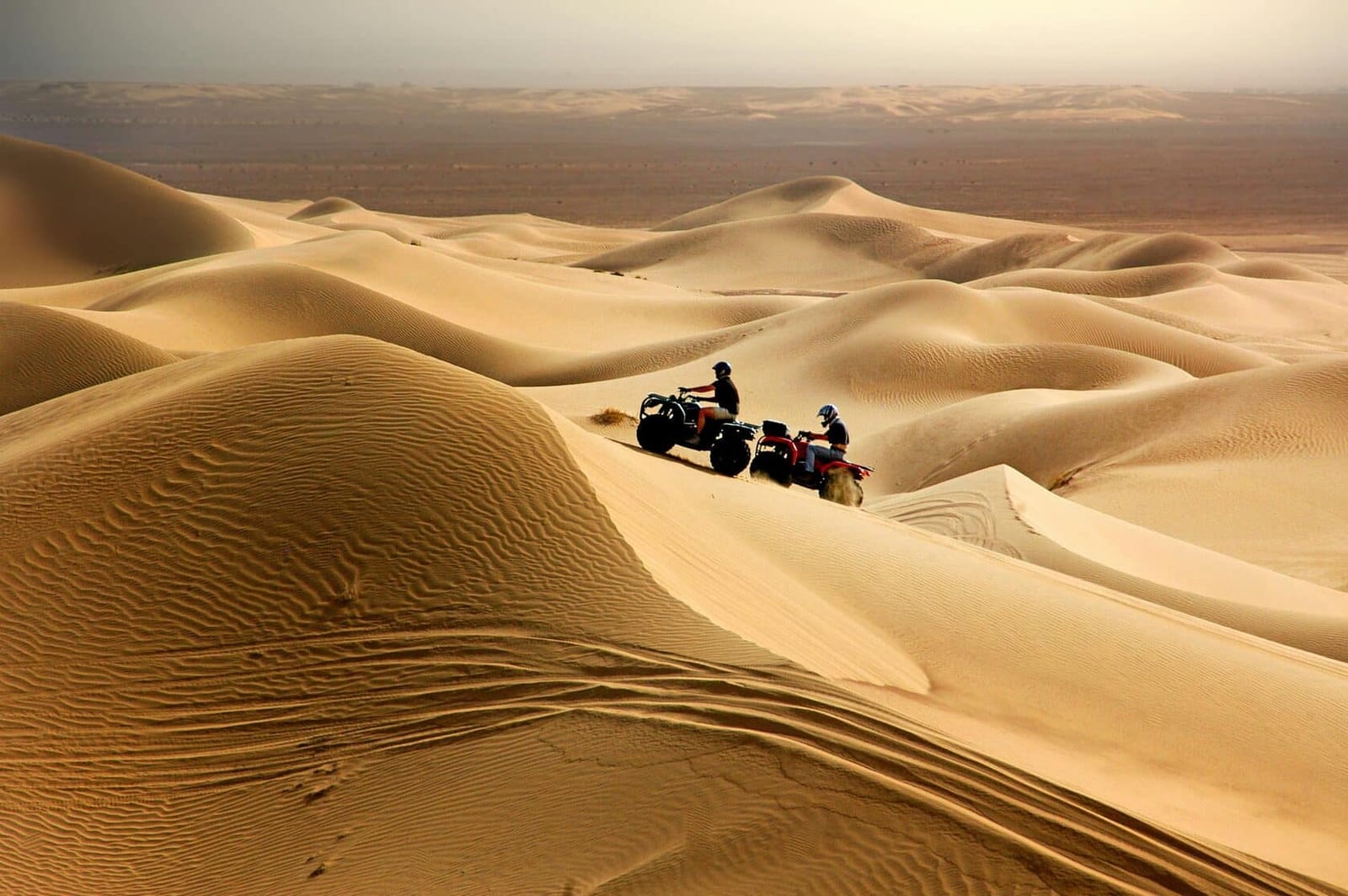
It is the slow-travel version of the classic safari: more time on the dunes, sunset without the crowds and a full evening programme at a premium camp with air-conditioned tents, unlimited drinks and a large BBQ buffet with vegetarian and gluten-free options. Everything is arranged from the hotel door — a licensed English-speaking driver, the 4x4, the camp and the shows.
- Duration
- 7 hours
- Area
- Lahbab Desert, Dubai
- Format
- Full-day desert safari
- Best for
- families, couples and first-time desert visitors who want the full evening programme
From $45 per person No prepayment
View tour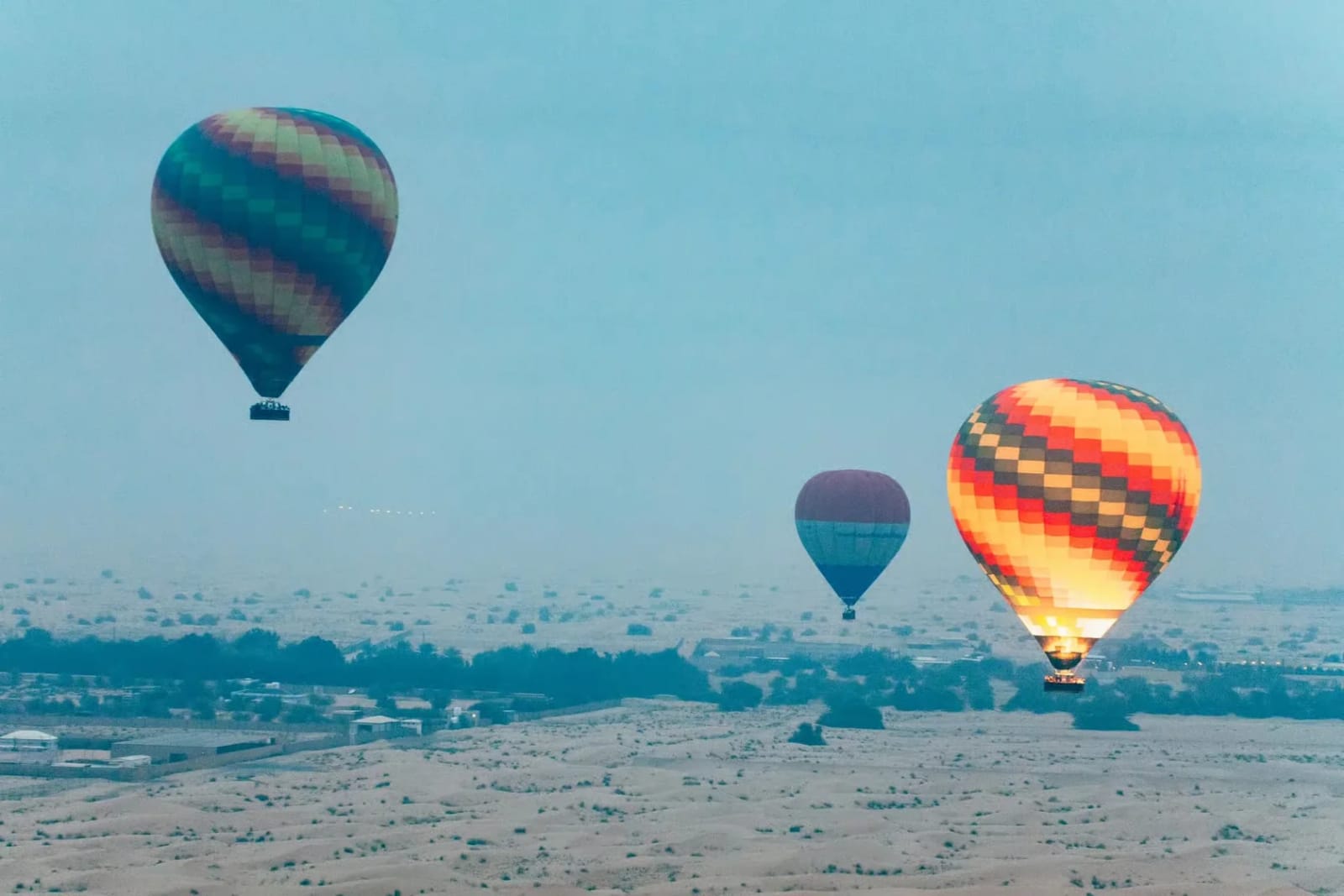
Sunrise Hot Air Balloon in Dubai
It is the desert from above at first light: gazelles, oryx and camels in the Dubai Desert Conservation Reserve, the Hajar Mountains on the horizon and the dunes turning gold. After landing a vintage Land Rover or SUV takes you to a private Bedouin camp for a gourmet breakfast (veg and non-veg options), a short camel ride and a falcon photo, and every guest gets an electronic flight certificate signed by the pilot.
- Duration
- 4-5 hours
- Area
- Dubai Desert Conservation Reserve
- Format
- Shared sunrise balloon flight with breakfast
- Best for
- couples, photographers and anyone who wants the desert at sunrise from above
From $275 per person 30% deposit
View tour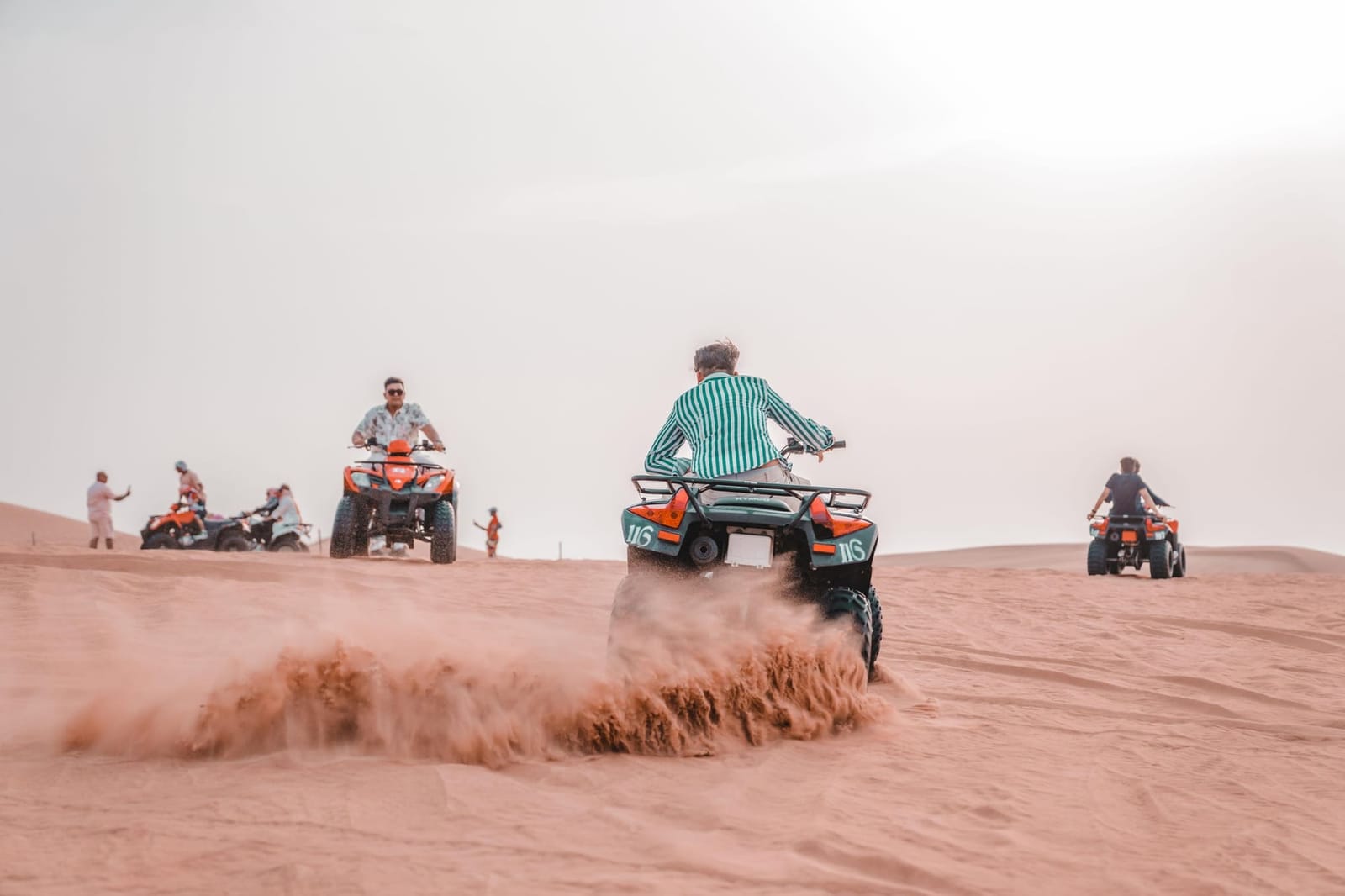
Evening Quad Bike Desert Safari
It is the desert safari for people who want to drive, not just ride along: a full hour on a self-drive quad is part of the price, from $70 per person on a bike shared by two guests or $105 on your own quad. The rest of the evening is the classic camp programme — sandboarding, a camel ride, sunset photos, Arabic coffee and dates, henna for women, a live BBQ buffet and the shows — with hotel pickup and no prepayment.
- Duration
- 6-7 hours
- Area
- Lahbab Desert, Dubai
- Format
- Shared quad safari
- Best for
- couples, friends and active travellers who want to drive a quad on the dunes, not just ride in a 4x4
From $70 per person No prepayment
View tour📚 Keep reading
Photos: Al Qudra desert — Charbel Zakhour, CC BY-SA 4.0, Mleiha and Fossil Rock, Sharjah — Adrian Chavez, CC BY-SA 4.0 (Wikimedia Commons).