

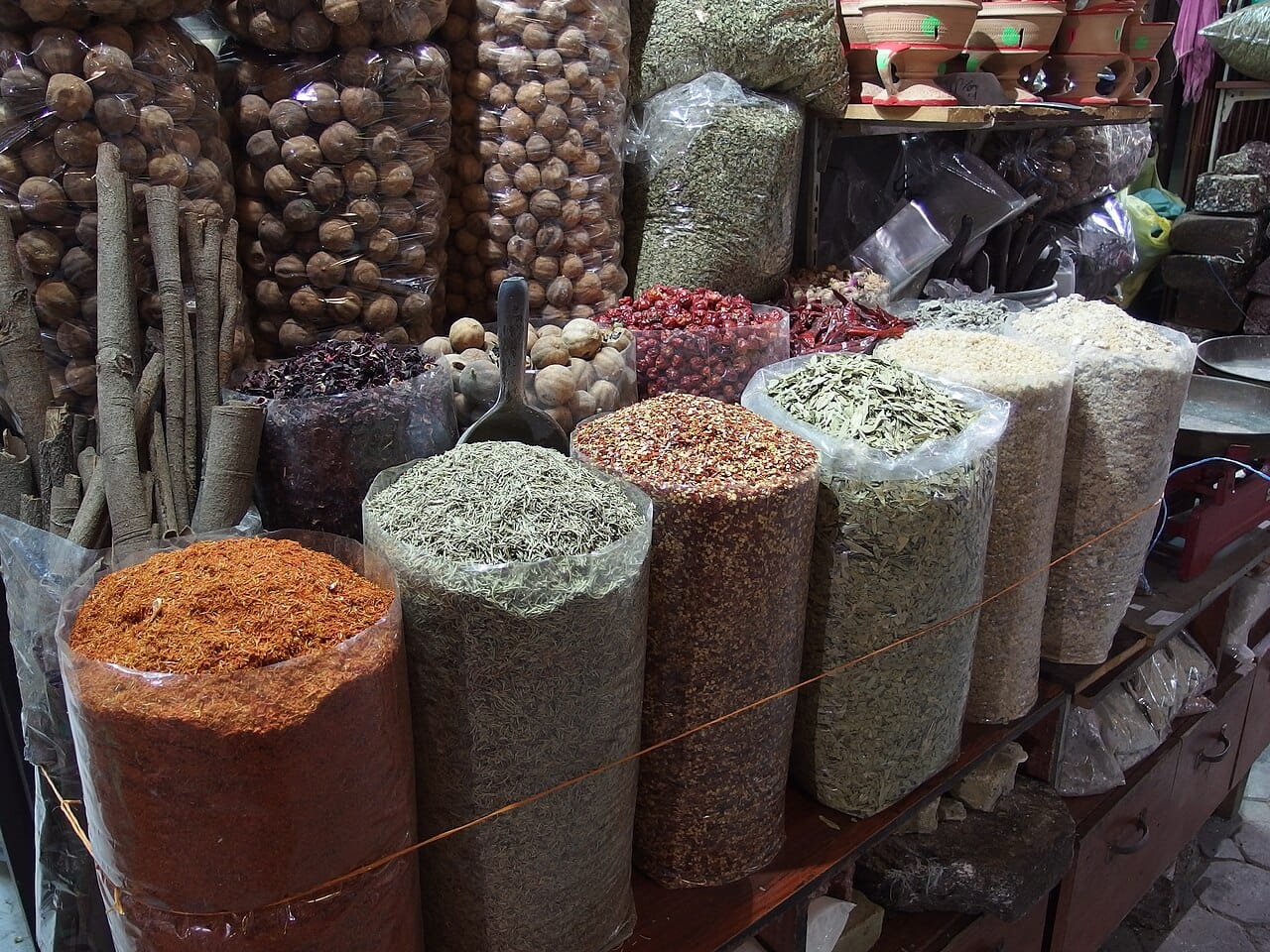
The Dubai Spice Souk is a free-to-enter market in Deira, a short walk from the Gold Souk, and the best buys are sealed saffron, dried limes, cardamom, frankincense and spice blends sold by weight. Decent saffron is reported at roughly AED 15-25 a gram, so a very low price is a warning. Haggling is mild, the best time is after 4 PM and half an hour is enough. This guide covers what to buy, how to judge saffron and how the souk fits our Old Dubai walking tour, from $35.
By SB Excursions · Published 29 October 2026 · Updated 29 October 2026
Tour on this route: Old Dubai Walking Tour — From $35 per person, 3-4 hours.
How long do I need at the Dubai Spice Souk?
Half an hour to an hour. It is a few lanes in Deira, free to enter, and most visitors add the Gold Souk next door for another 45 minutes. On our Old Dubai walking tour, which also covers Al Fahidi, Al Seef and an abra ride, the whole route takes 3-4 hours.
This guide also answers:
- How much does saffron cost at the Dubai Spice Souk?
- Do you haggle at the Spice Souk?
- What is the best time to visit the Spice Souk?
Five things to look for at the Spice Souk
 #1
Saffron and the open sacks
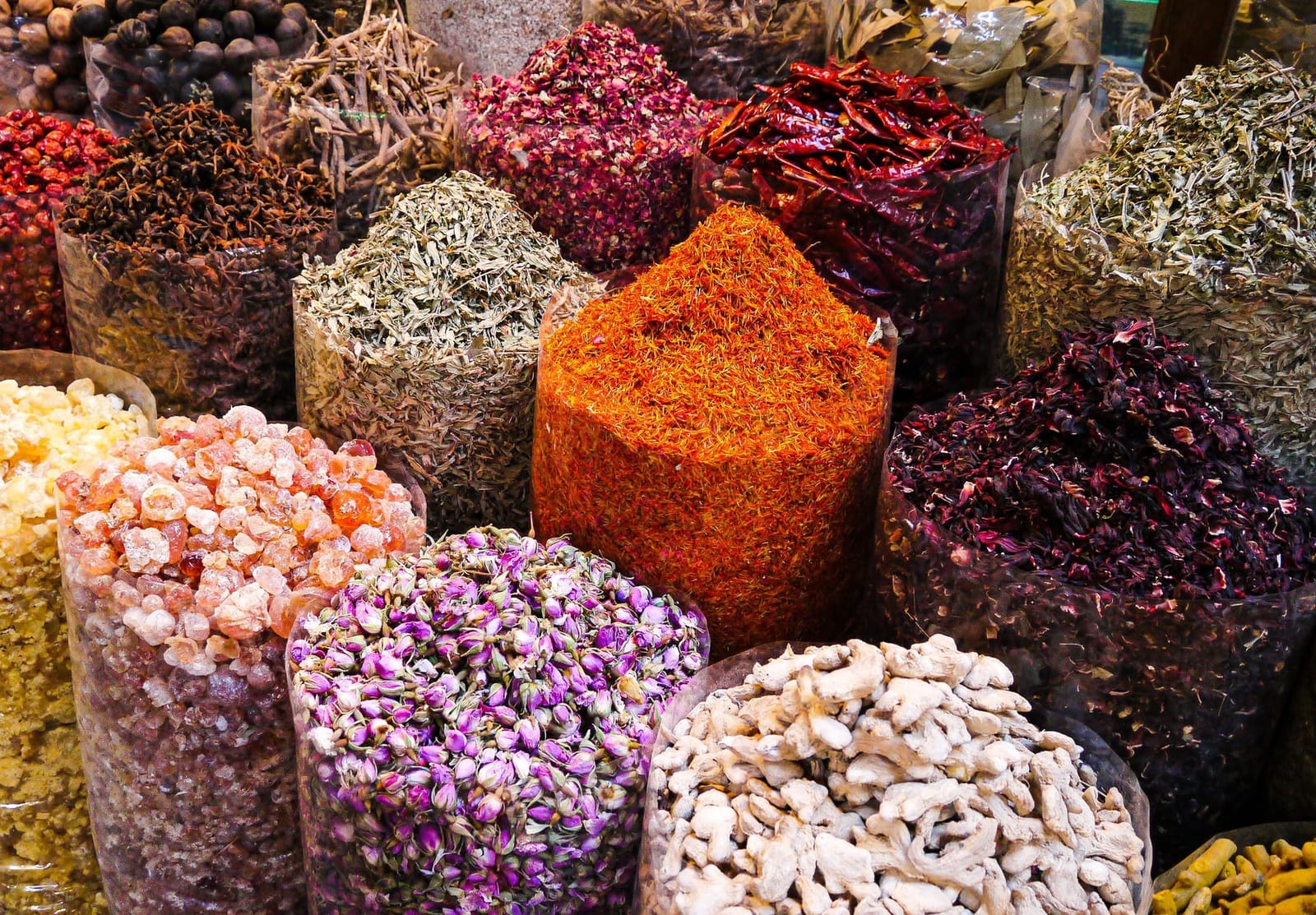
Saffron is the one item where the price per gram matters and a mistake costs real money. Buy whole threads rather than powder, ask for a sealed pack of one to five grams, compare the price against a supermarket, and keep the receipt. Open sacks of chillies, cinnamon and dried limes next to it are cheap and low-risk, so spend your haggling energy elsewhere.
 #2
Dates, nuts and dried fruit
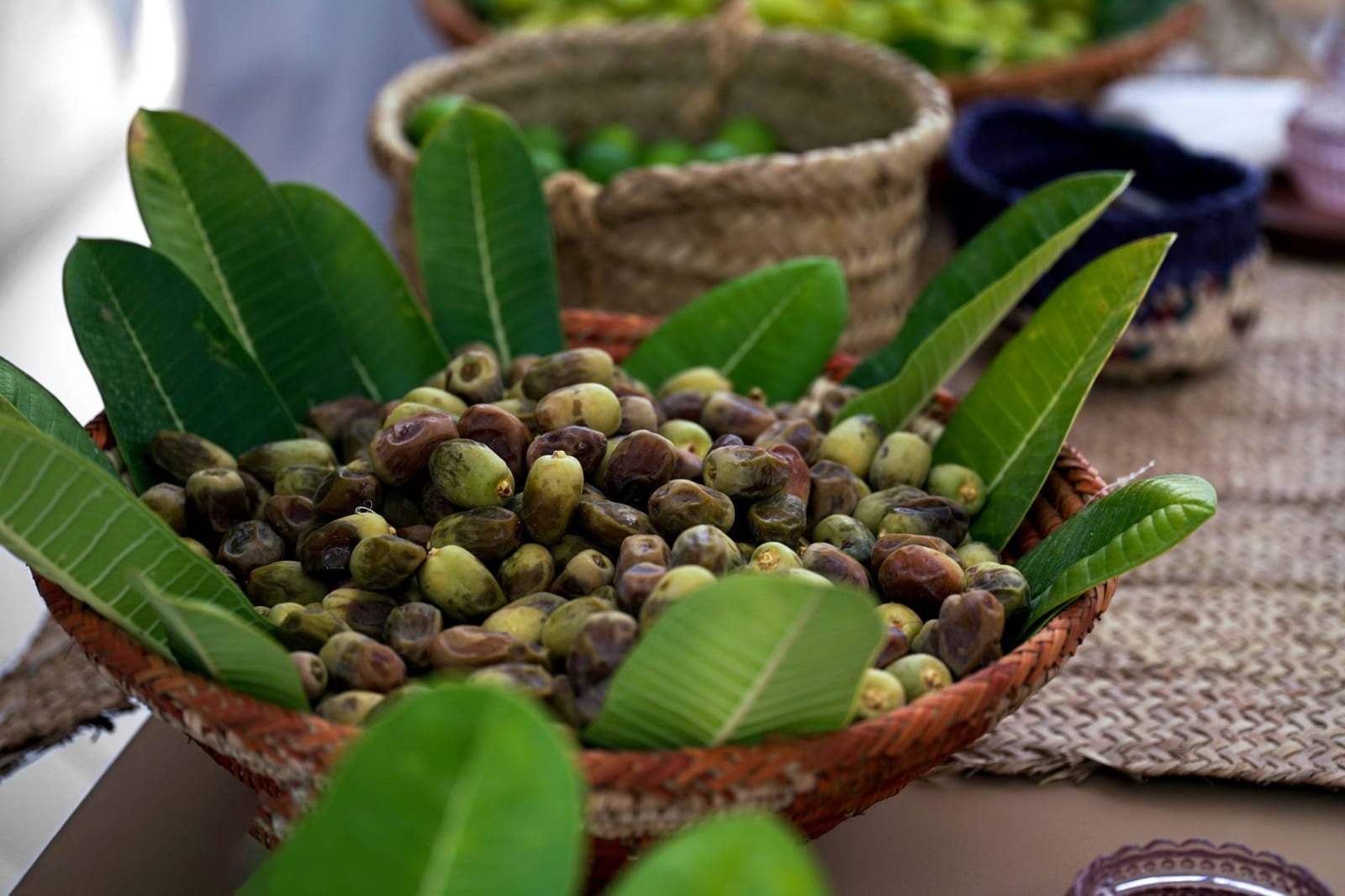
Many spice shops also sell dates, almonds, pistachios and dried fruit by the kilo, and you can usually taste before you buy. Dates are the safest gift from the area: they keep well, pack flat and need no explaining. Ask for the variety and the price per kilo, and have them weighed in front of you. Our dates guide covers the varieties and what to taste first.
 #3
Coffee, cardamom and karak masala
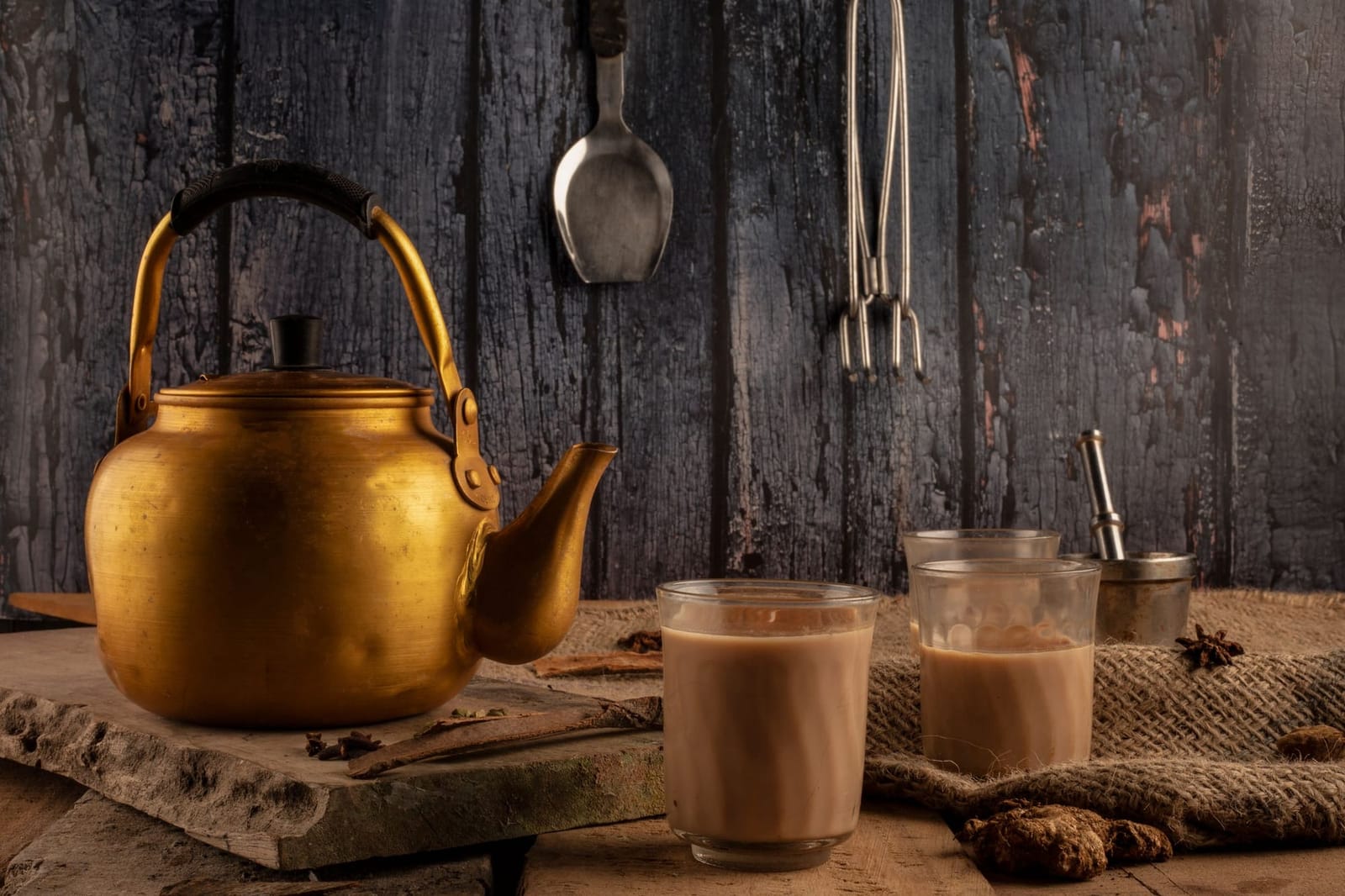
Green cardamom pods, ready-mixed karak chai masala and Arabic coffee with cardamom are the everyday flavours of the Gulf, and the souk sells them by the bag for very little. They are light, they last well if kept airtight, and they make a better souvenir than a keyring. Smell the pods first: fresh cardamom is sharp and sweet, stale cardamom smells of nothing.
 #4
The Gold Souk next door
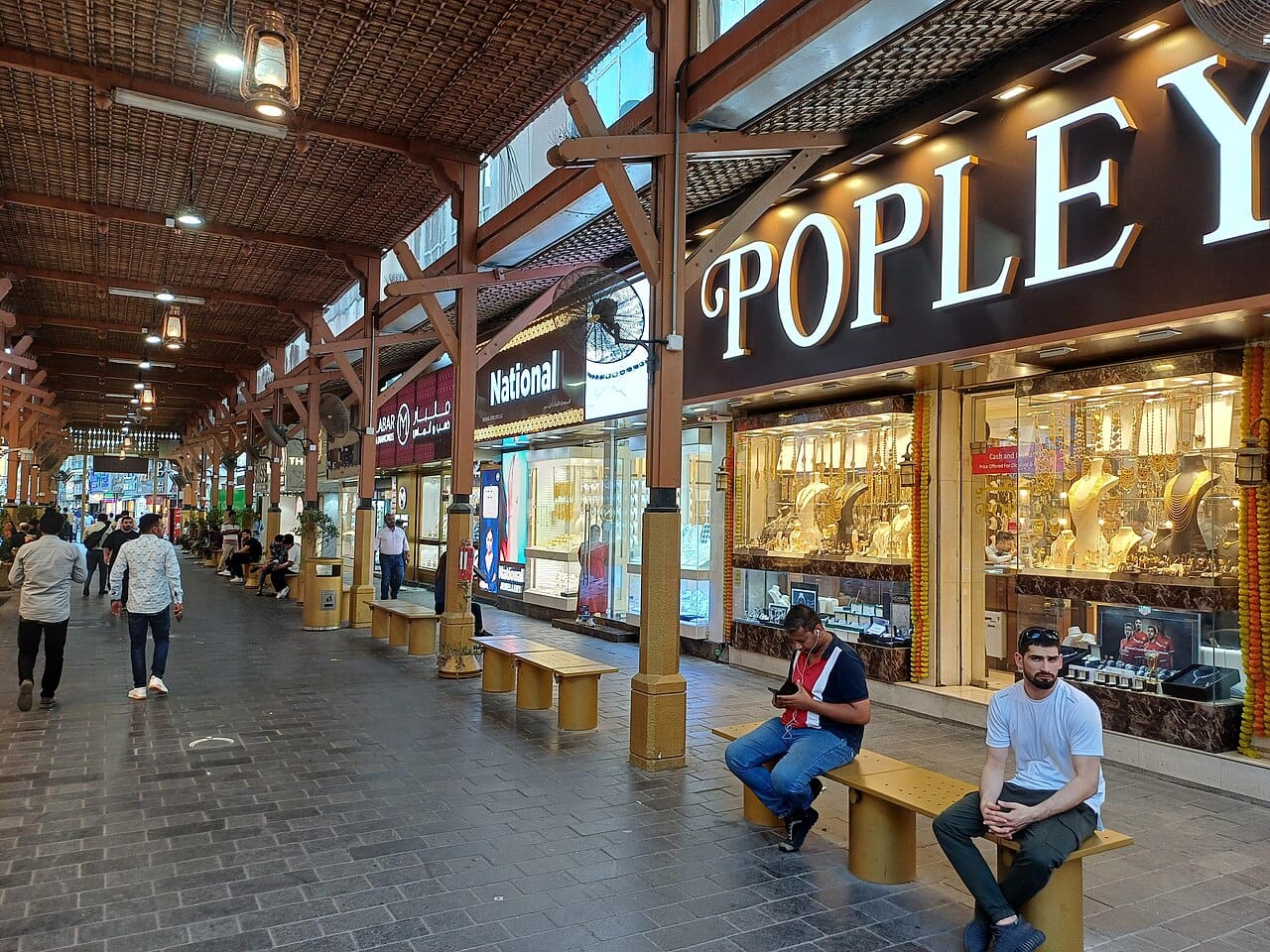
The Gold Souk is a covered timber arcade of jewellers whose windows glow after dark, and it is a short walk from the Spice Souk, so most visitors do the two together. You do not need to buy anything to enjoy it. If you do, gold is priced by weight and the negotiation is on the making charge; our Gold Souk guide has the detail.
 #5
The abra back to Bur Dubai
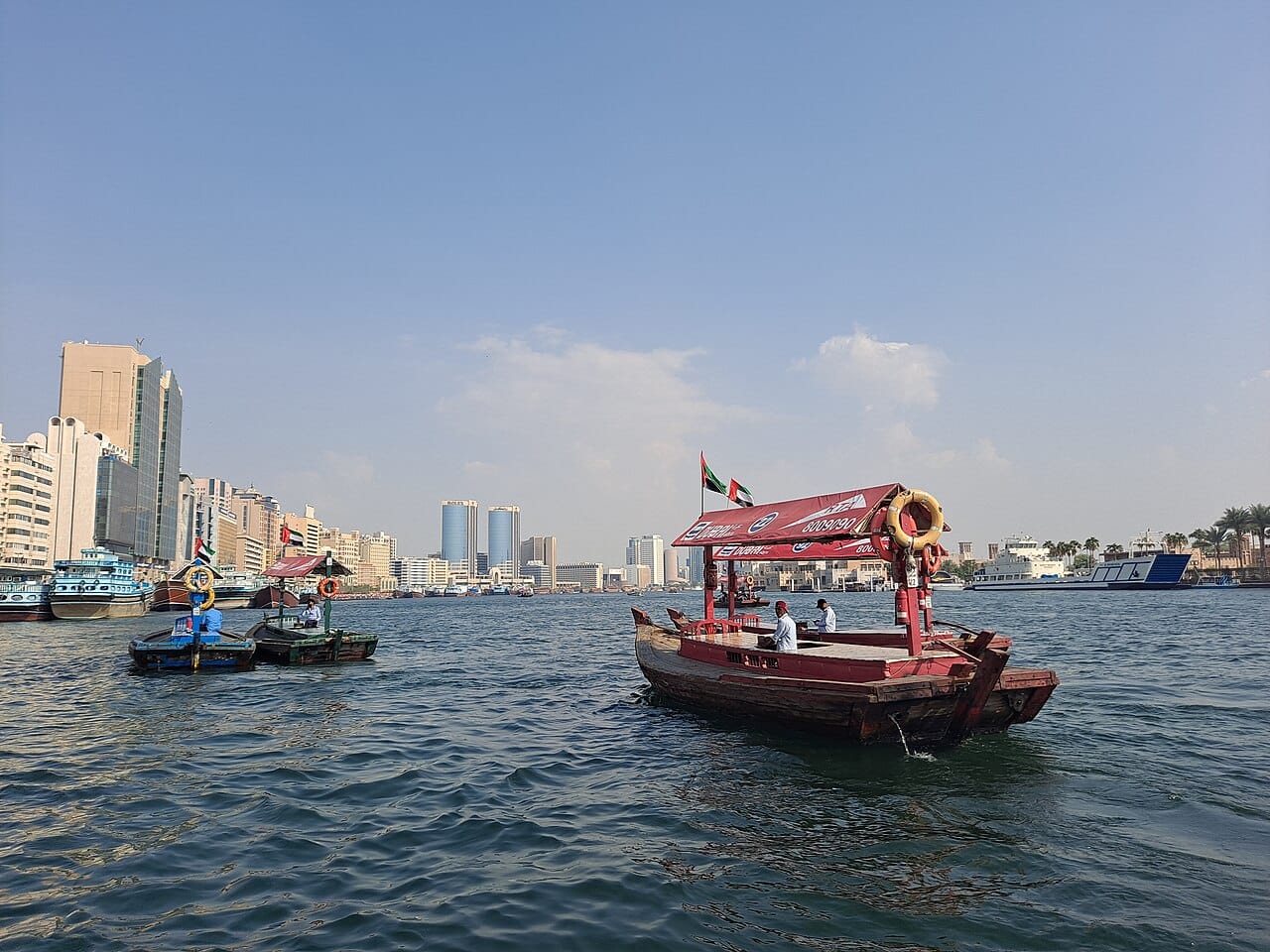
A red-canopied wooden abra takes you across the Creek to the Bur Dubai side in a few minutes for AED 1-2, paid to the boatman on board. It is the natural end to a souk loop, with the dhows moored alongside and the Deira bank behind you. Cross once by daylight and, if you are still out, once after dark when the bank is lit.
The Dubai Spice Souk in one minute
The Spice Souk is a few lanes of open-fronted shops in Deira, on the north bank of Dubai Creek, where spices, dried limes, frankincense, herbs and nuts are sold by weight. It is free to enter, 30-60 minutes is enough, and it sits a short walk from the Gold Souk, so the two are normally visited together. The Metro stop is Al Ras on the Green Line, and the abra from Bur Dubai lands you on the Deira side within a few minutes' walk.
It suits anyone who cooks, drinks Arabic coffee or tea, or wants a small, cheap gift that smells of the place. It suits less well anyone who dislikes strong smells in a narrow lane, or who expects a quiet, air-conditioned shop. The lanes are shaded in places but not cooled, so the time of day matters, and the timing section below says when to go.
If you are planning a wider shopping day, the guide to Dubai's souks compares them and what to buy in Dubai lists souvenirs by budget. For gold, read the Gold Souk guide before you walk in.
What to buy at the Spice Souk
Everything is sold by weight, so the useful habit is to ask the price per 100 g or per kilo before anything goes into a bag, and to watch it being weighed. Everyday spices are cheap, and a bag usually costs about as much as a coffee in a mall, or less. Saffron, good frankincense and anything oud-based are where the bill grows. The table lists what visitors actually take home.
| Item | What it is | Notes for visitors |
|---|---|---|
| Saffron | Dried red threads of the crocus flower | The one costly buy; buy small, sealed and with a receipt (next section) |
| Dried limes (loomi) | Whole sun-dried limes, pale to black | Used in Gulf stews, rice and tea; pierce before cooking; light and cheap |
| Cardamom | Green pods | Goes into Arabic coffee and karak chai; smell for freshness, store airtight |
| Frankincense (luban) and bukhoor | Resin tears and scented incense chips | Burned on charcoal or in a small burner; strong smell, sold by weight |
| Baharat and spice blends | Arabic mixed spice and rice or grill blends | Good small gifts; ask what is in the blend and when it was ground |
| Hibiscus, rose buds, herbal teas | Dried flowers and herbs for infusions | Very light to pack; hibiscus makes a tart cold drink |
| Sumac and za'atar | Tangy red powder and a thyme-based herb mix | Good on salads and grilled meat; check the smell is fresh |
Prices change and are not posted on tariffs, so ask before it is weighed and treat any figure you read as a guide.
One category to skip: anything sold as a miracle cure. Shops will tell you what a spice or oil is good for; treat that as chat, not advice, and ask a pharmacist or doctor if you have a health question. For ordinary cooking and tea, the souk is excellent value.
Saffron: how to buy it without being fooled
Saffron is the reason the souk has a reputation, and also the reason for most complaints, because a thread of dyed filler looks much like a thread of the real thing. None of the checks below is proof, but together they filter out the worst.
- Buy threads, not powder. Powder is easy to cut with cheap fillers and you cannot judge it by eye.
- Look at the colour and shape: deep red, thin, slightly trumpet-shaped at one end and often orange at the tip. Very dark, heavy or sticky threads, or lots of pale yellow or white pieces, are poor signs.
- Smell it: real saffron is floral and a little like honey, with a slightly bitter edge. No smell, or a chemical one, is a bad sign.
- Try the water test if the shop allows it: a few threads in warm water release a gold-yellow colour slowly over several minutes and stay red themselves, while fakes bleed bright red almost at once.
- Check the price per gram. Reports from the souk put decent threads at roughly AED 15-25 a gram, and genuine saffron is expensive everywhere, so a price far below that needs an explanation you are unlikely to get.
- Buy a sealed pack of one to five grams and keep the receipt. A supermarket or mall shop sells sealed saffron at fixed prices, which makes a handy comparison.
On grades, you will hear the names Negin and Sargol for the all-red threads and Pushal for threads that include paler parts, which are cheaper and weaker. One gram goes a long way, because a typical recipe calls for a pinch, a fraction of a gram, so there is no need to buy more than a few grams.
Haggling at the Spice Souk
Haggling here is gentle. Spices are sold by weight at a price the shop has in its head, and a small discount is normal when you buy several things, not a sport. The big percentage reductions you read about belong to the textile and souvenir stalls, not to spices. A sensible target is a small saving on a mixed bag of purchases, or a free extra bag of something, and anything in a sealed pack with a printed price is effectively fixed.
Our fuller guide to haggling in Dubai's souks covers the other markets. For this one, a few habits do most of the work:
- Ask the price of each item, walk on, and compare two or three shops before buying anything costly.
- Buy several items from one shop and ask what the total comes to, then ask politely whether that is the best price.
- Accept the tea or a taste if offered; it carries no obligation to buy, and a smile and shukran (thank you) end any pitch.
- Do not start negotiating unless you intend to buy. Once you agree a price, the deal is made.
- Ask before photographing traders or customers, and carry small notes, because change for a large note can be slow.
Getting there, opening hours and the best time
The souk is in the Deira Old Souk area, near the Deira abra station and a short walk from the Gold Souk. Station sponsor names change from time to time, so navigate by area names. The table gives the three practical routes.
| From | How | Notes |
|---|---|---|
| Anywhere on the Red Line | Change to the Green Line at Union or BurJuman and get off at Al Ras | Allow 5-15 minutes on foot from the station; our Metro guide explains Nol cards and fares |
| Bur Dubai (Al Fahidi, Textile Souk) | Abra across the Creek for AED 1-2 | Pay the boatman on board; boats leave when full |
| Taxi | Ask for the Spice Souk or Gold Souk, Deira | Traffic around the Creek is heavy at rush hour; the Metro is often quicker |
From the Marina or JBR it is about an hour by Metro with a change; a taxi is quicker but costs far more.
Shops keep their own hours. Most open in the morning and stay open into the evening, some close for a break in the early afternoon, and many open late on Friday. In Ramadan the hours shift and the evenings are the busy time. Go after about 4 PM, when the heat drops, the traders are back and the lanes fill, and in the hot months from May to September make it an evening visit.
Wear light clothes with shoulders and knees covered, which is the polite standard in Old Dubai; our dress code guide has the detail. Wear comfortable shoes, because the paving is uneven. For the rest of the district, the Old Dubai guide has a half-day plan and the abra guide covers the crossing.
Taking spices home
Dry spices, frankincense and dates travel well. Keep them in their sealed bags, pack them in your hold luggage if you can, and keep any oils or liquids within the cabin limits if you carry them in your hand luggage. Some countries restrict plant products, seeds or dried herbs at the border, so check your own country's customs rules before you fill a suitcase.
A small cloth bag or a zip bag stops the smell of cardamom and frankincense reaching your clothes. If you are buying a lot, the tourist VAT refund may apply to larger purchases at participating shops; our VAT refund guide explains how it works. Avoid anything made from coral, shell, ivory or animal parts, which export and import rules treat strictly.
The Spice Souk on our Old Dubai walk
The Spice Souk is one of the stops on our Old Dubai walking tour, a shared group walk of 3-4 hours with an English-speaking local guide, from $35 per person. It covers the Al Fahidi lanes and Al Seef, the old Bur Dubai souk, an abra ride across the Creek, the Spice Souk, where spices, dried limes and frankincense are sold from open sacks, and the Gold Souk. The $35 walk includes Arabic coffee or tea, dates, water and entry to a heritage house. The $55 option adds Emirati street-food tastings.
It meets in Al Fahidi near Sharaf DG metro, and the exact pin is sent after payment. Full prepayment confirms your place, and cancellation or a date change is free up to 24 hours before the start. It is mostly outdoors, so wear comfortable shoes and light clothes, bring sunglasses and a hat, and expect May to September to be very hot. It is not for children under 2, wheelchair users or people with limited mobility, and pushchairs and large bags are not allowed. Tastings contain gluten and dairy and may contain sesame and nuts, so tell us about allergies when you book.
For a cooler evening after the souks, the shared yacht hour leaves Dubai Marina hourly, from $32 per person, and the full-day desert safari, from $45, collects you from your hotel and includes a BBQ buffet, unlimited drinks including Arabic coffee, and shows at the camp.
FAQ
How long do I need at the Dubai Spice Souk?
Half an hour to an hour. It is a few lanes in Deira, free to enter, and most visitors add the Gold Souk next door for another 45 minutes. On our Old Dubai walking tour, which also covers Al Fahidi, Al Seef and an abra ride, the whole route takes 3-4 hours.
How much does saffron cost at the Dubai Spice Souk?
Reports put decent threads at roughly AED 15-25 a gram, and prices change, so check the tag. Genuine saffron is expensive everywhere, so a price far below that range is a warning sign. Buy whole threads in a sealed pack of one to five grams and keep the receipt.
Do you haggle at the Spice Souk?
Lightly. A small discount is normal when you buy several items from one shop, but spices are sold by weight and sealed packs have fixed prices. Ask the price per 100 g, compare two shops, and do not start negotiating unless you intend to buy.
What is the best time to visit the Spice Souk?
After about 4 PM, when the heat drops and the lanes fill with traders and shoppers. From May to September, when daytime temperatures are very high, go in the evening. Many shops open late on Friday and the hours shift in Ramadan.
How do I get to the Spice Souk by Metro?
Take the Green Line to Al Ras in Deira and walk 5-15 minutes. From the Red Line, change at Union or BurJuman. From Bur Dubai, the abra across the Creek costs AED 1-2 and lands you a few minutes from the souk.
Can I take spices through Dubai airport?
Dry spices, frankincense and dates are normally fine in hold luggage when sealed. Liquids and oils in hand luggage follow the usual cabin limits, and some countries restrict plant products at the border, so check your own country's customs rules and the airline's baggage rules.
Is the Spice Souk good with children?
For older children, yes: it is colourful, free and short. The lanes are narrow, busy and strongly scented, and pushchairs are awkward. Our Old Dubai walking tour is not for children under 2, and pushchairs and large bags are not allowed.
Recommended Dubai tours for this guide
Old Dubai Walking Tour
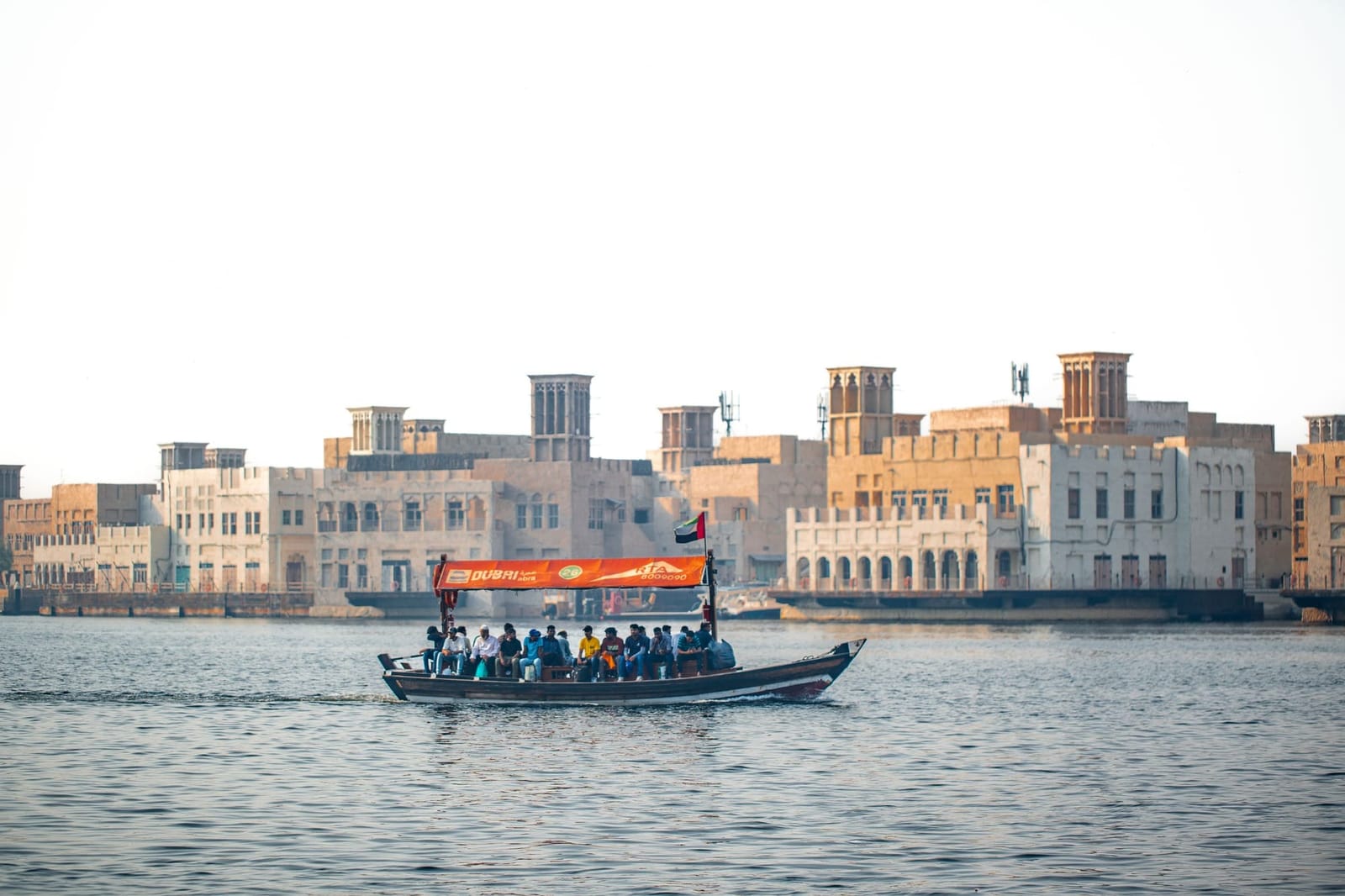
It is the Dubai that is walked rather than driven: the Creek where the city began as a trading port, the restored wind-tower quarter and the souks that still trade spices and gold. A local guide tells the story along the way. The $35 walk includes the abra, Arabic coffee or tea, dates and water; the $55 option adds street-food tastings.
- Duration
- 3-4 hours
- Area
- Old Dubai: Bur Dubai and Deira
- Format
- Shared group walk
- Best for
- first-time visitors, food lovers and anyone who wants the old trading side of Dubai on foot
From $35 per person Full prepayment
View tour
Full-Day Desert Safari in Dubai
It is the slow-travel version of the classic safari: more time on the dunes, sunset without the crowds and a full evening programme at a premium camp with air-conditioned tents, unlimited drinks and a large BBQ buffet with vegetarian and gluten-free options. Everything is arranged from the hotel door — a licensed English-speaking driver, the 4x4, the camp and the shows.
- Duration
- 7 hours
- Area
- Lahbab Desert, Dubai
- Format
- Full-day desert safari
- Best for
- families, couples and first-time desert visitors who want the full evening programme
From $45 per person No prepayment
View tour
Dubai Marina Shared Yacht Tour
It is the most stylish way to see the skyline without paying for a private charter: a premium yacht with spacious decks and 5-star hospitality, a red carpet at the pier and the crew helping with photos against JBR and Ain Dubai. Full pre-payment secures your slot — the hourly departures sell out — and the yacht leaves strictly on time.
- Duration
- 1 hour
- Area
- Dubai Marina
- Format
- Shared 1-hour sightseeing cruise
- Best for
- families, couples and anyone who wants the Marina skyline from the water without a private charter
From $32 per person Full prepayment
View tour📚 Keep reading
Photos: Open sacks of dried chillies, herbs, cinnamon bark and dried limes on a stall in the Deira Spice Souk — Guilhem Vellut from Annecy, France, CC BY 2.0, The Gold Souk next door — Radosław Botev, CC BY 3.0 pl (Wikimedia Commons).