

Haggle in the Textile Souk and at souvenir stalls, gently in the Spice Souk, and only over the making charge in the Gold Souk. Never haggle in malls, taxis or supermarkets. A workable rule on scarves and souvenirs is to open at about half the first quote and settle near two thirds of it, which is roughly a third off. This guide gives the savings to expect by place, the step-by-step method, the etiquette that keeps shopkeepers friendly and the mistakes that cost visitors money.
By SB Excursions · Published 29 October 2026 · Updated 29 October 2026
Tour on this route: Old Dubai Walking Tour — From $35 per person, 3-4 hours.
How much should I haggle down in Dubai souks?
On scarves and souvenirs, open at about half the first quote and settle near two thirds, which is roughly 30% off. In the Spice Souk expect a small discount, and in the Gold Souk only the making charge moves, so the total shifts by a few per cent. These are rules of thumb, not fixed rates.
This guide also answers:
- Should I pay in dollars or dirhams?
- Can I haggle at Global Village?
Where to haggle, from most room to none
 #1
The Textile Souk
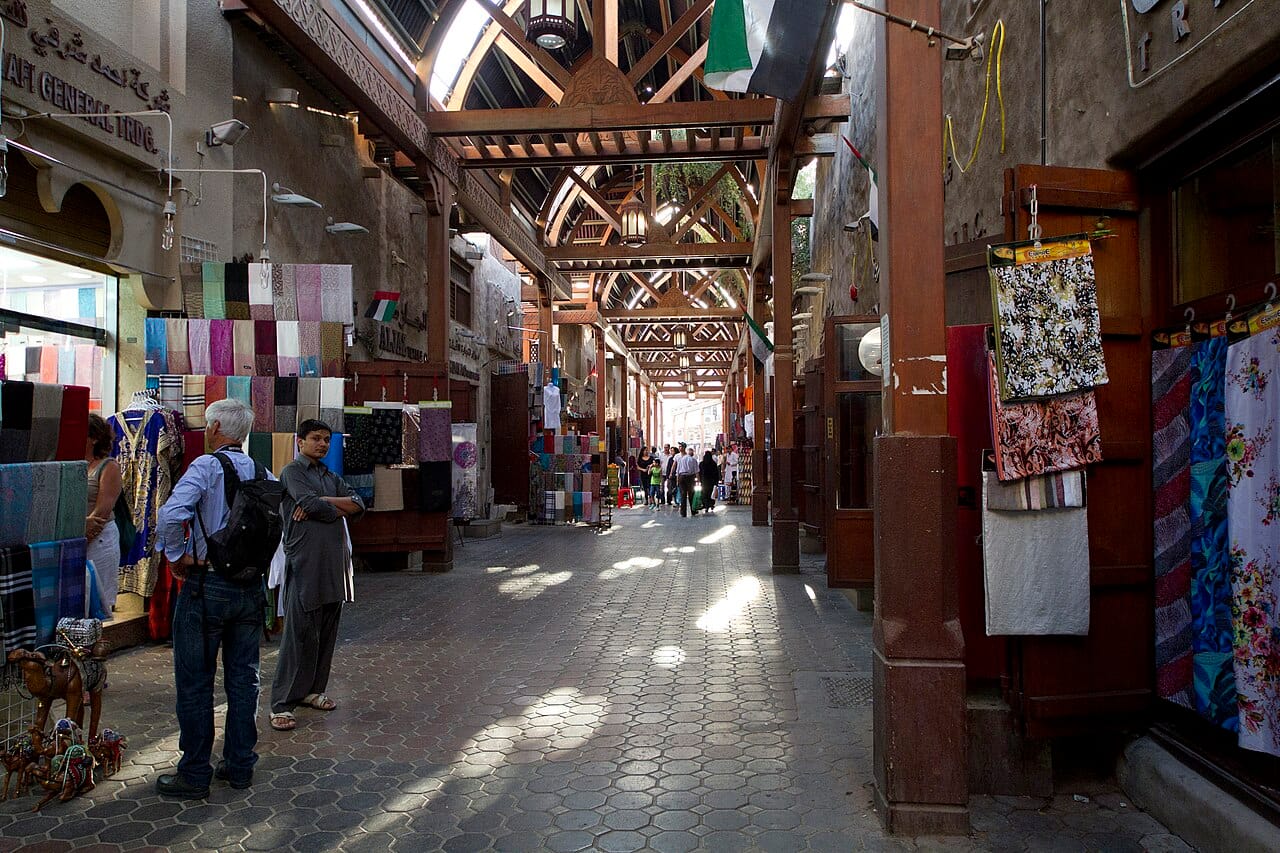
The most haggling room in Old Dubai. First prices on scarves and souvenirs are set high on purpose, and a counter-offer at about half is expected. Compare two shops, stay friendly and be ready to walk away; a settled price near two thirds of the first quote is a fair outcome, and a very low price on a scarf labelled pashmina rarely means real pashmina.
 #2
Global Village stalls
Global Village is a seasonal winter attraction, and Khaleej Times reported this season opening on 14 October 2026 with tickets at AED 25 on weekdays and AED 30 at weekends. Many independent stalls will negotiate, especially when you buy several items, while branded pavilions with tags will not. Check this season's dates and prices on the official site.
 #3
The Spice Souk
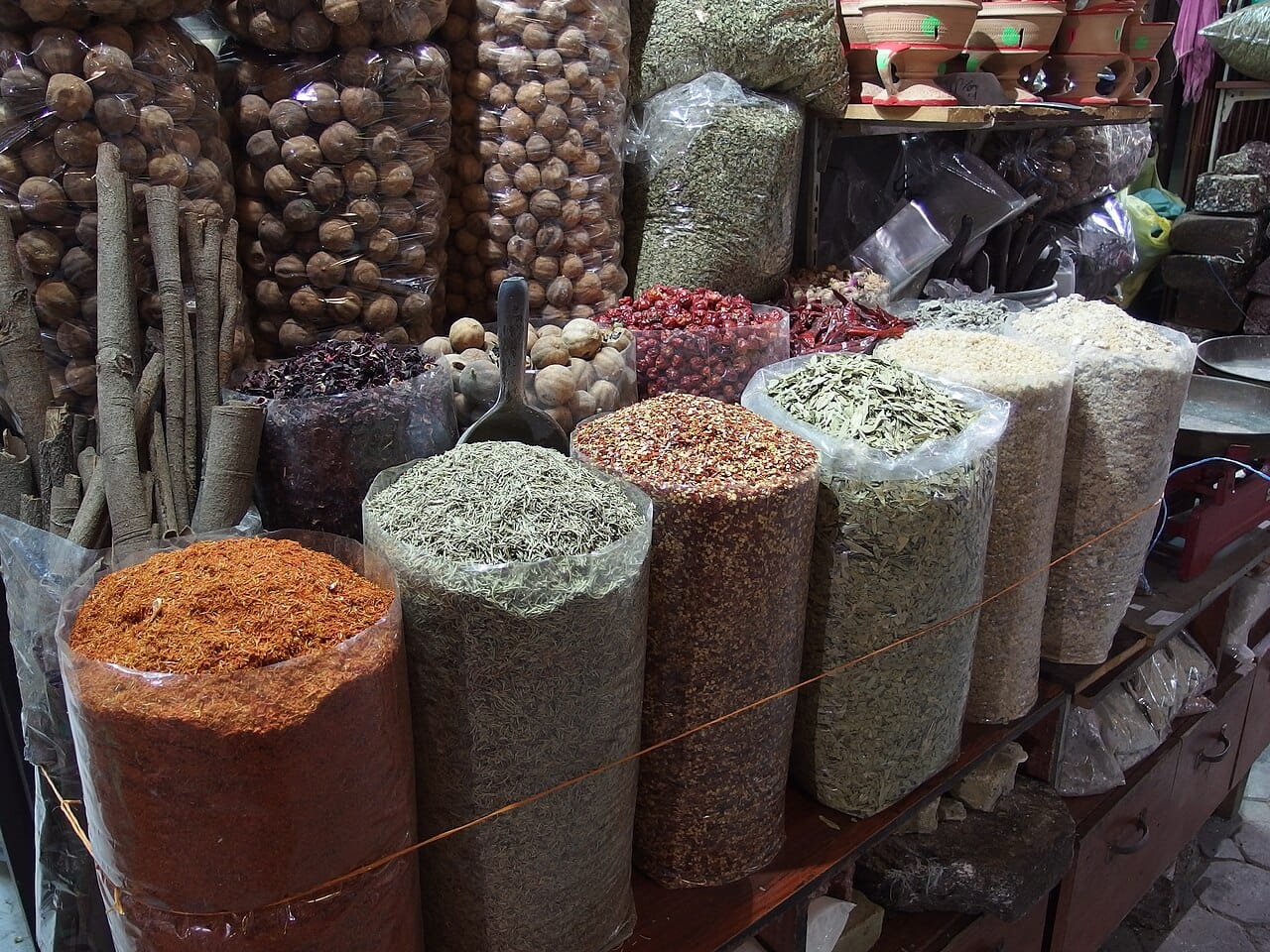
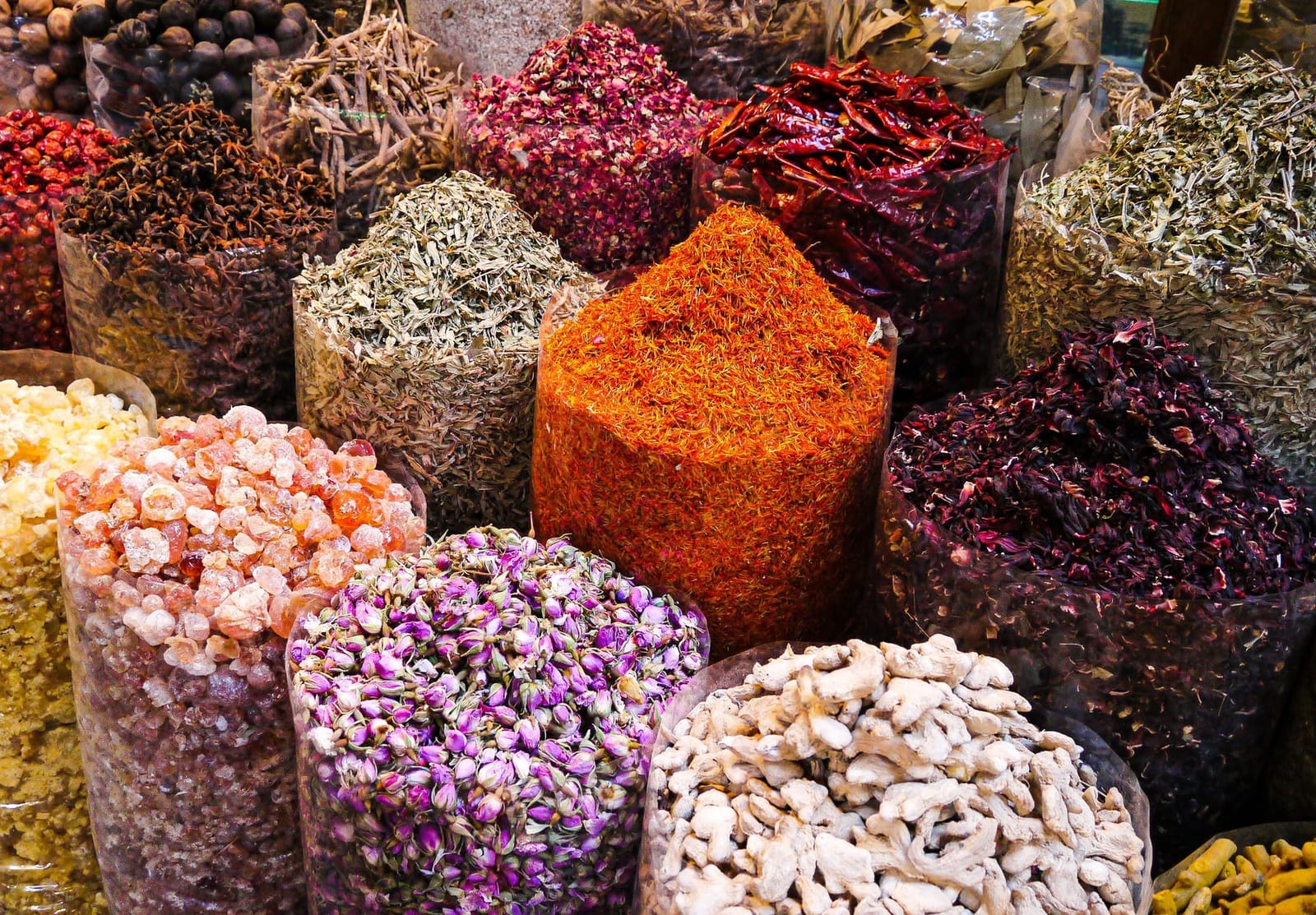
Spices are sold by weight at prices shopkeepers know well, so haggling is gentle: a small discount or an extra bag of something when you buy several items. Ask the price per 100 g, compare two shops and never haggle over a sealed pack that carries a printed price. Saffron is the exception where the price per gram matters most.
 #4
The Gold Souk
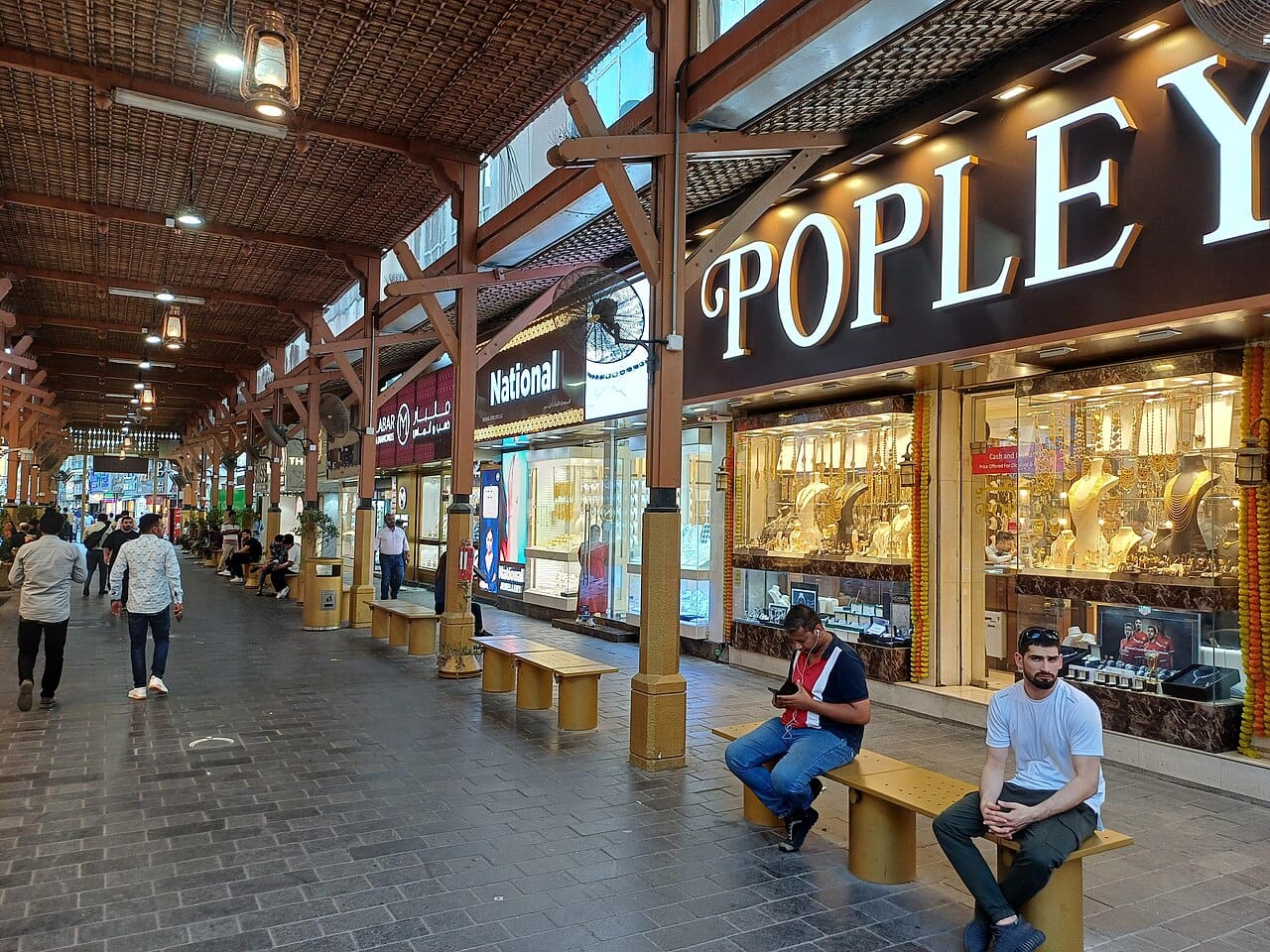
Gold is priced by weight at the day's rate and the rate is not negotiable. What you can negotiate is the making charge, the fee for the craftsmanship, so the total moves by a few per cent rather than by a third. Compare two or three windows, ask for the weight and purity on the receipt and keep it. Our Gold Souk guide has the detail.
 #5
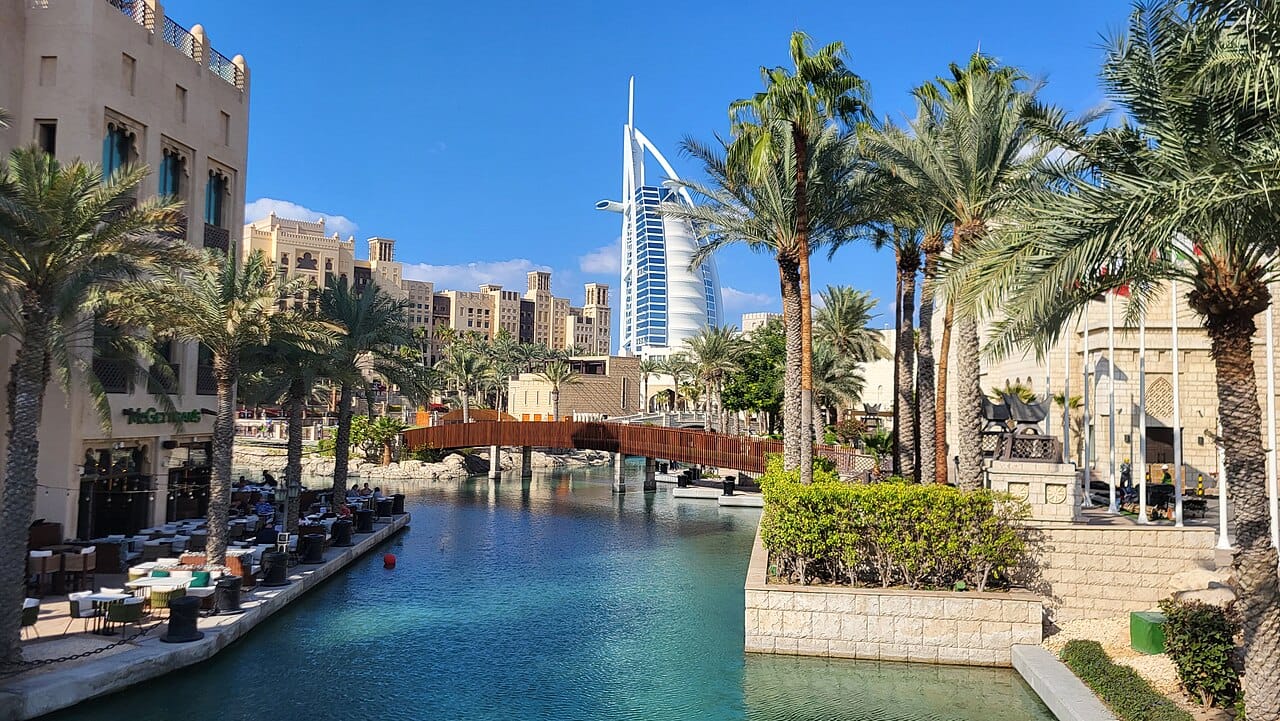
Souk Madinat Jumeirah
A polished souk of boutiques and restaurants where prices are on the tags and haggling is not part of the deal. A polite question about a discount when you buy several pieces is the most you can expect, and it is as likely to meet a no. Come for the setting and a comfortable evening, not for a bargain.
 #6
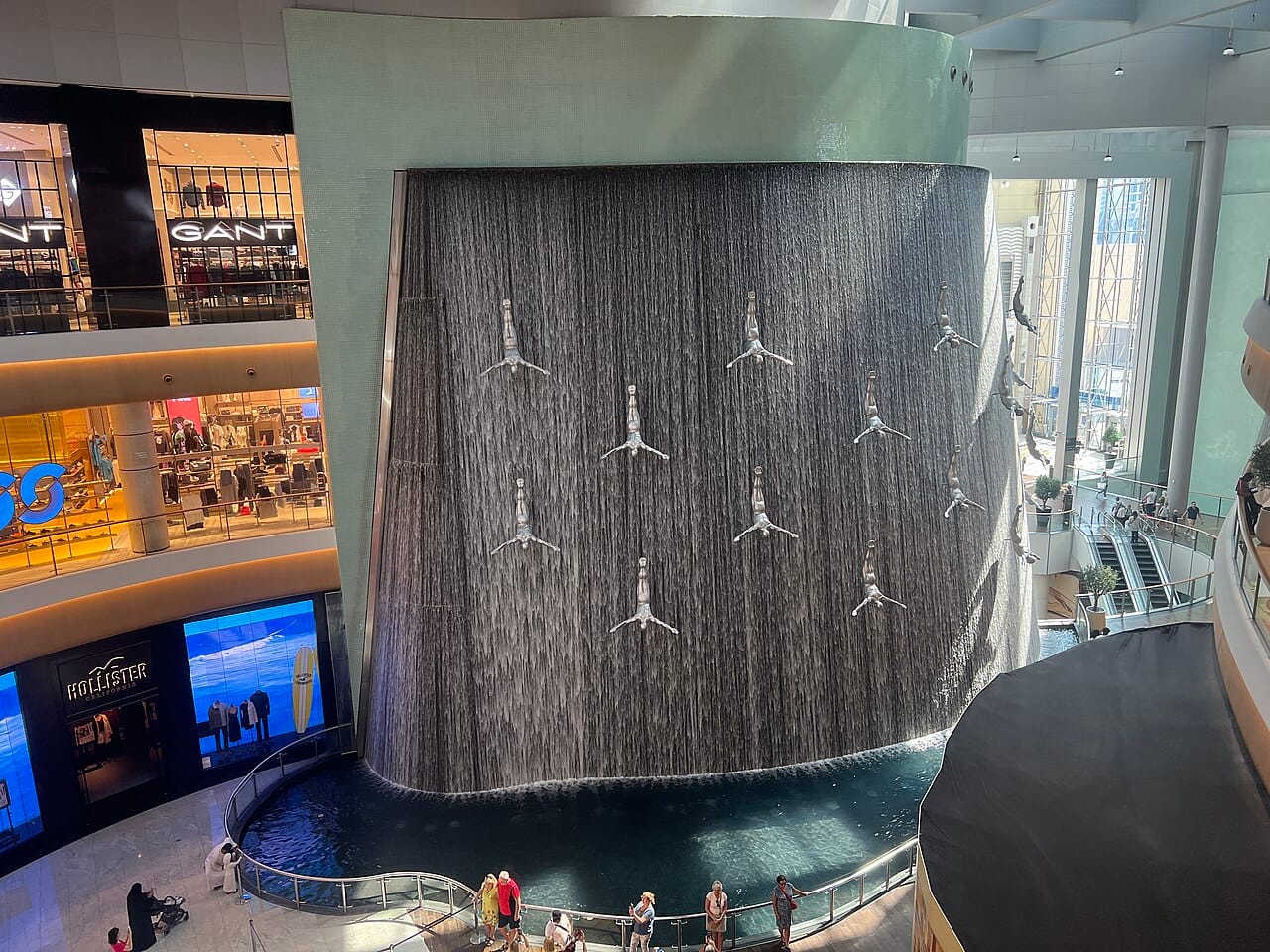
Malls and brand shops
Mall prices are fixed, and trying to haggle in a brand shop will only confuse the staff. You can save money here in other ways: sale periods, the tourist VAT refund on eligible purchases, and the Dubai Shopping Festival, which TradeArabia reported for 4 December 2026 to 17 January 2027 with 45 days of promotions. Confirm dates on the official site.
Haggling in Dubai in one minute
Haggle in the old souks, at souvenir stalls and over the making charge in gold; do not haggle where prices are printed. The Textile Souk has the most room, the Spice Souk a little, the Gold Souk only on the making charge, and malls, supermarkets, taxis, the Metro and the abra none. A sensible rule of thumb on scarves and souvenirs is to open at about half the first quote and settle near two thirds of it, about a third off. These are working rules, not fixed rates, and shops differ.
Haggling is a normal, friendly part of buying in a traditional market, not a fight. The shopkeeper expects a counter-offer, you expect a first price that leaves room, and both of you get a small sense of winning. The point is to leave with something you like at a price you are happy with, not the lowest number in the souk.
Below: where it works, how to do it step by step, the etiquette and the traps. For the markets themselves, see our guide to Dubai's souks and our what to buy in Dubai list.
Where haggling works, and what you can save
The table gives a realistic outcome for each place. The percentages are approximate and depend on the shop, the item and how many things you buy.
| Where | Haggle? | What to expect | Note |
|---|---|---|---|
| Textile Souk, souvenir stalls | Yes, expected | About a quarter to a third off the first quote | Open at about half; compare two shops |
| Spice Souk | Gently | A small discount or an extra bag on mixed purchases | Sealed packs with a printed price are fixed |
| Gold Souk | Making charge only | A few per cent off the total | The gold rate is the same everywhere that day |
| Perfume shops | Modestly | A better price on several bottles | Try on skin and wait before buying |
| Karama and independent stalls | Yes | Similar to the Textile Souk | See our Karama guide for the area |
| Global Village stalls | At many stalls | Better prices when you buy several items | Seasonal; pavilions with tags are fixed |
| Malls, brand shops, supermarkets | No | Printed prices; sales and VAT refund instead | Ask about promotions, not about haggling |
| Taxis, Metro, abra | No | Meter and fixed fares | Agree a price first only for a private abra hire |
Figures are rules of thumb for guidance. A shop that will not move is not insulting you; it may simply be a fixed-price shop.
Look at whether the item has a price tag. A printed tag, a sealed pack or a menu board usually means fixed. A scarf pulled from a pile with no tag, a bag of spices weighed at the counter or a souvenir on a table is open to a counter-offer. Karama has a market area known for souvenirs and bargaining, covered in our Karama guide.
How to haggle, step by step
The method is simple and works in every old souk. It is easier if you decide your own price before you ask, and an example makes it concrete.
- Decide what it is worth to you before you walk in. If you would happily pay AED 70 for a scarf, that is your ceiling, whatever the first price is.
- Ask the price and do not react. A friendly smile and a pause is enough.
- Counter at about half. The shopkeeper will say it is too low; that is part of the dance.
- Move up in small steps, and let the shopkeeper come down. Aim to meet near two thirds of the first quote.
- If it will not go below your ceiling, thank them politely and start to walk away. Often the price drops; if not, you are free to try the next shop.
- When you agree a price, buy. Walking away after a deal is rude.
As an illustration only: a scarf quoted at AED 120 might get a counter of AED 60, a middle offer of AED 75-80, and settle around AED 80. The numbers will differ for every item, but the rhythm is the same. For multiple items, ask for a price for the lot, which often gives a better saving than haggling piece by piece.
Pay in dirhams, in cash where you can. Some shops accept dollars or euros, but the rate they give is rarely in your favour. Check what you are handed before you leave, and check your change.
Etiquette: what keeps shopkeepers friendly
Dubai's souks are used to visitors, and good manners earn better prices than hard bargaining does. A few habits make a real difference.
- Greet first. A smile and a hello before the price question changes the whole tone.
- Do not haggle unless you intend to buy. Making an offer is a commitment in a traditional market.
- Avoid insulting offers, such as a tenth of the price. Going from half to two thirds is fair, going from a tenth to a half is theatre.
- Accept tea or a taste if offered; it is hospitality, not a trap, and you are not obliged to buy.
- Do not compare out loud, saying the shop next door is cheaper, and do not name the price you were quoted elsewhere in a sneering way.
- Ask before photographing traders or customers, women in particular, and never push a camera into a stall.
- A few Arabic words help: kam (how much), ghali (expensive) and shukran (thank you); la, shukran means no, thank you.
Dress for the district, with shoulders and knees covered, which our dress code guide explains. In Ramadan the souks stay open but the hours shift, and daytime eating and drinking in public is best avoided; the Ramadan guide covers what else changes.
Gold, saffron and perfume: haggle differently
Three purchases follow their own rules. For gold, the price is the day's rate per gram multiplied by the weight, plus the making charge. The rate is the same in every shop that day, so there is nothing to argue about, and the sensible move is to compare the making charge at two or three windows. Ask for a receipt that states the weight and the purity; 22 carat gold is commonly stamped 916. Read the Gold Souk guide before you buy.
For saffron, the price per gram matters more than any discount. Reports from the souk put decent threads at roughly AED 15-25 a gram, so a price far below that is a warning, not a bargain. Buy a sealed pack, ask for the receipt, and use our Spice Souk guide to check the quality tests.
For perfume oils and oud, try the scent on your skin and wait before you decide. Cheap bottles sold as pure oud are often blends or synthetic, so ask for the price per bottle, compare shops and pack the bottle well. A fixed-price perfume from a mall brand is a safer route if you want a known scent.
Common mistakes that cost money
Most overpaying comes from a few predictable habits, and all of them are easy to avoid.
- Starting at the first shop you enter. Walk a lane first and see the range of prices.
- Paying the first price because the shopkeeper was charming. The charm is part of the sale.
- Buying anything sold as a designer copy. Selling copies is illegal, your own customs may seize them, and the quality is poor.
- Paying for something before it is wrapped, weighed or tried on, or for a bag of spices without watching it weighed.
- Assuming a low price means real pashmina, real saffron or real oud. Check the item, not the story.
- Haggling at a fixed-price shop, or trying to bargain after the abra boatman has quoted the standard fare.
If you are in Dubai during a sale period, the malls can beat a souk price for branded goods, and the haggling advice above matters less. Dates for the Dubai Shopping Festival are in our shopping festival guide. Always check them on the official site.
Get the lie of the land first: our Old Dubai walk
If you want to see the souks before you spend, our Old Dubai walking tour is a shared group walk of 3-4 hours with an English-speaking local guide, from $35 per person. It takes in Al Fahidi, Al Seef, the old Bur Dubai souk, an abra ride across the Creek, the Spice Souk and the Gold Souk, with time to look and shop. It is not a shopping tour, but it gives you the geography and the story of the Creek before you open your wallet. The $35 walk includes Arabic coffee or tea, dates, water and entry to a heritage house; the $55 option adds Emirati street-food tastings.
It meets in Al Fahidi near Sharaf DG metro, with the pin sent after payment. Full prepayment confirms your place and cancellation or a date change is free up to 24 hours before the start. It is mostly outdoors, May to September is very hot, and it is not for children under 2, wheelchair users or people with limited mobility; pushchairs and large bags are not allowed. If you are heading on to a longer day, our full-day desert safari, from $45, has no prepayment, and our Abu Dhabi city tour, from $45 shared, includes a Dates Market stop.
FAQ
How much should I haggle down in Dubai souks?
On scarves and souvenirs, open at about half the first quote and settle near two thirds, which is roughly 30% off. In the Spice Souk expect a small discount, and in the Gold Souk only the making charge moves, so the total shifts by a few per cent. These are rules of thumb, not fixed rates.
Where can you haggle in Dubai?
In the Textile Souk, at souvenir stalls, in the Karama market area and, gently, in the Spice and perfume shops. In the Gold Souk you negotiate the making charge. At Global Village many independent stalls will negotiate, but not branded pavilions.
Where should I not haggle in Dubai?
In malls, brand shops, supermarkets, restaurants, taxis, on the Metro and at the abra, where prices or fares are fixed. Souk Madinat Jumeirah and Souk Al Bahar are mostly fixed too. Ask about sales and the VAT refund instead.
Is it rude to haggle in Dubai?
No, in a traditional souk it is expected and friendly. It becomes rude if you haggle with no intention to buy, make insulting offers or walk away after agreeing a price. Greet first, keep smiling and accept the tea.
Can you haggle in the Gold Souk?
Only over the making charge. The gold rate is fixed for the day and is the same in every shop, so compare the making charge at two or three windows and ask for a receipt showing the weight and purity.
Should I pay in dollars or dirhams?
Dirhams, in cash where you can. Some shops accept dollars or euros, but the exchange rate they use is rarely in your favour. The dirham is pegged at about AED 3.67 to the dollar, so you can convert in your head.
Can I haggle at Global Village?
At many independent stalls, yes, especially when you buy several items, but branded pavilions with price tags are fixed. Global Village is seasonal; Khaleej Times reported this season opening on 14 October 2026, so check the official site for dates and ticket prices.
Recommended Dubai tours for this guide

Old Dubai Walking Tour
It is the Dubai that is walked rather than driven: the Creek where the city began as a trading port, the restored wind-tower quarter and the souks that still trade spices and gold. A local guide tells the story along the way. The $35 walk includes the abra, Arabic coffee or tea, dates and water; the $55 option adds street-food tastings.
- Duration
- 3-4 hours
- Area
- Old Dubai: Bur Dubai and Deira
- Format
- Shared group walk
- Best for
- first-time visitors, food lovers and anyone who wants the old trading side of Dubai on foot
From $35 per person Full prepayment
View tour
Full-Day Desert Safari in Dubai
It is the slow-travel version of the classic safari: more time on the dunes, sunset without the crowds and a full evening programme at a premium camp with air-conditioned tents, unlimited drinks and a large BBQ buffet with vegetarian and gluten-free options. Everything is arranged from the hotel door — a licensed English-speaking driver, the 4x4, the camp and the shows.
- Duration
- 7 hours
- Area
- Lahbab Desert, Dubai
- Format
- Full-day desert safari
- Best for
- families, couples and first-time desert visitors who want the full evening programme
From $45 per person No prepayment
View tour
Abu Dhabi City Tour from Dubai
It is the classic capital day in one organised loop: the mosque before the midday heat and crowds, the newly opened BAPS Mandir, the skyline from the Corniche, Bedouin history at Heritage Village and a photo op at Ferrari World. Transport, a licensed guide, mosque registration assistance and bottled water are included; the $45 shared tour covers all free-entry sites, and a private VIP car for up to 7 people is $245.
- Duration
- 9 hours
- Area
- Abu Dhabi, UAE
- Format
- Full-day guided city tour (shared or private)
- Best for
- families, seniors and first-time visitors who want the capital's landmarks in one day
From $45 per person No prepayment
View tour📚 Keep reading
Photos: Open sacks of dried chillies, herbs, cinnamon bark and dried limes on a stall in the Deira Spice Souk — Guilhem Vellut from Annecy, France, CC BY 2.0, The Textile Souk — trolvag, CC BY-SA 3.0, Global Village stalls — Slayym, CC BY-SA 4.0, The Gold Souk — Radosław Botev, CC BY 3.0 pl, Malls and brand shops — Dakstor, CC BY-SA 4.0 (Wikimedia Commons).